

This bill directs the President to withdraw the United States from the United Nations Framework Convention on Climate Change (the entity tasked with supporting the global response to climate change). The bill also prohibits the use of funds to carry out U.S. obligations under the framework following this withdrawal.
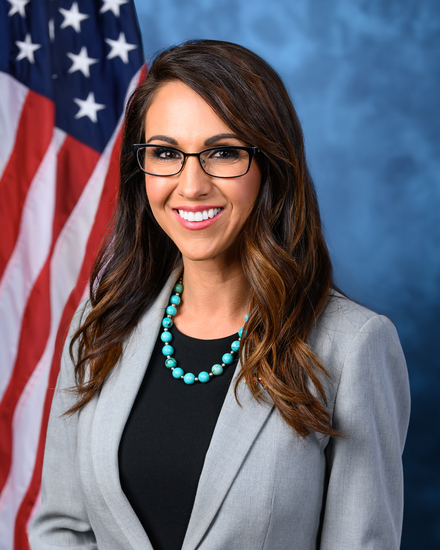
Rep. Lauren Boebert
Sponsored bills
Maddy summaryHR 2743 prohibits large financial institutions (over $100 billion in assets) from denying banking services to lawful businesses based on subjective political reasons, industry type, or reputational concerns. It requires these institutions to use objective, risk-based assessments for service decisions and provide written justifications for denials. The law applies to banks, credit unions, and payment networks, with civil penalties for violations including fines up to $10,000 per incident. It specifically ensures businesses operating legally under federal law receive fair access to financial services without discrimination. The bill mandates that denials be based on documented risk factors, not political bias or category-based exclusion.
Maddy summaryHR 2746, the Pueblo Jobs Act, mandates the closure of the Pueblo Chemical Depot in Colorado within one year after completing its chemical weapons destruction mission under the Chemical Weapons Convention. The bill requires the Army Secretary to follow specific federal procedures under the 1990 Defense Base Closure Act for disposing of the depot's land, buildings, and equipment, while allowing existing Colorado hazardous waste permits to govern demolition. It also authorizes Department of Defense grants to support local reuse efforts and explicitly states the site is unsuitable for homeless housing, exempting it from related federal screening requirements. The bill directly affects Pueblo County, the depot's future use, and local economic development plans tied to the closure.
Maddy summaryHR 2709 (BBB Act) requires the Comptroller General to study whether abandoning U.S. military equipment in Afghanistan during the 2021 withdrawal contributed to U.S. inflation, and to submit a report to Congress within 90 days. It also requests the President to provide a written statement on the same question within the same timeframe. The bill mandates a factual inquiry into this specific economic link without proposing any policy changes or affecting citizens. It is purely procedural, directing government agencies to conduct a study and provide reports.
U.S.A. Beef Act This bill modifies label requirements for meat food products of cattle. Specifically, the bill prohibits the label of cattle meat or a meat food product of cattle from bearing the phrase Product of U.S.A. unless such meat or meat food product is exclusively derived from one or more cattle born, raised, and slaughtered in the United States. The requirement does not apply to cattle meat or a meat food product of cattle that is intended and offered for export to a foreign country.
Maddy summaryHJRES 27 is a congressional resolution seeking to block a federal rule that redefined which waterways fall under the Clean Water Act's protections. It targets a rule submitted by the Army Corps of Engineers, Department of Defense, and Environmental Protection Agency (EPA) on January 18, 2023, which aimed to revise the "Waters of the United States" definition. The resolution would formally disapprove this rule under a specific federal procedure (Chapter 8 of Title 5), preventing it from taking effect. This would directly affect how federal agencies regulate pollution and development near water bodies, including wetlands and smaller streams.
Maddy summaryThe VA Same-Day Scheduling Act of 2023 requires the Department of Veterans Affairs to schedule appointments for enrolled veterans during the same phone call when they request care. This applies to veterans enrolled in the VA healthcare system who contact the VA by phone to request appointments. The law mandates that the VA must complete the scheduling during the call - without delay or future scheduling - regardless of the appointment date. The requirement takes effect 120 days after the bill is enacted.
Maddy summaryThis bill establishes the Dolores River National Conservation Area (approximately 52,872 acres of Bureau of Land Management land) and Dolores River Special Management Area (approximately 15,452 acres of National Forest land) in Colorado to protect natural, recreational, and cultural resources including native fish, whitewater boating, and scenic areas. Management plans must be developed within 3 years for both areas, requiring consultation with local governments, water users, conservation groups, and tribal representatives. The bill protects existing water rights and tribal treaty rights, prohibits new road construction in sensitive areas, and limits motorized vehicle use to designated routes within the conservation areas. It also makes technical modifications to release portions of the Dolores River from potential Wild and Scenic River designation.
Ensuring United Families at the Border Act This bill addresses the treatment of children who are non-U.S. nationals ( aliens under federal law), including by statutorily establishing that there is no presumption that such a child (other than an unaccompanied child) should not be detained for immigration purposes. Specifically, the bill states that the detention of such minors shall be governed by specified sections of the Immigration and Nationality Act and not any other provision of law, judicial ruling, or settlement agreement. (A 1997 settlement agreement, commonly known as the Flores agreement, imposes requirements relating to the treatment of detained alien minors, including requiring such minors to be released or placed in a nonsecure facility after a certain amount of time in detention.) If an adult enters the United States unlawfully with their child, DHS must detain the adult and child together if the only criminal charge against the adult is a misdemeanor for unlawful entry. This bill also prohibits states from imposing licensing requirements on immigration detention facilities used to detain minors or families with minors.
Maddy summaryHR 2620, the Federal Firearms Licensee Protection Act of 2023, increases penalties for crimes targeting firearms licensees. It amends Section 924 of Title 18 to impose mandatory minimum sentences of 3 years for burglaries or 5 years for robberies committed at the business premises of licensed firearms dealers, manufacturers, or importers. The bill specifically targets violations of Section 922(u), which prohibits unauthorized access to these premises, and adds "attempts to do so" to the penalties. This directly affects licensed firearms businesses by strengthening legal protections against theft or violence at their locations. The law creates clearer, harsher consequences for crimes committed during burglaries or robberies at these specific business sites.