

Maddy summaryHR 1953, the Deportation Compliance Act, prohibits U.S. foreign aid to countries that repeatedly refuse or delay accepting their own citizens being deported from the United States. Specifically, it blocks federal funds if a country continues denying or unreasonably delaying the return of its citizens for 180 days after the Secretary of State has listed it under Section 243(d) of immigration law. This directly affects foreign governments that fail to cooperate with U.S. deportation requests for their nationals. The key mechanism is a mandatory cutoff of all foreign assistance funds to such non-compliant countries, using aid as leverage to enforce deportation cooperation.
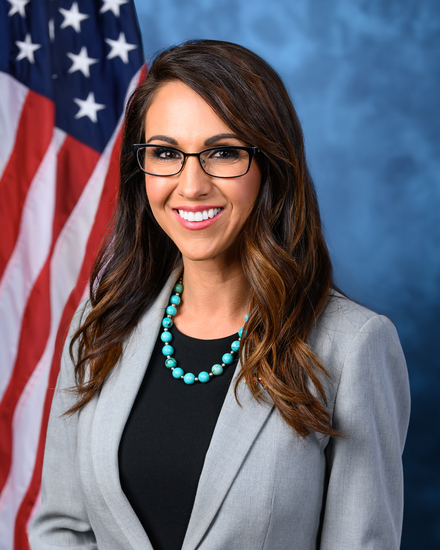
Rep. Lauren Boebert
Sponsored bills
Maddy summaryHR 961, the Veterans Access to Direct Primary Care Act, establishes a 5-year pilot program allowing eligible veterans enrolled in VA care to use health savings accounts for primary care services from non-VA providers. Eligible veterans would receive annual deposits into a savings account to cover direct primary care fees, preventive screenings, and medications, but could not use VA care for services included in the arrangement during the program. The program, managed by the VA’s Center for Innovation, requires fraud prevention measures and annual reports to Congress. It affects VA-enrolled veterans who opt into the pilot, with funding drawn from existing VA budgets and no new appropriations. The pilot terminates after five years, with no permanent change to VA care access.
Maddy summaryHR 471, the Fix Our Forests Act, establishes a new system for identifying and managing high-risk wildfire areas called "firesheds" and creates a centralized Fireshed Center to coordinate wildfire risk management across federal agencies. The bill streamlines environmental reviews for wildfire risk reduction projects, allowing for faster implementation of hazardous fuels management activities in designated areas. It includes provisions for community wildfire risk reduction programs, water source protection, and specific initiatives for restoring white oak forests. The legislation also includes litigation reforms to expedite forest management projects and reduce delays from legal challenges. These provisions aim to reduce wildfire risk and improve forest health through more coordinated, data-driven management approaches.
Maddy summaryHR 1846, the Federal Reserve Board Abolition Act, would end the Federal Reserve System by abolishing its Board of Governors and all 12 Federal Reserve banks after a one-year transition period following enactment. The bill requires liquidating the Fed's assets through the Office of Management and Budget, transferring all liabilities (including employee benefits) to the Treasury Secretary, and depositing net proceeds into the Treasury's General Fund. This bill directly affects the Federal Reserve's structure and operations, transferring its responsibilities to the Treasury without altering current monetary policy functions.
Maddy summaryHR 1790, the Golden Age Act of 2025, requires the U.S. Treasury to print all new $100 bills after December 31, 2028, featuring a prominent portrait of Donald J. Trump on the front. The bill mandates that the Treasury release a preliminary design of this note by December 31, 2026. This procedural bill directly affects the U.S. Treasury's currency production process and changes the design requirements for the $100 bill.
Maddy summaryHR 1668 prohibits the Federal Emergency Management Agency (FEMA) from using funds to support sheltering programs or facility improvements for U.S. Customs and Border Protection (CBP) short-term holding facilities. It specifically cancels unused funds from two 2023 and 2024 appropriations acts that were previously allocated to FEMA for this purpose. The bill directly affects FEMA's budget authority and prevents the agency from funding non-Federal entities providing such support. This is a procedural funding change, not a new immigration policy.
Maddy summaryThis bill amends federal law to require that individuals purchasing handguns from licensed dealers be at least 21 years old, removing previous exceptions that allowed sales to those under 21 for certain firearms. It directly affects anyone seeking to buy handguns from federally licensed gun sellers, raising the minimum age from 18 to 21 for these transactions. The bill also removes an existing age verification statement (requiring buyers to confirm they are 21 or older) for handgun purchases, aligning the requirement with the new age standard. Rifles and shotguns remain unaffected by this provision, as the amendment specifically targets handguns only. The bill's title referencing "voter" is unrelated to its actual provisions on firearm sales.
Maddy summaryHR 1748, the "FEMA for America First Act of 2025," would amend the federal disaster relief law to restrict FEMA assistance to "qualified aliens" only. This means non-citizens seeking disaster aid would need to meet specific immigration status criteria defined in existing law, excluding certain groups like asylum seekers who haven’t applied for permanent residency, refugees without adjustment applications, and certain parolees. The bill directly affects non-citizen individuals applying for FEMA disaster assistance under the Robert T. Stafford Act. It changes eligibility rules by requiring applicants to hold a "qualified alien" status as defined by the 1996 welfare law, without altering the core disaster relief program structure.
Maddy summaryHR 1680, the UPLIFT Act, requires all local law enforcement agencies in jurisdictions that restrict immigration enforcement (often called "sanctuary jurisdictions") to fully cooperate with federal immigration authorities. It amends a 1996 law to prohibit local entities from restricting officers from asking about immigration status, sharing information about suspected criminals, or complying with federal detainer requests for suspected inadmissible or deportable individuals. The bill also mandates annual compliance reports to Congress, allows local governments to sue states for noncompliance, and provides legal immunity to jurisdictions following federal detainers. This would directly affect local police departments and county jails in areas with policies limiting cooperation with federal immigration enforcement.
Maddy summaryThis bill requires the U.S. Department of Agriculture (USDA) to join the Committee on Foreign Investment in the United States (CFIUS) for reviews of certain transactions involving foreign adversaries. It specifically targets acquisitions of U.S. agricultural land, biotechnology, or agriculture-related infrastructure (like transportation, storage, or processing) by entities from China, North Korea, Russia, or Iran. The USDA must notify CFIUS about reportable transactions, prompting the committee to determine if a full review is needed. The provisions expire for any country removed from the official list of foreign adversaries in federal regulations.