

Canadian Snowbird Visa Act This bill authorizes the Department of Homeland Security to admit into the United States qualifying Canadian citizens as long-term nonimmigrant visitors. A qualifying Canadian citizen is an individual who (1) is at least 50 years old, (2) maintains a Canadian residence, (3) owns a U.S. residence or has rented a U.S. accommodation for the duration of the individual's stay, (4) is not inadmissible or deportable, (5) will not engage in employment or labor for hire in the United States other than for a non-U.S.-based person or entity by whom the Canadian citizen was employed in Canada or for whom the Canadian citizen performed services in Canada, and (6) will not seek certain forms of assistance or benefits. A qualified individual may be admitted for up to 240 days during any single 365-day period. The spouse of such an individual may be admitted under the same terms, except that the spouse is not required to separately satisfy the requirement for owning or renting a residence in the United States. The bill grants an individual so admitted nonresident alien tax status.
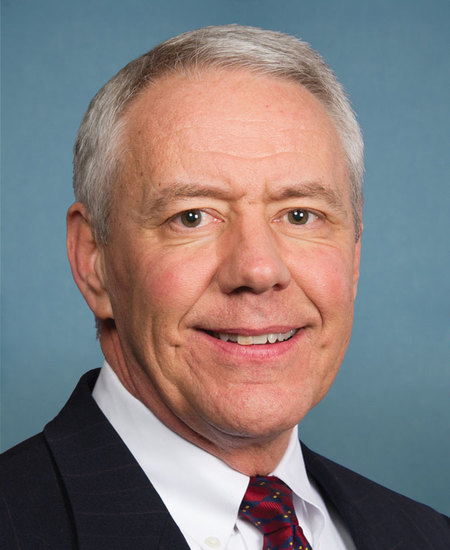
Sponsored bills
Criminal Alien Removal Clarification Act of 2021 This bill subjects to deportation an alien who at any time after admission has been convicted of a felony or two misdemeanors under state or federal law. Currently, an alien is subject to deportation for a single conviction for certain felonies (such as an aggravated felony), two or more convictions for crimes involving moral turpitude, or being a drug addict.
Migrant Child Trafficking Prevention and Accountability Act of 2021 This bill imposes sanctions on an alien parent (or guardian) of an unaccompanied alien child who arrives at any U.S. border or port of entry. Under current law, an alien may arrive in the United States (whether or not at a port of entry) and request asylum, subject to certain restrictions. If the parent is not a lawful permanent resident, that parent shall be permanently barred from adjusting immigration status and deemed inadmissible into the United States. In addition, such a parent shall be deemed to have violated certain crimes related to assisting or abetting an alien's attempt to enter into the United States in violation of immigration laws, even if the parent's actions would fall under an exception for a first offense in assisting or abetting certain family members. If the parent is a lawful permanent resident, that parent shall be ineligible for any federal public benefit.
No Frivolous Application for Short-Barreled Shotguns Act or the NFA SBS Act This bill removes certain short-barreled shotguns from the definition of firearms for purposes of the National Firearms Act. It also eliminates the prohibition on the sale or transportation of such shotguns in interstate commerce and treats persons who acquire or possess a short-barreled shotgun as meeting the registration or licensing requirements for such shotguns where such requirements are determined by reference to the National Firearms Act. The bill preempts state or local laws that impose a tax or recordkeeping requirements on short-barreled shotguns. The Department of Justice must destroy records relating to the registration of shotguns described by this bill within one year after the enactment of this bill.
Bankruptcy Venue Reform Act of 2021 This bill limits where a non-individual debtor (e.g., a corporate debtor) may file for bankruptcy. Specifically, these debtors must file in the district court for the district in which the principal place of business or principal assets of the debtor are located. Such a debtor may also file in a district where there is a pending bankruptcy case concerning an affiliate that has a certain level of control or ownership of the debtor (e.g., if the affiliate is a controlling shareholder of the debtor), if that pending case is in a proper venue under this bill. Under current law, these debtors may also file where they are domiciled (i.e., incorporated) or where there is a bankruptcy case pending concerning an affiliate, general partner, or partnership. For certain debtors who are issuers of securities, their principal place of business is defined in the bill as the address of the entity's principal executive office as provided in specified Securities and Exchange Commission filings.
Stars and Stripes Act of 2021 This bill prohibits the Department of State from displaying any flag or banner at a diplomatic or consular post other than specified flags. Such flags are (1) the U.S. flag; (2) the flag of the country wherein the post is located; (3) the flag of a state, territory, or possession of the United States; (4) a departmental or secretarial flag; (5) the flag of an Armed Force; or (6) a flag to honor prisoners of war or those missing in action.
Taiwan Diplomatic Review Act This bill addresses issues concerning diplomatic relations with Taiwan. The bill directs the Department of State to seek to enter into negotiations with the Taipei Economic and Cultural Representative Office (TECRO) in the United States to rename its office in the District of Columbia as the Taiwan Representative Office in the United States. (The U.S.-Taiwan relationship is unofficial, and TECRO is Taiwan's principal representative in the United States.) In addition, the bill establishes a W nonimmigrant visa for aliens affiliated with Taiwan's diplomatic operations, including (1) an ambassador, public minister, or career diplomatic or consular officer accredited by Taiwan and accepted by the United States; (2) a designated principal representative of Taiwan to an international organization; and (3) the immediate family members of such individuals. Specified holders of a W visa shall be entitled to certain immunities afforded to holders of diplomatic visas. The bill also requires the President to appoint the Director of the American Institute in Taiwan with the advice and consent of the Senate. (After the U.S.-Taiwan relationship became unofficial, the United States conducted relations with Taiwan through the American Institute in Taiwan. The institute's office in Taipei performs many of the same functions as an embassy.)
Preventing Anti-Semitic Hate Crimes Act This bill requires a designated officer or employee of the Department of Justice (DOJ) to facilitate the expedited review of anti-Semitic hate crimes and reports of anti-Semitic hate crimes. Further, the bill requires DOJ to issue guidance for state, local, and tribal law enforcement agencies on expanding public education campaigns to raise awareness of anti-Semitic hate crimes. Finally, the bill increases the statutory maximum prison term for an individual who is convicted of a federal hate crime offense after a prior conviction for a hate crime offense under federal law or a hate crime felony under state law.
Separation of Powers Restoration Act of 202 1 This bill modifies the scope of judicial review of agency actions to authorize courts reviewing agency actions to decide de novo (i.e., without giving deference to the agency's interpretation) all relevant questions of law, including the interpretation of (1) constitutional and statutory provisions, and (2) rules made by agencies. No law may exempt a civil action from the standard of review required by this bill except by specific reference to such provision.
Combating Organized Retail Crime Act of 2022 This bill expands federal enforcement of criminal offenses related to organized retail crime. Organized retail crime typically refers to large-scale retail theft and fraud by organized groups of professional shoplifters, or boosters, who make money by stealing merchandise and reselling it for a fraction of the retail cost. First, with respect to criminal offenses involving the transportation of stolen property across state lines and the sale or receipt of stolen goods, the bill broadens the scope of conduct that qualifies as offenses. Additionally, the bill makes the offenses predicate offenses (i.e., underlying offenses) for prosecutions under the federal money laundering statute and authorizes the criminal forfeiture of any property representing or traceable to the gross proceeds obtained as a result of an offense or a conspiracy to commit an offense. Second, with respect to criminal offenses involving theft from an interstate or foreign shipment, the bill makes an offense an underlying offense for prosecution under the federal money laundering statute and authorizes the criminal forfeiture of any property representing or traceable to the gross proceeds obtained as a result of an offense or a conspiracy to commit an offense. Finally, the bill establishes a center—the Organized Retail Crime Coordination Center—within the Department of Homeland Security to coordinate the federal law enforcement activities related to organized retail crime.