

Maddy summaryThis bill establishes a Truth and Healing Commission to investigate the history and impacts of U.S. Indian Boarding School policies on Native American communities, including cultural, emotional, and physical effects on survivors, descendants, and tribal communities. The Commission will document these impacts through research, public meetings, and testimony, working with two advisory committees focused on Native American perspectives and Federal agency coordination. The Commission will operate for six years, with annual reports to Congress and a final report containing recommendations for Federal action. The bill also includes provisions for managing burial sites related to boarding schools and ensures the Native American Graves Protection and Repatriation Act applies to remains found on Federal lands related to these schools.
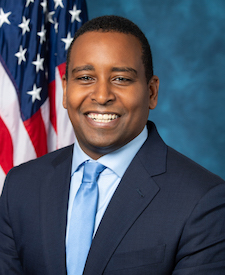
Rep. Joe Neguse
Sponsored bills
Maddy summaryThis bill amends the Public Works and Economic Development Act of 1965 to expand eligibility for federal grants to include youth sports facilities. It requires grant award decisions to prioritize projects that address sedentary lifestyles, support underserved rural communities lacking recreational infrastructure, and spur economic development through youth sports access. The bill directly affects local communities and municipalities seeking federal funding to build or improve youth sports facilities, particularly in areas with limited tax revenue or existing facility gaps. Key provisions mandate that the Secretary consider factors like reducing obesity impacts, promoting job creation linked to sports infrastructure, and enhancing community health through improved recreational access. The policy change modifies existing grant criteria rather than creating new funding streams.
Maddy summaryThis bill clarifies that noise abatement and lead abatement measures cannot be considered "unjust discrimination" when federal agencies review airport improvement project applications under the Airport Improvement Program. It directly affects airports seeking federal grants for projects like noise-reducing infrastructure or lead paint remediation. The key provision amends Title 49 U.S. Code to explicitly state that such environmental measures should not disqualify projects based on discrimination interpretations. The change ensures these common safety and environmental upgrades remain eligible for funding without unnecessary regulatory hurdles.
Maddy summaryThe Investing in Community Resilience Act of 2024 amends the Stafford Act to expand eligibility for federal disaster resilience funding. It adds programs that improve building standards and land use practices to reduce vulnerability to natural disasters (like storms, floods, and wildfires) and includes support for community emergency response teams and non-governmental organizations providing disaster assistance through training and preparedness exercises. The bill requires FEMA to issue guidance to state and tribal governments within one year of enactment, and mandates that these changes be implemented using existing FEMA funds without new appropriations. This directly affects state/local governments and community emergency response organizations by altering how they access federal resilience funding.
Maddy summaryThis bill prohibits Medicaid from covering conversion therapy for any enrollee. It amends federal law to block Medicaid payments for any therapy aimed at changing a person's sexual orientation or gender identity (defined as "conversion therapy" in the bill), starting in the first full quarter after the law takes effect. The prohibition applies to all Medicaid providers who offer such therapy for compensation, but explicitly excludes support for gender transition, acceptance-based care, and interventions focused on safety or unlawful conduct. It directly affects Medicaid recipients seeking therapy and providers who previously billed for conversion therapy services.
Maddy summaryThis bill extends the operating period for the African American Civil Rights Network program from 7 years to 10 years after the act's enactment. It directly affects the existing program, which supports organizations preserving civil rights history and promoting education, by allowing it to continue operating for a longer duration without needing new congressional approval. The change is a straightforward extension of an existing authorization period under federal law.
Maddy summaryThe Public Land Search and Rescue Act (HR 9165) creates a federal grant program to fund remote search and rescue operations on public lands managed by the Department of the Interior or Agriculture. It provides up to 75% federal funding for eligible recipients - such as states, local governments, or their designees - to purchase equipment, maintain gear, or reimburse costs for locating and rescuing people lost or injured in remote areas. The program prioritizes applications from regions with high visitor-to-resident ratios, focusing on areas where search and rescue demand is greatest. This legislation directly supports state and local search teams conducting critical safety operations on federal lands.
Maddy summaryHR 10038 directs the Veterans Affairs (VA) Secretary to run a two-year pilot program making naloxone available at no cost and without a prescription to veterans and their VA-registered caregivers at VA pharmacies and medical facilities. The program requires providing information about VA addiction, suicide prevention, and mental health services, along with naloxone use education. The VA must report to Congress within 90 days of the pilot's end, detailing participation numbers, feasibility of expanding to family members or non-VA providers, and budget considerations for potential permanent adoption. This bill directly affects veterans and their registered caregivers by removing barriers to accessing overdose reversal medication.
Maddy summaryThe North American Grasslands Conservation Act of 2024 establishes a competitive grant program to support voluntary conservation and restoration of grassland ecosystems across North America. The bill creates a North American Grasslands Conservation Council and regional councils to recommend projects for funding, with a focus on protecting grasslands from conversion to cropland or development while supporting ranchers, farmers, and Tribal communities. It authorizes $60-90 million annually for fiscal years 2025-2029, including a 10% set-aside for Indian Tribes to incorporate Indigenous Traditional Ecological Knowledge into conservation efforts. The bill also includes provisions for native seed research and a pilot program studying regenerative grazing on federal lands to improve soil health and climate resilience.
Maddy summaryThis resolution (HRES 1558) is a symbolic House of Representatives measure supporting October as "National Domestic Violence Awareness Month." It does not create new laws or allocate funding but formally expresses the House's support for raising awareness about domestic violence and its impacts, and urges continued backing for existing programs that address domestic violence. The resolution cites statistics on domestic violence prevalence (e.g., 24 people per minute affected by intimate partner violence) to underscore the importance of the observance. It directly affects public awareness efforts but does not change policies or directly impact individuals.