

Maddy summaryThe DRIVE Act of 2025 requires the Department of Veterans Affairs (VA) to set mileage reimbursement rates for veterans at the federal government's current standard rate for employees using personal vehicles on official business, replacing the previous fixed rate of 41.5 cents per mile. It also mandates that the VA process and pay these reimbursements within 90 days of a veteran's valid request. This directly affects veterans who travel for VA medical appointments or services using their personal vehicles. The bill aligns veteran travel reimbursements with federal employee standards and ensures timely payments.
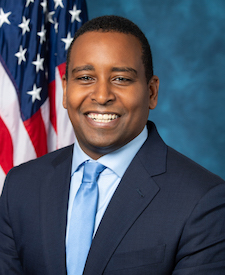
Rep. Joe Neguse
Sponsored bills
Maddy summaryThe Neighborhood Homes Investment Act creates a new tax credit for developers who build or rehabilitate affordable homes in distressed communities. The credit is calculated as the lesser of (1) the difference between development costs and sale price, (2) 40% of development costs, or (3) 32% of the national median home price. It applies only to homes sold to qualified homeowners with income up to 140% of area median income in designated "qualified census tracts" (areas with high poverty rates, low median home values, and low median family income). Developers must meet quality standards and repay the credit if the home is sold within 5 years of the affordable sale. This credit aims to address the "value gap" that prevents housing development in distressed communities by incentivizing affordable home construction and rehabilitation.
Maddy summaryHR 2850, the Youth Sports Facilities Act of 2025, amends the Public Works and Economic Development Act of 1965 to expand eligibility for federal grants to include youth sports facilities. It specifically requires these facilities to address sedentary lifestyles and obesity, prioritize low-income rural youth in underserved communities, and serve children lacking access to physical education spaces or living in areas with high opioid use or violence. The bill mandates that grant-funded projects must benefit highly rural communities with limited tax revenue and support economic development through youth sports infrastructure. It directly affects communities and children in rural, underserved, or high-risk areas by directing federal funding toward building or improving local sports facilities. The key mechanism is modifying existing grant criteria to prioritize these specific community needs through new eligibility requirements.
Maddy summaryHR 2830, the Public Safety Officer Concussion and Traumatic Brain Injury Health Act of 2025, requires the CDC to collect and publicly share data on concussions and traumatic brain injuries (TBIs) affecting public safety officers (including firefighters, police, and emergency responders). The bill directs the CDC to update its website and develop outreach materials to share this information with medical professionals, public safety employers, mental health providers, patients/families, and researchers. Key provisions include compiling evidence-based practices for diagnosis, treatment, and prevention, and consulting with affected groups to ensure the information meets their needs. This bill creates a centralized information resource but does not mandate new treatments or funding for specific programs.
Maddy summaryThis bill directs the Secretaries of Agriculture and the Interior to complete the Continental Divide National Scenic Trail as a continuous route within 10 years of enactment, using existing land acquisition authorities under the National Trails System Act. It establishes a joint Forest Service-Bureau of Land Management "Trail Completion Team" to coordinate with federal, state, Tribal, local governments, and landowners to identify trail gaps, explore land agreements, and develop a comprehensive 3-year plan. The plan must detail trail gaps, opportunities for land easements, and specific development costs. The bill explicitly states it does not create new land acquisition authority or prioritize trail land purchases over other federal land needs.
Maddy summaryHR 2881, the COAST Anti-Drilling Act of 2025, prohibits the federal government from issuing new oil and gas leases in four specific coastal planning areas: the North Atlantic, Mid-Atlantic, South Atlantic, and Straits of Florida. This directly affects the Department of the Interior (specifically the Secretary) and oil and gas companies seeking to explore or develop resources in these regions. The bill amends the Outer Continental Shelf Lands Act to ban all new leasing authorizations in these areas, as defined by the 2024-2029 leasing program notice. It does not affect existing leases or operations but prevents future development in these designated coastal zones.
Maddy summaryThis bill amends the Wild Free-Roaming Horses and Burros Act to change how the Bureau of Land Management manages horse and burro populations. It requires using fertility control vaccines as the first priority method for population management, replacing previous steps. Crucially, it directs the Secretary to prioritize recruiting and training military veterans for these fertility control tasks, including through the PZP applicator certification program, with veterans receiving appropriate compensation. This directly affects wild horse and burro populations through new management methods and military veterans through new training and contracting opportunities under the program.
Maddy summaryHR 2849, the West Coast Ocean Protection Act of 2025, prohibits federal oil and gas exploration, development, and production on the outer Continental Shelf off the coasts of California, Oregon, and Washington. It directly affects oil and gas companies seeking leases in four specific planning areas: Washington/Oregon, Northern California, Central California, and Southern California. The bill amends existing law to block the Secretary from issuing any leases or authorizations for these activities in those designated zones. This creates a permanent ban on offshore drilling in these regions, replacing previous federal leasing plans.
Maddy summaryHR 2812, the Youth Lead Act, amends an existing agricultural act to allocate $5 million annually for youth organizations from fiscal years 2026 through 2030. This funding is specifically designated for youth organizations under the amended section of the Agricultural Research, Extension, and Education Reform Act of 1998. The bill does not create new eligibility rules or define "youth organizations," but directs existing federal funds toward this purpose. It directly affects qualifying youth organizations that receive these annual grants. The provision is a straightforward funding mechanism with no other substantive policy changes.
Maddy summaryHRES 319 is a non-binding resolution recognizing Clela Rorex, a Boulder County, Colorado, clerk who issued the first same-sex marriage license in the U.S. to Dave McCord and Dave Zamora in April 1975. It honors her decision to grant marriage licenses to same-sex couples despite threats and public opposition, noting she issued six licenses total before the Supreme Court legalized same-sex marriage nationwide in 2015. The resolution specifically acknowledges her civil rights leadership and courage, and expresses support for Boulder County’s designation of July 23 as "Clela Rorex Day." As a commemorative resolution, it does not create new laws or policies.