

Ukrainian Adjustment Act of 2025 This bill provides a streamlined process for certain Ukrainian nationals (including accompanying spouse and children) who are living in the United States to receive lawful permanent resident status. Specifically, the bill permits Ukrainian nationals who have been paroled into the United States after February 20, 2014, to apply for and receive lawful permanent resident status. Additionally, the Department of Homeland Security (DHS) may waive grounds for inadmissibility (excluding certain crimes or security related grounds) for individuals who apply for status adjustment. DHS must establish vetting requirements (including an interview) for applicants that are equivalent to those under the United States Refugee Admissions Program. The bill also preserves eligibility for the status adjustment of certain battered spouses whose eligibility for such status stemmed from a marriage that has terminated. Finally, the bill requires DHS to issue guidance to implement these requirements and establishes a deadline for eligible individuals to apply for adjustment.
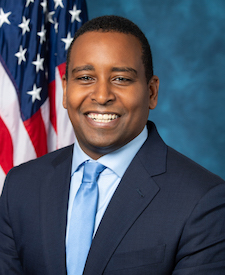
Rep. Joe Neguse
Sponsored bills
Maddy summaryThis bill prohibits U.S. federal executive agencies from renewing or entering contracts for specific consumer products containing PFOS or PFOA (types of harmful PFAS chemicals) after its effective date. Covered items include nonstick cookware, cooking utensils, and furniture/carpet treated with stain-resistant coatings. Agencies must prioritize purchasing PFAS-free alternatives when available and practical for these items. The law applies to all contracts entered into six months after enactment.
Maddy summaryHRES 359 is a symbolic House resolution supporting the designation of National Fentanyl Awareness Day in 2025. It aims to increase public awareness about the dangers of fake or counterfeit fentanyl pills, particularly their impact on families and young people. The resolution encourages existing law enforcement efforts to combat counterfeit pill distribution but does not create new laws or funding. It specifically highlights the rising threat of fentanyl-laced pills, which have contributed to over 51,000 fentanyl-related overdose deaths in 2024. This is a ceremonial resolution focused on awareness, not policy change.
Maddy summaryThe Equality Act (HR 15) amends federal civil rights laws to explicitly prohibit discrimination based on sexual orientation and gender identity in employment, housing, public accommodations, credit, and jury service. It expands existing protections under the Civil Rights Act of 1964 by adding sexual orientation and gender identity as protected characteristics under sex discrimination prohibitions. The bill clarifies that discrimination against LGBTQ people is a form of sex discrimination, consistent with the Supreme Court's Bostock decision, and adds specific definitions for gender identity and sexual orientation. This legislation directly affects businesses, employers, housing providers, financial institutions, and government entities that serve the public. The bill creates a more comprehensive legal framework to address discrimination that LGBTQ people face in multiple aspects of daily life.
Maddy summaryHR 3067, the Arctic Refuge Protection Act, repeals the existing oil and gas program for the Arctic National Wildlife Refuge (ANWR) and designates approximately 1.56 million acres of the refuge's Coastal Plain as wilderness. This directly affects federal management of the ANWR, halting potential oil drilling in the designated area. The bill requires the Secretary of the Interior to administer the newly designated wilderness area under the Wilderness Act, treating it as part of the existing wilderness within ANWR. The change prevents future oil and gas development on this specific portion of the refuge.
Maddy summaryThe RESEARCHER Act (HR 3054) requires federal research agencies to develop policies addressing financial instability for graduate students and postdoctoral researchers at federally funded universities. It mandates the Office of Science and Technology Policy to create guidelines within six months covering stipend increases (including location-based indexing), healthcare access, housing, food security, and family care support. The bill also adds new data collection requirements to track stipends and financial challenges by demographics, and directs the National Academies to study these issues with a report due within two years. Federal agencies must implement these guidelines within six months and report progress annually to Congress.
Medicare for All Act This bill establishes a national health insurance program that is administered by the Department of Health and Human Services (HHS). Among other requirements, the program must (1) cover all U.S. residents; (2) provide for automatic enrollment of individuals upon birth or residency in the United States; and (3) cover items and services that are medically necessary or appropriate to maintain health or to diagnose, treat, or rehabilitate a health condition, including hospital services, prescription drugs, mental health and substance abuse treatment, dental and vision services, long-term care, gender affirming care, and reproductive care, including contraception and abortions. The bill prohibits cost-sharing (e.g., deductibles, coinsurance, and copayments) and other charges for covered services. Additionally, private health insurers and employers may only offer coverage that is supplemental to, and not duplicative of, benefits provided under the program. Health insurance exchanges and specified federal health programs terminate upon program implementation. However, the program does not affect coverage provided through the Department of Veterans Affairs or the Indian Health Service. The bill also establishes a series of implementing provisions relating to (1) health care provider participation; (2) HHS administration; and (3) payments and costs, including the requirement that HHS negotiate prices for prescription drugs. Individuals who are age 18 or younger, age 55 or older, or already enrolled in Medicare may enroll in the program starting one year after enactment of this bill; other individuals may buy into the program at this time. The program must be fully implemented two years after enactment.
Maddy summaryThis bill amends the Visit America Act to require the Assistant Secretary of Commerce for Travel and Tourism to specifically identify and promote music tourism destinations both domestically and internationally. It directs the agency to highlight music-related attractions (like venues, studios, and museums) and events (such as festivals and concerts) in travel promotion efforts, including for international visitors. The bill also mandates annual reports to Congress on progress toward these tourism goals. It formally defines "music tourism" as travel to music-related sites or events, aligning with the bill's focus.
Maddy summaryHR 3030, the Highway Formula Fairness Act, adds a new provision allowing the Transportation Secretary to provide extra highway funding to states that have experienced population growth since the last census, proportional to their population increase. This directly affects states with rising populations by potentially increasing their federal highway funds based on demographic changes. The bill also mandates a study by the Transportation Secretary to assess whether current highway funding formulas fairly distribute funds based on highway user taxes and state contributions, and to develop recommendations for modernizing the system. The study must be completed and reported to Congress within 90 days of the bill's enactment.
Maddy summaryThis bill requires most private health insurance plans to cover diagnostic and supplemental breast exams with no out-of-pocket costs (like deductibles or copays) for enrolled patients. It specifically covers exams used to evaluate abnormalities found in screenings (diagnostic) or for high-risk screening without abnormalities (supplemental), based on medical guidelines. Plans can still require prior authorization for these exams, and state laws offering stronger protections remain in effect. The rule takes effect for plan years starting January 1, 2026.