

Military Spouse Licensing Relief Act of 2021 This bill provides for the portability of professional licenses of service members and their spouses who are relocated, because of military orders, outside of the jurisdiction that issued the license. Specifically, a professional license in good standing of a service member or spouse shall be considered valid at a similar scope of practice and in the discipline applied for in the new jurisdiction for the duration of such military orders. To establish and maintain eligibility, a service member or spouse must (1) provide a copy of the military orders to the licensing authority in the new jurisdiction; (2) remain in good standing with the licensing authority that issued the license; and (3) submit to the authority of the licensing authority in the new jurisdiction for the purposes of standards of practice, discipline, and fulfillment of any continuing education requirements. The bill also provides that if a service member or spouse is licensed to operate in multiple jurisdictions through an interstate licensure compact, the service member or spouse is subject to the requirements of the compact or the applicable provisions of the state law rather than the provisions of this bill.
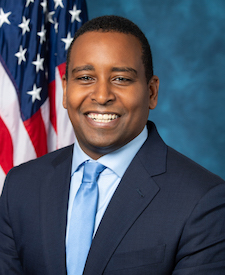
Rep. Joe Neguse
Sponsored bills
Rights for the Transportation Security Administration Workforce Act of 2022 or the Rights for the TSA Workforce Act of 2022 This bill modifies the workplace rights, protections, and benefits applicable to Transportation Security Administration (TSA) personnel. Specifically, the bill by December 31, 2022, eliminates personnel authorities of the Department of Homeland Security (DHS) and the Department of Transportation governing the conditions of employment for TSA employees, thus making TSA employees subject to the personnel management system applicable to other federal employees; sets forth transition rules that protect the pay rates, leave rights, and other rights of TSA employees; and requires DHS to consult with the exclusive representative of TSA screening employees to carry out the conversion of those positions. The bill also permits the TSA to consult with organizations representing federal air marshals to address concerns, including mental health and suicide rates; directs the TSA to ensure its employees are provided proper guidance regarding prevention and protections against COVID-19; requires the TSA to provide a one-time bonus payment of $3,000 to each TSA employee carrying out duties that require substantial contact with the public during the COVID-19 national emergency; and requires the Government Accountability Office to report on implementation of the bill, TSA recruitment efforts, and specified TSA personnel policies.
Life Saving Leave Act This bill expands employee medical leave to provide additional time for bone marrow or blood stem cell donations. Specifically, the bill expands leave under the Family and Medical Leave Act of 1993 (FMLA) to provide up to 40 hours of leave every 12 months for related predonation, donation, and postdonation activities. Under the bill, leave may be taken intermittently or on a reduced leave schedule. An employee has the option to substitute accrued paid vacation, personal, or sick leave for the unpaid FMLA time. The bill requires an employee to make a reasonable effort to schedule treatments for when the treatment would not unduly disrupt the employer's activities. Eligible employees may use this leave regardless of the employee's length of employment or the size of the employer.
NAPA Reauthorization Act This bill extends through 2035 and makes other changes to the National Alzheimer's Project. This project supports coordination of federal planning, programs, and other efforts to address Alzheimer's disease and related dementias. In particular, the bill incorporates a focus on promoting healthy aging and reducing risk factors associated with cognitive decline. The bill also expands the membership of the Advisory Council on Alzheimer's Research, Care, and Services to include (1) a researcher with experience recruiting and retaining diverse clinical trial participants, (2) an individual diagnosed with Alzheimer's disease, and (3) representatives from additional federal agencies (e.g., the Department of Justice and the Office of Management and Budget).
Affordable Housing and Area Median Income Fairness Act of 2022 This bill reauthorizes through FY2032 the Community Development Block Grant and other specified programs that support affordable housing. The bill also requires the Department of Housing and Urban Development (HUD) to assess alternative methods of calculating area median income (i.e., any metric used to refer to the median income level for a given area or jurisdiction for purposes of any program administered by HUD) and the use of alternative metrics in order to make housing more affordable for low-income families in urban areas.
Tribal Access to Clean Water Act of 2022 This bill provides funding for and expands access to water resources for Native communities (i.e., Indian tribes and Native Hawaiian communities). First, the bill provides funding for the Indian Health Service to (1) provide essential sanitation facilities to community structures (e.g., schools, hospitals, and tribal offices) that were not previously considered eligible for such service; (2) provide technical assistance; and (3) operate and maintain water facilities that serve Native communities. Next, the bill provides funding for the Department of Agriculture to provide water and wastewater facility grants to eligible entities (e.g., Native communities) that have residents facing significant health risks due to inadequate water supply systems. The bill specifies that these funds shall not require any matching contribution. In addition, the bill reauthorizes through FY2032 the Bureau of Reclamation's Rural Water Supply Program. Further, the bill provides funding for and establishes a grant program for tribal clean water access projects. It also provides funding for the Native American Affairs Technical Assistance Program.
WaterSMART Access for Tribes Act This bill allows the Department of the Interior to reduce or waive the nonfederal share of certain grants and agreements for assisting Indian tribes in planning, designing, or constructing any water management improvement or carrying out any water-related activity if the tribe does not have sufficient funds to pay the cost share.
Federal Firefighters Fairness Act of 2022 This bill makes it easier for federally employed firefighters who contract certain illnesses to qualify for federal workers' compensation. Specifically, the bill provides that chronic obstructive pulmonary disease, mesothelioma, and specified other cancers of those employed in fire protection activities for at least five years are presumed to be proximately caused by such employment for purposes of a disability or death claim under the federal workers' compensation program. This presumption also applies to federal employees employed in fire protection activities for at least five years who experience a sudden cardiac event or stroke within 24 hours of performing a fire protection activity. The bill also requires the Department of Labor to conduct a review to determine whether breast cancer, gynecological cancer, and rhabdomyolysis should be included under the presumption and to conduct periodic reviews to determine whether other diseases should be included. In addition, a person may petition Labor to include another disease under the presumption. An employee in fire protection activities is a firefighter, paramedic, emergency medical technician, rescue worker, ambulance personnel, or hazardous material worker who (1) is trained in fire suppression; (2) has the legal authority and responsibility to engage in fire suppression; (3) is engaged in the prevention, control, and extinguishing of fires or response to emergency situations where life, property, or the environment is at risk, including the prevention, control, suppression, or management of wildland fires; and (4) performs such activities as a primary responsibility.
Clean Water Standards for PFAS 2.0 Act of 2022 This bill directs the Environmental Protection Agency to develop requirements to (1) limit the discharge of perfluoroalkyl and polyfluoroalkyl substances (PFAS) into certain waters of the United States, and (2) publish human health water quality criteria for PFAS. PFAS are man-made and may have adverse human health effects. A variety of products contain the compounds, such as nonstick cookware or weatherproof clothing.
Benjamin Berell Ferencz Congressional Gold Medal Act This bill provides for the award of a Congressional Gold Medal to Benjamin Berell Ferencz in recognition of his service to the United States and the international community during the post-World War II Nuremberg trials and his lifelong advocacy for international criminal justice and the rule of law.