

Wildfire Response and Drought Resiliency Act This bill provides for measures to mitigate wildfires, drought, and other natural and human disasters. Among the bill's other provisions, it sets a minimum rate of pay for federal wildland firefighters and provides parity in pay, benefits, and bonuses for federal structural firefighters; requires implementation of a 10-year National Wildfire Plan; establishes the Saline Lake Ecosystems in the Great Basin States Assessment and Monitoring Program; requires a plan to sustain the survival of critically important fisheries within certain states during periods of extended drought; establishes the Open Access Evapotranspiration (OpenET) Data Program for the delivery of satellite-based evapotranspiration data to certain data users; authorizes the Colorado River Indian Tribes to enter into agreements for conserved water under specified conditions; authorizes, ratifies, and confirms, the Hualapai Tribe water rights settlement agreement; adds specified land to the Hualapai Reservation; establishes a Natural Disaster Grid Mitigation Map that identifies critical electric grid infrastructure in each state that is vulnerable to natural disasters; establishes a grant program to award grants to remove nonnative plant species in riparian areas that contribute to drought conditions; establishes four Centers of Excellence for Wildfire Smoke to carry out research on the effects on public health of smoke emissions from wildland fires; establishes a National Disaster Safety Board; establishes a National Wildland Fire Risk Reduction Program; establishes a basic training program to increase the capacity of environmental justice communities to address disproportionately adverse human health or environmental effects in their communities.
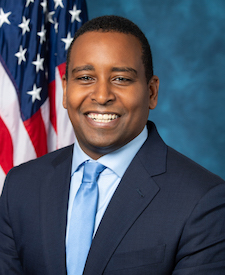
Rep. Joe Neguse
Sponsored bills
Assault Weapons Ban of 2022 This bill makes it a crime to knowingly import, sell, manufacture, transfer, or possess a semiautomatic assault weapon (SAW) or large capacity ammunition feeding device (LCAFD). The prohibition does not apply to a firearm that is (1) manually operated by bolt, pump, lever, or slide action, except for certain shotguns; (2) permanently inoperable; (3) an antique; (4) only capable of firing rimfire ammunition; or (5) a rifle or shotgun specifically identified by make and model. The bill also exempts from the prohibition the following, with respect to a SAW or LCAFD: importation, sale, manufacture, transfer, or possession related to certain law enforcement efforts, or authorized tests or experiments; importation, sale, transfer, or possession related to securing nuclear materials; and possession by a retired law enforcement officer. The bill permits continued possession, sale, or transfer of a grandfathered SAW, which must be securely stored. A licensed gun dealer must conduct a background check prior to the sale or transfer of a grandfathered SAW between private parties. The bill permits continued possession of, but prohibits sale or transfer of, a grandfathered LCAFD. Newly manufactured LCAFDs must display serial number identification. Newly manufactured SAWs and LCAFDs must display the date of manufacture. The bill also allows a state or local government to use Edward Byrne Memorial Justice Assistance Grant Program funds to compensate individuals who surrender a SAW or LCAFD under a buy-back program.
Restore Protections for Dialysis Patients Act This bill specifies that private health insurers may not limit, restrict, or condition benefits for renal dialysis services for individuals with end-stage renal disease as compared to other types of benefits for other medical conditions under Medicare secondary payer rules.
The LTCH Access and Stability Act This bill waives the Medicare site-neutral payment rate for inpatient services at long-term care hospitals for an additional 12 months after the end of the COVID-19 public health emergency. The Centers for Medicare & Medicaid Services must report on the effects of this waiver on hospital admissions and overall access to services, among other information.
Office of Disaster Recovery Act This bill directs the Department of Commerce to establish an Office of Disaster Recovery. The office must direct and implement the Economic Development Administration's post-disaster economic recovery responsibilities and economic recovery support function activities as directed under the National Disaster Recovery Framework. Additionally, the bill increases the federal share for a project for economic recovery in response to a major disaster or emergency declared under the Robert T. Stafford Disaster Relief and Emergency Assistance Act.
Delivering Equity and Justice for Disaster Survivors Act of 2022 This bill directs the Federal Emergency Management Agency (FEMA) to establish, as a subcommittee of the National Advisory Council, the Disaster Equity and Justice Subcommittee. The subcommittee must develop recommendations for improving equitable and just policy and program delivery before, during, and after disasters, including recommendations related to the accessibility, utilization, and receipt of FEMA grants and assistance by underserved, under resourced, and underrepresented populations and communities; strategies and policy recommendations to address the inequitable delivery of disaster assistance, grant programs, technical assistance, and training; and strategies to address any disparate impacts climate change will have on culturally, socially, or economically vulnerable communities.
Susan Muffley Act of 2022 This bill restores the full vested monthly benefits for eligible participants of certain pension plans that were sponsored by Delphi Corporation and terminated as a result of General Motors' bankruptcy in 2009. The Pension Benefit Guaranty Corporation (PBGC) must recalculate and adjust each plan participant's monthly benefits payment. The PBGC must also apply the recalculation to previously-made monthly payments and make a lump-sum payment for any additional benefits based on the recalculation. The bill establishes and provides appropriations to a fund for the payment of these benefits and specifies how the lump-sum payments are treated for tax purposes. Finally, the bill requires the PBGC to report on recommendations to ensure the long-term solvency of its insurance programs.
Indian Health Service Advance Appropriations Act This bill authorizes advance appropriations for the following Indian Health Service appropriations accounts: Indian Health Services, Indian Health Facilities, Contract Support Costs, and Payments for Tribal Leases. The advance appropriations provide new budget authority that first becomes available in the first fiscal year after the budget year. The bill requires the President's budget request to include information on estimates for the advance appropriations.
Securing and Enabling Commerce Using Remote and Electronic Notarization Act of 2022 or the SECURE Notarization Act of 2022 This bill allows a notary public commissioned under state law to remotely notarize electronic records and perform notarizations for remotely located individuals. The bill provides technical requirements for such notarizations, including the creation and retention of video and audio recordings and the use of communication technologies (i.e., video chat). Additionally, the bill requires U.S. courts and states to recognize notarizations—including remote notarizations of electronic records and notarizations of remotely-located individuals—that occur in or affect interstate commerce and are performed by a notary public commissioned under the laws of other states. The bill also allows a notary public to remotely notarize electronic records involving an individual located outside of the United States, subject to certain requirements.
Original Slavery Remembrance Day Resolution of 2021 This resolution supports the designation of a Slavery Remembrance Day and condemns slavery and its progenies.