

Reimagining Asylum Processing Act of 2021 This bill modifies the processing of asylum seekers, including by establishing humanitarian processing centers along the southern border. The Department of Homeland Security must establish at least five humanitarian processing centers to process adult asylum seekers who arrive at the southern border and did not arrive as part of a family unit with minor children. The bill imposes certain requirements on these processing centers, including by (1) requiring a rest period of at least 72 hours from the asylum seeker's arrival before an asylum officer may conduct an interview to determine whether there is a credible fear of persecution, (2) limiting an asylum seeker's detention at a processing center to no longer than 15 days, (3) requiring the processing center to provide legal counsel and interpreters, and (4) requiring that appropriate nongovernmental organizations are authorized to monitor the processing centers for human rights abuses. The bill also changes the processing of asylum seekers generally, including by (1) removing provisions requiring the mandatory detention of an asylum seeker after the credible fear interview; (2) prohibiting the use of information obtained from the interview for immigration enforcement; and (3) requiring an asylum officer conducting the interview to consider whether an asylum seeker is eligible for other forms of relief, such as special immigrant juvenile status.
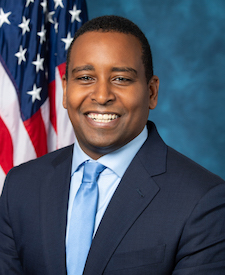
Rep. Joe Neguse
Sponsored bills
No Bonuses in Bankruptcy Act of 2021 This bill prohibits debtors in bankruptcy proceedings from paying bonuses to certain individuals including insiders (such as relatives) and highly compensated employees.
Special Immigrant Visas for Afghan Fulbright Scholars Act of 2021 This bill authorizes special immigrant visas for qualifying citizens or nationals of Afghanistan who were selected for certain educational and cultural exchange programs. Specifically, a citizen or national of Afghanistan (and any accompanying spouse or child of such an individual) may be eligible for a special immigrant visa if the individual was selected on or after October 7, 2001, to participate in a qualifying educational or cultural exchange program administered by the Department of State, including the J. William Fulbright Educational Exchange Program.
Lifting Immigrant Families Through Benefits Access Restoration Act of 2021 or the LIFT the BAR Act of 2021 This bill repeals certain limits on the eligibility of noncitizens who lawfully reside in the United States for federal means-tested programs, including Medicaid, the Children's Health Insurance Program (CHIP), programs funded through Temporary Assistance for Needy Families (TANF) grants, Supplemental Security Income (SSI), and certain nutrition and housing programs.
Welcoming Evacuees Coming from Overseas to Mitigate Effects of Displacement Act of 2021 or the WELCOMED Act of 2021 This bill makes certain individuals from Afghanistan eligible for any benefit that is available to a refugee, such as resettlement assistance. Specifically, this bill shall apply to a national of Afghanistan (or an individual with no nationality who last habitually resided in Afghanistan) who is temporarily paroled into the United States for urgent humanitarian reasons or significant public benefit during the four-year period beginning on July 1, 2021.
Afghan and Iraqi Allies Resettlement Improvement Act This bill addresses the settlement of Afghan and Iraqi special immigrant visa (SIV) holders. (Generally, SIV holders are individuals who received visas due to their work with the U.S. Armed Forces in Iraq or Afghanistan.) The Department of Health and Human Services must survey long-term outcomes, such as employment, housing, and educational attainment, of SIV holders as part of its annual survey of refugees. The Department of State must implement additional ways to deliver information in certain languages (i.e., Dari, Pashto, or Urdu) to prospective SIV holders about resettlement in the United States to assist with their adjustment process. The State Department and the Department of Defense must jointly establish a temporary program to offer SIV holders employment as translators, interpreters, and cultural awareness instructors.
Secure Background Checks Act of 2021 This bill extends federal restrictions on the receipt, possession, shipment, and transportation of firearms and ammunition to two new categories of persons: persons who fail to meet the minimum age requirements imposed by federal law and by the law of their resident state; and persons who are out-of-state residents and do not qualify for an exception, such as the temporary loan or rental of a firearm for lawful sporting purposes. Additionally, the bill imposes criminal penalties—a fine, a prison term of up to 10 years, or both—on an individual who ships, transports, or receives a firearm or ammunition while under indictment for a crime punishable by imprisonment for a term exceeding 1 year.
Frank Harrison, Elizabeth Peratrovich, and Miguel Trujillo Native American Voting Rights Act of 2021 This bill addresses the voting rights of Native American and Alaska Native voters and voting access on tribal lands. The bill includes provisions expanding the types of facilities that can be used as voter registration agencies; increasing polling site accessibility, including by expanding early in-person voting and providing ballot drop boxes; providing enforcement power to citizens and attorneys general; requiring approval for actions like moving a polling place; validating certain tribal identification for voting or registering to vote; permitting voters to designate another individual to return a ballot on their behalf; and expanding requirements for bilingual voting accessibility. In addition, the bill establishes a Native American voting task force grant program for the purpose of increasing voter outreach, education, registration, turnout, and accessibility for Native American communities. The bill also directs the Government Accountability Office to study and report on (1) the prevalence of nontraditional or nonexistent mailing addresses among Indians, members of tribes, and individuals residing on Indian lands; and (2) the alternatives for removing barriers to voter registration, receipt of voter information and materials, and receipt of ballots.
Maddy summaryHR 4936 grants permanent resident status (a "green card") to a specific individual, Rosa Aurora Sabido-Valdivia, by waiving immigration barriers that would otherwise prevent her from adjusting her status. The bill allows her to apply for permanent residency within two years of enactment, removes any existing removal orders against her, and requires the State Department to reduce an immigrant visa number for her country of birth. It also explicitly denies her family members any preferential immigration benefits based on their relationship to her. This is a case-specific bill affecting only one person, not a general policy change.
Local Public Health And Safety Protection Act This bill authorizes the Department of Justice to make grants to states that allow local governments to impose firearms laws that are more restrictive than state firearms laws. A state that receives a grant must award subgrants to localities to help implement the more restrictive firearms laws.