

Maddy summaryThe Protecting America's Meatpacking Workers Act of 2023 establishes new safety standards for meat and poultry processing facilities to protect workers from injuries and unsafe conditions. The bill prohibits "no fault attendance policies" that penalize workers for taking legally protected leave and requires employers to provide adequate toilet facilities without punishment. It mandates new ergonomic standards to prevent musculoskeletal injuries, increases OSHA inspection resources through $60 million in annual funding, and requires facilities to report infections and deaths during pandemics. The bill directly affects meat and poultry processing workers, their employers, and federal agencies overseeing workplace safety through concrete policy changes to improve working conditions.
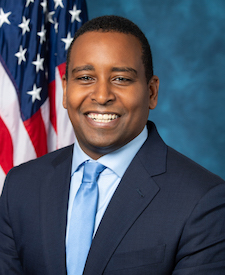
Rep. Joe Neguse
Sponsored bills
Maddy summaryThe Military Spouse Hiring Act expands the Work Opportunity Tax Credit to include military spouses. Employers who hire a spouse of an active-duty military member - certified by a local agency as meeting eligibility requirements on the hiring date - can claim this tax credit. The credit reduces the employer's federal tax liability for hiring such individuals. This provision applies to new hires after the bill's enactment date.
Maddy summaryHR 1310 (SHARE Act) requires the FBI to share criminal history records with state licensing agencies when needed for professional licensing checks across state lines through existing interstate compacts. It directly affects state licensing boards (like those for nurses or contractors) and individuals applying for licenses in multiple states. The bill mandates that states use this data *only* for license applications and prohibits sharing it with other agencies or the public, while allowing a simple "pass/fail" notification to the compact’s governing body.
Maddy summaryThe Air Carrier Access Amendments Act of 2023 updates the 1986 Air Carrier Access Act to improve accessibility for travelers with disabilities. It creates a private right of action (allowing individuals to sue for violations), sets new standards for accessible aircraft (including boarding equipment, seating, lavatories, and communication systems), and requires airports to provide accessible facilities and digital services. The bill establishes clearer complaint procedures with the Department of Transportation, including a 120-day investigation timeline and specific civil penalties for violations like delayed assistance or damage to assistive devices. These changes directly affect air carriers, foreign air carriers, and travelers with disabilities who face barriers such as inaccessible aircraft and inadequate assistance. The legislation aims to address ongoing issues including damaged assistive devices, inaccessible aircraft features, and inappropriate treatment of service animals.
Maddy summaryHR 1249, the Opportunities for Fairness in Farming Act of 2023, regulates agricultural "checkoff programs" that collect mandatory fees from producers to fund commodity promotion and research. The bill prohibits checkoff boards from using funds for lobbying, engaging in conflicts of interest, anticompetitive behavior, or disparaging other commodities. It requires boards to publicly disclose all budgets and disbursements, including recipient identities and purposes, and mandates regular audits by the USDA Inspector General and the Comptroller General. These provisions directly affect all 25+ existing checkoff programs (covering commodities like cotton, dairy, pork, and wheat) by enforcing transparency and preventing misuse of producer-funded promotion dollars.
Maddy summaryThe HITS Act changes tax rules to help independent music producers by allowing them to deduct costs for creating sound recordings as immediate business expenses, rather than spreading costs over time. It specifically applies to U.S.-produced sound recordings (like albums or podcasts) by qualifying independent producers, with a $150,000 annual cap on deductible costs. The bill also enables bonus depreciation for equipment used in these productions, treating them similarly to film or theater projects for tax purposes. This aims to improve cash flow for smaller music businesses by reducing upfront tax burdens on recording costs.
Maddy summaryHR 1247 would award a Congressional Gold Medal to the Freedom Riders collectively, honoring their pivotal role in challenging segregation in interstate travel during the Civil Rights movement. The medal, to be struck by the U.S. Mint and displayed at the Smithsonian Institution, recognizes their nonviolent protests that led to the 1961 federal ban on segregation in interstate public facilities. This is a symbolic tribute with no legal effect, as the bill does not create new policies or alter existing laws.
Maddy summaryHR 1244 authorizes Congress to award a gold medal collectively to Africans and their descendants who were enslaved in the U.S. from 1619 to 1865, recognizing their contributions to America's economic foundation. The bill directs the Treasury Secretary to design and strike the medal, which will be permanently displayed at the Smithsonian's National Museum of African American History & Culture. It also permits the sale of bronze duplicates to cover costs, with proceeds going to the U.S. Mint. This is a commemorative measure, not a policy change, focusing on symbolic recognition of historical contributions.
Maddy summaryThe SECURE Notarization Act of 2023 establishes federal standards for electronic and remote notarizations in interstate commerce, allowing notaries to verify identities and perform notarizations remotely using video communication. Key requirements include creating audio-visual recordings of remote notarizations, verifying identities through two distinct methods (or a credible witness), and retaining recordings for at least 5 years. The bill ensures federal courts and all states must recognize valid notarizations performed under these standards, regardless of whether the notarization was done electronically, remotely, or with a physical signature. It does not require notaries to use electronic methods and preserves state authority to enforce stricter rules, as long as they meet the minimum federal baseline.
Maddy summaryThe Richard L. Trumka Protecting the Right to Organize Act of 2023 strengthens workers' rights to organize unions by making it harder for employers to interfere with organizing efforts. Key provisions include changing the definition of "employee" to make it more difficult to classify workers as independent contractors, prohibiting employers from threatening to permanently replace striking workers, and requiring employers to provide voter lists for union elections. The bill also creates a new electronic voting system for union elections, strengthens whistleblower protections for workers reporting labor violations, and increases penalties for unfair labor practices. These changes directly affect workers seeking to form unions, employers who may interfere with organizing, and labor organizations. The bill aims to make it easier for workers to exercise their right to collective bargaining under the National Labor Relations Act.