

Maddy summaryHR 6124, the Cybersecurity Skills Integration Act, establishes federal grants to help community colleges and critical infrastructure employers develop cybersecurity-focused career training programs. The bill provides up to $500,000 per grant to partnerships between postsecondary institutions and critical infrastructure employers (like energy or transportation sectors) to integrate cybersecurity education into existing workforce programs. These programs must align with national cybersecurity standards, include hands-on learning, lead to recognized credentials, and prioritize diversity, with applicants required to detail how they address specific workforce needs. The legislation authorizes $10 million total over time to support these initiatives, aiming to better prepare workers for in-demand cybersecurity roles in critical infrastructure.
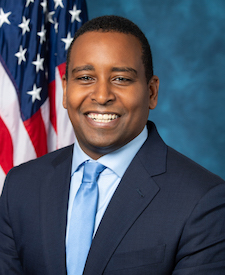
Rep. Joe Neguse
Sponsored bills
Maddy summaryHR 5983, the Clean Water Act of 2023, redefines "protected water resources" under federal law to explicitly include all interstate and intrastate waters (such as intermittent and ephemeral streams), wetlands, and their tributaries. This directly affects federal agencies like the EPA, states managing water quality, and developers or landowners needing permits for activities near these waters. The bill eliminates the Supreme Court’s narrow "navigable waters" definition from Sackett v. EPA (2023), restoring protections for tens of millions of acres of wetlands and millions of miles of small streams. Key mechanisms require the EPA to annually review and adjust exclusions from protections based on scientific evidence, ensuring water bodies critical to drinking water, flood control, and ecosystems remain safeguarded.
Maddy summaryHR 5937, the National Children’s Museum Act, formally designates the National Children’s Museum (operating as a nonprofit under IRS 501(c)(3)) as the official national children’s museum and secures its space in the Ronald Reagan Building. The bill requires the General Services Administration (GSA) to enter a cooperative agreement providing the museum with rent-free use of its current 32,369-square-foot space (suite C-001) for the duration of its existing lease, subject to the museum maintaining its 501(c)(3) status and using the space as a children’s museum. Funding for this arrangement will come from existing GSA funds (Pennsylvania Avenue Development Corporation or International Trade Center funds), and the museum must submit annual reports on operations and finances to specific congressional committees. This procedural bill primarily affects the museum’s operational stability and space agreement, not broader policy.
Maddy summaryThis resolution (HRES 817) formally recognizes four African American legislators - James Lewis, John Willis Menard, Pinckney B.S. Pinchback, and Josiah Thomas Walls - as former Members of the House. It states they duly won election during the Reconstruction Era (1869-1874) but were wrongly denied seats due to contested credentials. The resolution directs the House to recognize them as former Members and display oil portraits of them in a House corridor. This is a symbolic gesture of historical acknowledgment, not a legal change to their status or voting rights.
Maddy summaryHRES 771 is a non-binding resolution expressing the U.S. House of Representatives' support for Israel following Hamas' October 7, 2023, attack. It condemns Hamas' actions, affirms Israel's right to self-defense, and calls for the immediate release of hostages. The resolution also urges enforcement of existing laws restricting aid to terrorists and sanctions against Iran for supporting Hamas. It does not create new policies or allocate funds, as it is a symbolic statement of congressional support.
Maddy summaryHRES 768 is a symbolic House Resolution expressing congressional support for Israel following Hamas' October 7, 2023 attacks. It condemns Hamas' actions, reaffirms Israel's right to self-defense, and calls for the immediate release of hostages. The resolution references the U.S. commitment to Israel's security through existing military aid programs, including the 2016 U.S.-Israel Memorandum of Understanding, and emphasizes enforcement of laws like the Taylor Force Act to prevent U.S. aid from reaching terrorist groups. As a symbolic resolution, it does not create new policy but serves as a statement of congressional support for Israel.
Maddy summaryThe 21st Century Dyslexia Act amends the Individuals with Disabilities Education Act (IDEA) to add a clear definition of dyslexia as a specific learning disability and requires schools to provide equal access to accommodations and services for all eligible children with dyslexia, including those from low-income families, low socioeconomic status families, and limited English proficient children. The bill defines dyslexia as an unexpected difficulty in reading due to challenges in processing the sounds of language, which affects reading, spelling, and speaking abilities. This change ensures students with dyslexia are explicitly recognized under IDEA and schools must provide inclusive support without barriers related to background. The bill directly affects students with dyslexia and their schools by mandating these specific recognition and access requirements.
Maddy summaryThis bill authorizes a one-time $40,000 payment to former Air America employees who served at least five years during 1950-1976, or to their survivors (widows/widowers, dependents, or children). Additional $8,000 payments are provided for each full year of service beyond five years. The total funding is capped at $60 million, with claims due within two years of regulations being finalized. It does not create ongoing benefits or change Air America’s legal status, and payments are issued as a single lump sum.
Maddy summaryThe Safe Schools Improvement Act (HR 6031) requires public elementary and secondary schools to implement comprehensive anti-bullying policies that specifically prohibit harassment based on protected characteristics like race, gender identity, disability, religion, and sexual orientation. It mandates schools to collect and publicly report annual data on bullying incidents while establishing clear grievance procedures for students and parents. The bill also requires states to submit biennial reports on school compliance and supports evidence-based interventions, such as restorative practices, to reduce exclusionary discipline. This legislation directly affects all public K-12 schools and students in the U.S., aiming to create safer learning environments through standardized policy requirements and data transparency.
Maddy summaryHR 6016 creates a new DOE-NSF liaison to improve coordination between the Department of Energy and National Science Foundation on quantum research under the National Quantum Initiative Program, aiming to prevent duplication. It establishes a Manufacturing USA institute focused on scaling quantum computing, sensing, and communication technologies through end-to-end manufacturing ecosystems and workforce development. The bill also mandates two studies: one by the National Academies to assess program progress, and another to identify collaboration barriers among research centers, industry, and academia. These provisions directly affect federal agencies, quantum researchers, and manufacturers working on quantum technologies.