

Maddy summaryHR 2630, the Safe Step Act, requires group health plans and health insurance issuers to establish a clear, transparent process for patients or their doctors to request exceptions to medication step therapy protocols. These protocols typically force patients to try cheaper drugs first before covering more expensive alternatives. The bill mandates that plans must approve exceptions when prior treatments failed, delay would cause serious harm, a treatment is unsafe, or a patient is stable on a previously approved drug, with strict 72-hour (or 24-hour in emergencies) decision timelines. It also requires plans to publish the exception process online and limit documentation requests to only necessary medical information. This law directly affects health insurers, employers offering health plans, and patients using step therapy for prescription drugs.
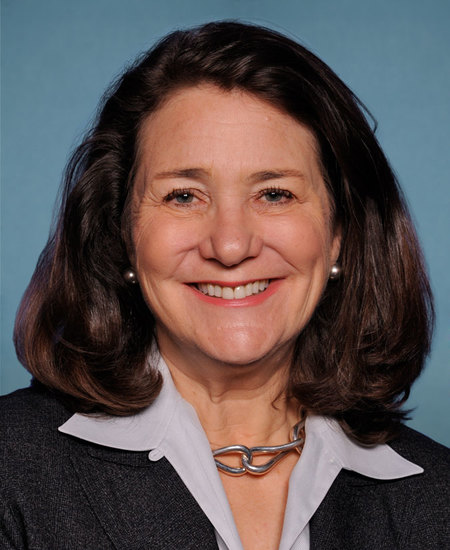
Rep. Diana DeGette
Sponsored bills
Maddy summaryThe School Meals Expansion Act (HR 2567) amends the National School Lunch Act to make it easier for schools to provide free meals to all students. It lowers the income threshold to 25% (from a higher previous rate) and increases the eligibility multiplier to 2.5 for school years starting July 1, 2023. This means school districts with 25% or more students from low-income families can now qualify for full federal funding to offer free meals to all students without requiring individual applications. The bill directly affects local school districts that choose to participate in the community eligibility program under the National School Lunch Act.
Maddy summaryThis bill allows Medicaid coverage for incarcerated individuals during the 30 days preceding their release from public institutions. It directly affects people transitioning from prisons or jails back into communities by extending health coverage during this critical period. The key mechanism amends the Social Security Act to remove a Medicaid exclusion for this 30-day window. Additionally, it requires an 18-month report analyzing correctional healthcare standards, current discharge practices, and the potential impact of this coverage extension on post-release health access.
Maddy summaryHR 2439, the Ally’s Act, requires most private health insurance plans to cover hearing-related services and devices for qualifying individuals. It mandates coverage for cochlear implants, bone conduction devices, maintenance, upgrades every five years, hearing assessments, surgery, and rehabilitation, without separate cost-sharing or medical necessity reviews. This directly affects people with hearing loss who need implantable devices, as defined by a physician or audiologist. The law applies to group health plans under the Public Health Service Act, ERISA, and Internal Revenue Code, taking effect for plan years beginning January 1, 2025.
Verifying Accurate Leading-edge IVCT Development Act of 2023 or the VALID Act of 2023 This bill requires the Food and Drug Administration (FDA) to regulate in vitro clinical tests (IVCTs). Currently, the FDA and the Centers for Medicare & Medicaid Services have authority to regulate in vitro diagnostic devices. The bill defines IVCTs, which includes in vitro diagnostic devices, as tests intended for the collection, preparation, analysis, or in vitro clinical examination of specimens from the human body to provide information about a disease, condition, or treatment. An IVCT may not be introduced into interstate commerce unless it has received FDA premarket approval or is covered by certain exemptions, such as an exemption for a test that (1) was developed and introduced before this bill's enactment and meets certain requirements, (2) is a low-risk test, (3) is solely for public health surveillance, (4) is covered by a technology certification issued under this bill, or (5) has received a humanitarian exemption or emergency use authorization. The FDA may grant upon application a technology certification. Generally, such a certification covers a group of tests that use a single technology and may be evaluated using a representative test. While such a certification is valid, a qualifying IVCT that falls within the scope of the certification shall be cleared for interstate commerce. The bill also imposes various requirements related to IVCTs, including those related to quality control, labeling, and reporting adverse events. The FDA shall have various enforcement authority, including authority to order the recall of an IVCT with a reasonable probability of causing serious adverse health consequences.
Resident Physician Shortage Reduction Act of 2023 This bill increases the number of residency positions eligible for graduate medical education payments under Medicare for qualifying hospitals, including hospitals in rural areas and health professional shortage areas. Current law provides for an increase of up to 200 positions per fiscal year beginning in FY2023, with a total increase of 1,000 positions; each hospital may receive up to 25 additional positions. Current law also provides for an additional increase of up to 200 positions for FY2026, with at least 100 of these positions for psychiatry or related specialties; each hospital may receive up to 10 additional positions. The bill provides for an additional increase of 2,000 positions per fiscal year from FY2025-FY2031; during this period, each hospital may receive up to 75 additional positions in total under the bill and current law. Additionally, one-third of the positions that are made available under the bill must be allocated to hospitals that are already operating above applicable resident limits. The bill also requires the Government Accountability Office to report on strategies to increase the diversity of the health professional workforce, including with respect to representation from rural, low-income, and minority communities.
Maddy summaryThe Women's Health Protection Act of 2023 would protect access to abortion services by prohibiting states from imposing restrictions that are more burdensome than those for comparable medical procedures. The bill would ensure people can obtain abortion services before fetal viability without unnecessary limitations like mandatory waiting periods or biased counseling, and after viability when necessary to protect the patient's life or health. It would preempt state laws that conflict with these protections and allow for civil enforcement actions to challenge restrictive state laws. This bill directly affects people seeking abortion services (including transgender and nonbinary individuals who can become pregnant), health care providers, and states that have implemented abortion restrictions.
Maddy summaryThis bill establishes a federal grant program to fund state and tribal governments in implementing Next Generation 9-1-1 systems, which upgrade emergency call systems to handle text, video, and data alongside voice calls. It requires grantees to develop coordinated implementation plans emphasizing cybersecurity, interoperability, rural/urban equity, and sustainable funding, with funds covering training, infrastructure, and public outreach. The bill mandates an annual report to Congress, creates a cybersecurity center for threat coordination, and forms an advisory board of public safety professionals to guide implementation. It directly affects state/local emergency communications centers, public safety agencies, and the 9-1-1 systems used by the public during emergencies.
Maddy summaryHCONRES 32 is a symbolic resolution supporting International Transgender Day of Visibility, introduced in the U.S. House of Representatives on March 30, 2023. It encourages Americans to observe the day through ceremonies and activities, celebrates transgender achievements, and recognizes the community's fight for dignity amid ongoing discrimination and anti-trans legislation. The resolution does not create new laws or policies - it is a non-binding statement of support, referencing over 700 anti-trans bills introduced in 2021-2023 that target education, healthcare, and identity documents. It directly acknowledges transgender individuals and their contributions without altering any legal rights or obligations.
Maddy summaryHRES 273 is a symbolic House resolution supporting National Women's History Month for March 2023. It expresses the House's recognition of the goals and ideals of this annual observance, which honors women's historical contributions and the women's suffrage movement. The resolution specifically acknowledges women and organizations that promote teaching women's history and the suffrage movement. As a non-binding resolution, it does not create new laws or policies but serves as a formal acknowledgment of historical achievements.