

Maddy summaryHR 2501, titled "Sunset for the 2001 Authorization for Use of Military Force Act," would end the 2001 law (Public Law 107-40) that authorized military force following the September 11 attacks. The bill directly affects military operations currently justified under that 2001 authorization, requiring future actions to seek new congressional approval. It mandates the repeal of the 2001 AUMF 240 days after the bill becomes law, ending its legal authority. The bill states Congress finds the 2001 authorization has been used too broadly, conflicting with constitutional war powers.
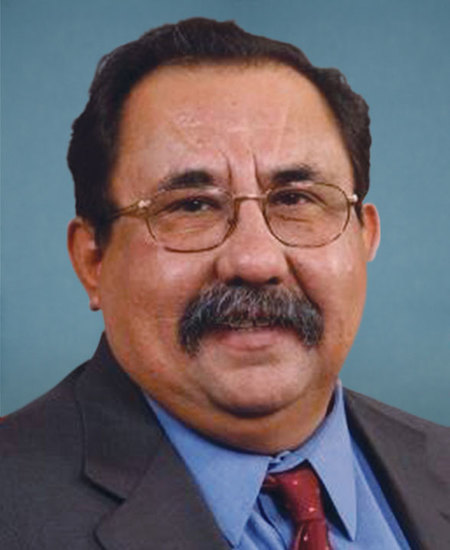
Rep. Raúl M. Grijalva
Sponsored bills
Fair Manufactured Housing Lending Act This bill requires a manufactured or modular home retailer to comply with consumer mortgage protections, including those related to lending origination and conflicts of interest.
Maddy summaryHR 1465, "Violet’s Law," requires federal research facilities to establish standards for placing eligible animals (dogs, cats, primates, guinea pigs, hamsters, rabbits) no longer needed for research with animal rescue organizations, sanctuaries, shelters, or individuals. Federal departments and agencies operating such facilities must create these placement standards within one year of the law's enactment. The law mandates that animals must be vet-certified as healthy (free of infectious disease or physical issues) before placement and prohibits facilities from using animals for commercial trade, breeding, or public exhibitions. This policy directly affects federal research facilities and aims to provide permanent homes for research animals through defined, safe pathways.
Maddy summaryHR 2471, the Vote Without Fear Act, forbids unauthorized firearm possession within 100 yards of entrances to federal election sites (like polling places or ballot-counting locations for federal offices). It prohibits carrying or bringing firearms into this zone, with exceptions for law enforcement on duty, firearms remaining in vehicles, and lawful possession on private property. Violations carry up to 1 year in prison for basic possession or up to 5 years if firearms are intended for criminal use. This bill directly affects voters, election workers, and anyone near federal election sites during voting periods, aiming to enhance safety at these locations.
Supporting Our First Responders Act This bill establishes a competitive grant program to support medical transport and emergency medical services (EMS). The Department of Health and Human Services (HHS) must award the grants to EMS organizations (including for-profit organizations) or state, tribal, territorial, or local governments. Grant-funded activities include (1) providing salaries and stipends for EMS workers; (2) purchasing vehicles, personal protective equipment, and other resources; and (3) establishing community paramedicine or mobile integrated health care initiatives. HHS must also report to Congress about health insurance reimbursement for medical transport and EMS and the feasibility of establishing a federal EMS office.
Maddy summaryHCONRES 31 is a congressional resolution that commends environmental defenders worldwide and condemns violence against them. It directs U.S. agencies to create a dedicated State Department position on environmental defenders, integrate their protection into climate programs, and use diplomatic pressure on countries targeting activists. The resolution also urges U.S. companies and financial institutions to respect defenders' rights in sectors like mining and energy. As a symbolic policy directive - not a new law - it focuses on shifting U.S. government actions to support global environmental defenders.
Maddy summaryHCONRES 32 is a symbolic resolution supporting International Transgender Day of Visibility, introduced in the U.S. House of Representatives on March 30, 2023. It encourages Americans to observe the day through ceremonies and activities, celebrates transgender achievements, and recognizes the community's fight for dignity amid ongoing discrimination and anti-trans legislation. The resolution does not create new laws or policies - it is a non-binding statement of support, referencing over 700 anti-trans bills introduced in 2021-2023 that target education, healthcare, and identity documents. It directly acknowledges transgender individuals and their contributions without altering any legal rights or obligations.
Maddy summaryThis resolution expresses the U.S. House of Representatives' support for recognizing March 31, 2023, as "César Chávez Day" to honor the legacy of César Estrada Chávez, a civil rights leader who founded the United Farm Workers union and advocated for farmworkers' rights. It does not create new laws or policies but formally acknowledges his life and work through a symbolic resolution. The resolution highlights Chávez's achievements, including his nonviolent organizing efforts, the 1975 California Agricultural Labor Relations Act, and his enduring influence on labor rights and social justice. It encourages the public to commemorate his legacy, referencing existing state observances and previous presidential proclamations of the day.
Maddy summaryHR 2403, the Enhanced Background Checks Act of 2023, modifies federal firearm background check procedures to address delays. It requires firearm licensees to wait at least 10 business days after a prospective buyer submits a petition verifying they are not prohibited from owning firearms before completing a sale, if the background check system hasn't cleared the transaction. The bill also mandates the Attorney General to create an electronic petition form, provide timely responses to petitions, and track delays. Additionally, it requires multiple reports analyzing implementation, transaction delays, denial reasons by state, and potential impacts on domestic violence victim safety, with the first report due within 150 days of enactment.
Maddy summaryHR 2425, the Universal Full-Day Kindergarten Act, establishes a federal grant program to fund full-day kindergarten programs in public schools. It directly affects states, local school districts, and children aged 4-6 by requiring funded programs to offer at least 5 hours daily, be free to families, run year-round, and use qualified teachers meeting state standards. The bill allocates funds to states using a formula based on existing Title I education funding, with specific minimums and requirements for equitable access and program quality. States must submit plans detailing how they'll use funds and ensure local districts meet program standards, while the Secretary must report annually on program availability. The program is authorized for fiscal years 2024-2029.