

Maddy summaryHR 3238, the Affordable Housing Credit Improvement Act of 2023, updates the Low-Income Housing Tax Credit (LIHTC) program to increase the availability of affordable housing across the United States. The bill makes several key changes including increasing state funding formulas, modifying tenant eligibility rules to better serve vulnerable populations (such as domestic violence victims and students), and expanding credit eligibility for projects in rural and Native American communities. Specific provisions raise the credit for properties serving extremely low-income households, clarify rules around tenant income increases, and require housing providers to protect victims of domestic violence. The bill also updates terminology from "low-income" to "affordable" throughout the tax code and enhances program transparency through data sharing requirements. These changes aim to make the LIHTC program more effective at creating and preserving affordable housing units for low-income households nationwide.
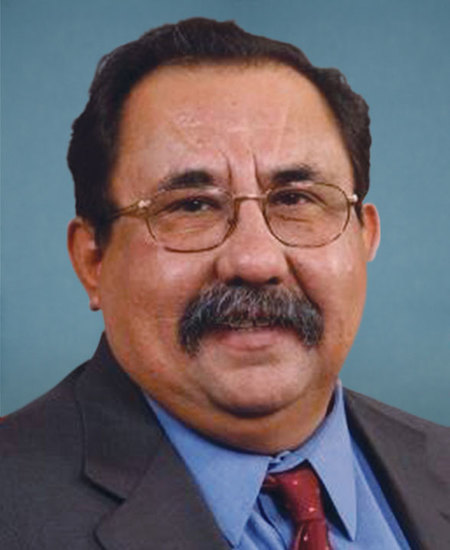
Rep. Raúl M. Grijalva
Sponsored bills
Maddy summaryThis bill requires U.S. public schools to include Asian Pacific American history in all K-12 American history and civics education. It amends the Elementary and Secondary Education Act to mandate that curriculum standards, teacher training, and national assessments explicitly cover this history as part of American history. The policy directly affects students and teachers nationwide by changing how history is taught in public schools. The key mechanism is requiring specific curriculum updates to address gaps in current Eurocentric teaching, ensuring students learn about APA contributions, experiences, and challenges as integral to U.S. history.
Maddy summaryThis bill requires state agencies administering the WIC program to publicly post details about infant formula bid solicitations online within 5 business days of posting the bid. Specifically, states must share the bid title, application website, contact information, and deadline via a central federal portal, which the Secretary must then publish publicly within 5 days. It directly affects state WIC agencies and the public by increasing transparency in how states purchase infant formula. The bill creates a new online information-sharing requirement under the Child Nutrition Act, without changing WIC eligibility or benefits.
Maddy summaryThis bill modifies how distilled spirits taxes collected in Puerto Rico are handled. It repeals a rule limiting tax coverage to Puerto Rico and the U.S. Virgin Islands, allowing those territories to transfer certain distilled spirits taxes to the U.S. Treasury. Crucially, it requires Puerto Rico to transfer 1/6 of the tax difference (above $10.50 per gallon) from rum taxes covered over into the Puerto Rico Conservation Trust Fund, which supports natural habitat conservation and sustainable agriculture. This directly affects Puerto Rico's rum industry and ensures a portion of those tax revenues funds conservation efforts.
Maddy summaryThe Teachers LEAD Act of 2023 establishes a federal grant program to support teacher leadership development in public schools. The bill provides $400 million annually to fund structured leadership programs that allow experienced teachers to take on leadership roles while maintaining classroom teaching responsibilities. These programs must include shared decision-making, distributed leadership, and professional development opportunities, with specific requirements for teacher selection, compensation for leadership duties, and data collection on teacher retention. The program prioritizes high-need schools and aims to improve teacher retention, particularly for teachers from underrepresented populations. The Department of Education will track program effectiveness through annual reporting on teacher retention rates and other metrics.
Maddy summaryThe Transit to Trails Act establishes a federal grant program to fund transportation projects connecting critically underserved communities - defined as areas lacking adequate park access, low-income, communities of color, or environmental justice areas - to public lands and recreational spaces. Eligible entities, including states, local governments, tribal organizations, and park districts, can apply for grants to develop transportation connectors (like bus routes) and culturally appropriate education materials, with priority for projects using low-emission vehicles and offering discounted fares for low-income riders. Grants range from $25,000 to $500,000, with federal funding covering up to 80% of costs, and recipients must report on demographics served and project outcomes. The program is funded at $40 million annually in its fifth year, aiming to improve mobility to parks and recreation in communities historically excluded from such access.
Maddy summaryHR 2757, the Puerto Rico Status Act, establishes a process for Puerto Rico to determine its political status through a plebiscite on November 2, 2025, offering three options: independence, sovereignty in free association with the United States, or statehood. If no option receives a majority in the initial vote, a runoff plebiscite would be held on March 8, 2026. The bill outlines transition processes for each option, including constitutional conventions, implementation steps, and provisions for citizenship, immigration, and economic benefits. It mandates bilingual voter education materials and requires oversight by the Elections Commission and the Attorney General to ensure fair representation of all options. This legislation directly affects Puerto Rico's residents by providing a structured process to choose their permanent political relationship with the United States.
Maddy summaryThis bill redesignates the existing César E. Chávez National Monument in Keene, California, as the César E. Chávez and the Farmworker Movement National Historical Park, while expanding its boundaries to include key sites like Delano’s Forty Acres (where farmworkers organized), Phoenix’s Santa Rita Center, and San Jose’s McDonnell Hall. It preserves and interprets locations central to César Chávez’s work and the farmworker movement’s history, as identified in a 2013 National Park Service study. The bill also authorizes the study of the 1966 Delano-to-Sacramento march route as a potential national historic trail. The park will be managed by the National Park Service under standard park system laws, focusing on public education about this chapter of U.S. labor history.
Maddy summaryThis bill expands eligibility under federal health benefits programs to include employees of Tribal Colleges and Universities (TCUs), alongside existing Indian tribes, tribal organizations, and urban Indian organizations. It amends the Indian Health Care Improvement Act to explicitly allow TCUs (defined under the Higher Education Act) to participate in the Federal Employees Health Benefits (FEHB) Program, enabling their employees to purchase coverage. Additionally, it creates a new "Tribal Insurance Administrative Account" under Title 5 to collect a capped administrative fee (max 3% of average premiums) from tribal employers using the FEHB Program, funding the program's administration. The changes directly affect tribal entities and TCUs seeking to provide federal health benefits to their employees.
Maddy summaryHCONRES 37 is a non-binding congressional resolution expressing that Congress views climate change as an emergency requiring a massive national mobilization. It states that human-caused climate change severely impacts U.S. economic well-being, health, safety, and national security, and urges the President to use existing authorities to accelerate climate action. The resolution does not create new laws or funding but emphasizes the need for urgent, equitable efforts to reduce emissions, address environmental injustice, and support vulnerable communities disproportionately affected by climate impacts. It cites rising global temperatures, extreme weather costs ($165 billion in U.S. disasters in 2022), and the Inflation Reduction Act as context, while clarifying it does not declare an actual national emergency.