

Maddy summaryThis bill requires public schools (K-12) to integrate Asian American, Native Hawaiian, and Pacific Islander (AANHPI) history into their American history and civics curricula. It amends the Elementary and Secondary Education Act to mandate that all required history content "shall include" AANHPI history, updating existing standards for teachers, textbooks, and national assessments. The law directs the Smithsonian Institution’s Asian Pacific American Center to provide educational resources for schools implementing this change. It directly affects school districts, educators, and curriculum developers by requiring concrete revisions to history instruction. The bill does not fund new programs but modifies existing federal education law to ensure AANHPI contributions and experiences are included in required teaching.
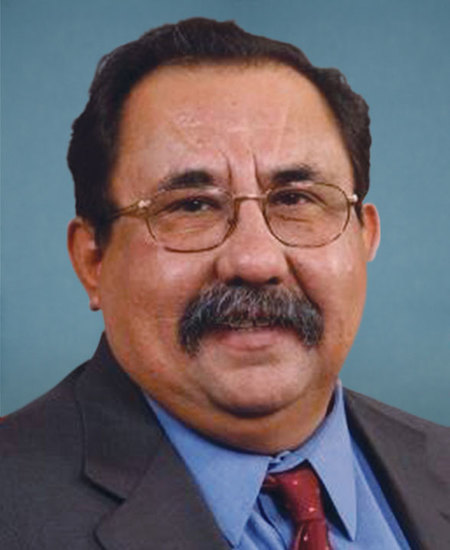
Rep. Raúl M. Grijalva
Sponsored bills
Maddy summaryHR 3422, the Judiciary Act of 2023, would amend the structure of the U.S. Supreme Court by increasing the number of associate justices from eight to twelve. It would also raise the required quorum for court proceedings from six to eight justices. This bill directly affects the Supreme Court's operational structure and composition. The change is purely procedural, altering the Court's size and voting requirements without impacting other legal processes or specific groups of people.
Maddy summaryHR 3445, the Equity and Inclusion Enforcement Act of 2023, strengthens civil rights enforcement in federally funded education programs. It allows individuals to sue for "disparate impact" discrimination (where policies unintentionally harm specific groups) under Title VI of the Civil Rights Act, similar to suing for intentional discrimination. The bill requires schools and programs receiving federal education funds to designate a compliance coordinator and notify students/employees of their contact information. It also creates a new Special Assistant for Equity and Inclusion within the Department of Education to coordinate enforcement efforts and inform the public about their rights under Title VI.
Maddy summaryThe Strength in Diversity Act of 2023 creates a federal grant program to help school districts address racial and socioeconomic isolation in public schools (K-12). Eligible school districts, states, or consortia with significant segregation gaps can apply for planning or implementation grants to develop strategies like equitable school assignments, transportation plans, or teacher recruitment programs. Grants require community engagement, data tracking on academic outcomes and diversity metrics, and plans to sustain efforts after funding ends. The program aims to increase student diversity and improve outcomes for students of color and low-income students in segregated schools.
Maddy summaryThis bill would prevent the leasing of Federal lands for oil and gas development when there's low or no potential for such development. It requires the Secretary of the Interior to first complete a "reasonably foreseeable development scenario" that assesses oil and gas potential before offering land for lease, with public participation required in this process. The bill would stop offering for lease land designated as low or no potential, with limited exceptions for preventing drainage from adjacent producing wells, affecting how public lands and National Forest System lands are managed for oil and gas leasing.
Maddy summaryThe Early STEAM Achievement Act (HR 3374) creates a federal grant program to support early childhood education programs serving children from birth through age eight. It authorizes the Secretary of Health and Human Services to award competitive grants for STEAM (science, technology, engineering, art, and mathematics) activities, prioritizing rural communities (at least one-third of funds) and nonprofit organizations (at least one-quarter of funds). Grants must fund specific activities like teacher training, educational materials, or partnerships with colleges and arts organizations. The program is authorized for fiscal years 2024 through 2028.
Report on Grant Consolidation Authority for Puerto Rico Act This bill requires the Government Accountability Office (GAO) to report to Congress regarding the consolidation of certain grant programs currently available to insular areas and the suitability of such consolidation for Puerto Rico. Further, any official of Puerto Rico from whom the GAO seeks information for purposes of that report must promptly and comprehensively respond to such request for information.
Maddy summaryHRES 319 is a symbolic resolution passed by the U.S. House of Representatives on April 24, 2023, recognizing the federal government's duty to develop a Green New Deal. It states the House believes the government should create a comprehensive plan to address climate change and economic inequality through a 10-year national mobilization. The resolution outlines goals like achieving net-zero emissions by 2050, creating high-wage union jobs, upgrading infrastructure, and prioritizing frontline communities, but it does not establish binding policy or funding mechanisms. As a non-binding resolution, it serves as a statement of legislative intent rather than a law.
Maddy summaryHR 3331, the Improving Mental Health and Wellness in Schools Act, requires public schools participating in federal school meal programs to integrate mental health into their wellness policies. The bill mandates schools to form teams including mental health professionals to develop and update these policies, and to promote mental health assessments, encourage mental health support, and build resilient school environments. It amends the National School Lunch Act to add mental health promotion alongside physical activity and eating disorder prevention, and extends a policy review deadline from 2014 to 2026. This directly affects all K-12 schools receiving federal nutrition funding.
Maddy summaryThis bill directs the U.S. Department of Agriculture to prioritize urban forestry assistance for communities with the lowest tree equity scores - measured by how tree canopy coverage aligns with community factors like income, race, health, and employment. It also creates a $30 million pilot program for public elementary and secondary schools to establish rooftop gardens, requiring at least 20% native plants, organic methods, and curriculum integration on urban agriculture or pollinator habitats. Schools in areas with high population density, respiratory illness rates, or low existing garden access receive priority for funding. The program mandates annual inspections of funded gardens and defines "tree equity score" using tools like American Forests' methodology.