

This bill directs the Federal Aviation Administration (FAA) to require that medications and medical equipment for the emergency treatment of a known or suspected opioid overdose be included in an aircraft emergency medical kit; the FAA must, to the maximum extent possible, follow the guidance of the Aerospace Medical Association. In a 2019 guidance document to the FAA, the Aerospace Medical Association recommended including an opioid antagonist (e.g., naloxone or Narcan) in an aircraft emergency medical kit.
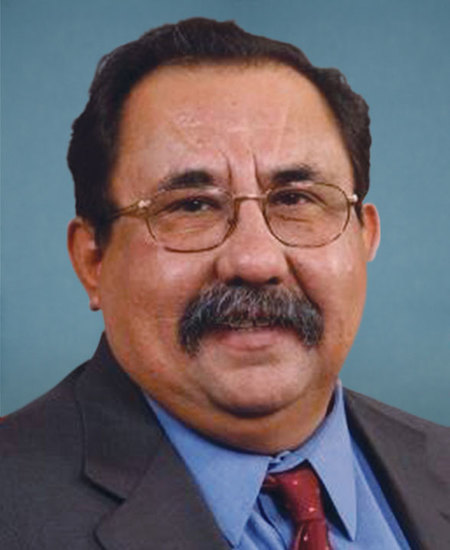
Rep. Raúl M. Grijalva
Sponsored bills
Maddy summaryHRES 439 is a non-binding resolution expressing the House of Representatives' support for keeping the U.S. Postal Service (USPS) as an independent federal agency, not subject to privatization. It highlights USPS's constitutional role, self-sustaining nature (relying on service revenue, not taxpayer funds), and its importance to rural communities, e-commerce, and over 600,000 employees. The resolution urges Congress to take action to preserve USPS's independence, emphasizing that privatization could raise prices, reduce services, and harm the nation's mail infrastructure. As a procedural resolution, it does not change law but formally states the House's position.
Maddy summaryHR 3607, the SYLLABLE Act of 2023, creates a federal grant program to fund high-quality dual language immersion programs for students from low-income families, English learners, and minority children. It authorizes up to $15 million in funding for fiscal year 2024 to award no more than five grants to local educational agencies, requiring partnerships between schools, early childhood programs, and technical assistance providers. The grants support bilingual programs from preschool through fifth grade that use the partner language for at least half of instruction, include teacher training in dual language teaching, and measure student progress in both English and the partner language. The program must serve high-need schools and evaluate outcomes like literacy development, academic achievement, and program effectiveness over five years.
Maddy summaryHR 3606 (FLUENT Act) creates a federal grant program to expand family literacy services for English language learner families, targeting caregivers with limited English proficiency. It authorizes $50 million annually (2024-2028) for grants up to $1 million each to organizations providing research-based programs that include interactive caregiver-child literacy activities, adult education, and school collaboration. The program requires grantees to improve children's English language skills, primary language literacy, and caregivers' ability to support education, with measurable outcomes tracked across seven key areas. It prioritizes "hardest-to-reach" families and mandates services for children under age 8 with caregivers aged 16+.
Maddy summaryHR 3605, the Reaching English Learners Act, creates a new federal grant program to improve teacher preparation for educators working with English learners. The bill authorizes competitive grants to partnerships between colleges and school districts (high-need local educational agencies or early childhood programs) to develop or strengthen teacher training programs. These grants fund evidence-based strategies like bilingual education and dual-language instruction, clinical classroom experiences with English learners, and training on supporting students with disabilities who are English learners. Partners must contribute 50% of costs from non-Federal sources and track outcomes like teacher certification rates and employment in high-need schools. The program aims to ensure future teachers meet state requirements to effectively support English learners in early childhood, elementary, and secondary education.
Maddy summaryHR 3610, the Neighbors Not Enemies Act, repeals specific sections (4067-4070) of the Alien Enemies Act of 1798 from U.S. law. This bill removes the legal authority allowing the president to detain or deport non-citizens during wartime based on that historical statute. The repeal directly affects the federal legal framework governing emergency powers over non-citizens, eliminating a provision dating to the Quasi-War with France. The bill makes no new policy changes but formally removes this outdated legal mechanism from the U.S. Code.
Maddy summaryThis bill prohibits corporal punishment (such as spanking or paddling) in all schools receiving federal funding, directly affecting students, school personnel, and school administrators. It requires schools to notify parents within 24 hours if corporal punishment occurs and establishes enforcement through civil lawsuits by students/parents, Attorney General actions, and Office for Civil Rights oversight. The bill mandates states to submit school climate reports and develop training programs on positive behavioral interventions to reduce exclusionary discipline practices that disproportionately affect students of color, students with disabilities, and other marginalized groups. It creates a grant program to help schools implement these approaches, with priority given to schools with high suspension rates and disciplinary actions. The bill does not apply to private schools or home schools that don't receive federal funding.
Maddy summaryThe AIR PUMP Act requires airlines to provide nursing crew members (like flight attendants and pilots) with reasonable break time to express breast milk for up to one year after their child's birth, as well as a private, non-bathroom space for this purpose. It specifically excludes breaks during critical flight phases and ensures accommodations won't compromise safety, security, or require significant costs (e.g., aircraft modifications). The bill includes anti-retaliation protections for employees who request accommodations or file complaints, and enforces these requirements through the Department of Labor using existing Fair Labor Standards Act mechanisms. This directly affects airline employees who are nursing parents and their employers, aligning airline workplace policies with federal breastfeeding protections.
Maddy summaryHCONRES 47 is a non-binding resolution urging the U.S. Senate to provide "advice and consent" for ratifying the UN Convention on Biological Diversity (CBD), which the U.S. signed in 1993 but has never ratified. Currently, the U.S. participates only as an observer in CBD negotiations without voting rights, limiting its influence on global biodiversity policies that affect national security and economic interests. The resolution notes the U.S. is already legally compliant with the CBD’s obligations under existing law and is a top international conservation funder. It argues that ratification would restore U.S. voting power and alignment with global efforts to address biodiversity loss, which impacts all Americans.
Maddy summaryThis resolution (HRES 423) supports designating May 19, 2023, as "Endangered Species Day" to recognize the importance of protecting at-risk wildlife. It does not create new laws or policies but formally acknowledges the value of species conservation and the 50th anniversary of the Endangered Species Act of 1973. The resolution highlights the biodiversity crisis, the Act's success in preventing extinctions (like for the California condor), and the cultural significance of species to Indigenous communities. It is a symbolic gesture by the House of Representatives, not a binding mandate, intended to raise awareness about conservation efforts.