

Maddy summaryThe Equal Dignity for Married Taxpayers Act of 2023 updates the Internal Revenue Code to use gender-neutral language regarding married couples. It replaces terms like "husband and wife" with "married couple" and "his spouse" with "the individual's spouse" throughout tax code provisions. The bill makes these language changes to ensure the tax code applies equally to all married couples regardless of gender, without altering tax rates, deductions, or other substantive tax policies. This affects all married taxpayers and tax professionals who apply the tax code. The bill is a language update rather than a policy change, making the tax code more inclusive while maintaining existing tax treatment.
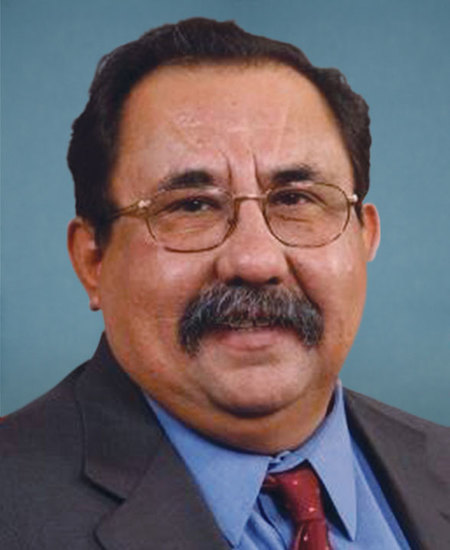
Rep. Raúl M. Grijalva
Sponsored bills
Maddy summaryHR 4335, the VA Loan Informed Disclosure Act of 2023, requires mortgage lenders to include specific information about VA home loan programs in standard mortgage disclosures. The bill amends the National Housing Act to mandate that lenders provide details on VA loans (guaranteed under Title 38) alongside other loan options, including assumptions about prevailing interest rates. This change directly affects lenders processing VA-guaranteed mortgages, ensuring borrowers receive clearer comparisons between VA loans and other financing. The law does not require lenders to verify borrower eligibility for VA loans, only to include the specified disclosure language.
Maddy summaryHR 4272, the Stop Fentanyl Now Act of 2023, directly affects schools, public health systems, and law enforcement by expanding prevention and response efforts to the fentanyl crisis. The bill requires schools to train staff on carrying and administering naloxone (an opioid overdose reversal drug) and provides grants to states for school-based programs, treatment access, and harm reduction tools like fentanyl test strips. It also increases law enforcement resources to disrupt fentanyl trafficking, including targeting online sales, and removes legal barriers for possessing fentanyl test strips. These provisions aim to reduce overdose deaths by improving education, treatment access, and prevention strategies in communities most impacted by fentanyl-laced pills.
Maddy summaryThe HERO Act establishes a national data system to track suicides among public safety officers, including firefighters, EMTs, police, and telecommunicators, collecting detailed statistics by age, gender, occupation, and employment status (career, volunteer, or retired). It mandates annual reports to Congress and public availability of findings to identify suicide trends and effective interventions. The bill also funds peer-support wellness programs for fire/EMS departments, behavioral health programs for healthcare providers, and resources to train mental health professionals on treating public safety personnel. All data collection and program provisions include strict privacy safeguards to protect confidentiality and prohibit using suicide data to deny survivor benefits.
Maddy summaryThis bill reauthorizes the Virginia Graeme Baker Pool and Spa Safety Act by creating a federal grant program to improve swimming pool safety across the United States. The program provides funding to states, Indian Tribes, and qualified nonprofit organizations that have enacted swimming pool safety laws meeting federal standards. Grant recipients must use at least 25% of funds for hiring and training personnel to enforce safety standards and inspect pool drain covers, with the remainder for public education and swimming lessons (limited to 25% of that portion). The bill authorizes $5 million annually from 2024-2028 for these grants and a separate $5 million for public education campaigns, requiring annual reporting on program implementation and effectiveness.
Maddy summaryHR 4241, the Horse Transportation Safety Act of 2023, prohibits transporting horses between states or territories in multi-level motor vehicles (like certain livestock trailers with stacked levels). This directly affects commercial horse transporters moving animals across state lines. The bill adds a civil penalty of $100-$500 per horse per violation for knowingly violating this rule, with separate penalties for each horse transported. It amends the Horse Protection Act to address safety concerns related to transporting horses in vehicles not designed for such travel.
Maddy summaryHR 4268, the Reproductive Health Travel Fund Act of 2023, would provide $350 million annually (2024-2028) in federal grants to nonprofit organizations that help individuals cover travel and logistical costs for accessing abortion care across state lines. The bill directly supports people living in states with abortion bans or severe restrictions who must travel for care, including expenses like transportation, lodging, childcare, meals, and lost wages. Grants may not fund abortion procedures themselves but cover related logistical barriers identified in the bill’s findings, such as increased travel times and costs post-Dobbs. Eligible organizations must provide unbiased, medically accurate assistance, with priority given to those serving individuals traveling to access abortion services.
Maddy summaryHR 4211 requires the EPA to create and update an online compendium of air quality monitoring technologies, including low-cost sensors and satellite data, to help communities understand local pollution patterns. It establishes a working group with environmental justice community representatives to develop templates for integrated monitoring systems that combine ground sensors, modeling, and satellite data. The bill directs the EPA to conduct a national inventory of existing air monitoring infrastructure and identify high-priority areas - particularly near communities disproportionately affected by pollution - to target future monitoring efforts. This aims to address significant air quality variations (up to 800% block-to-block) and support hyperlocal data use for environmental justice communities.
Maddy summaryHR 3698, the Feed Hungry Veterans Act of 2023, amends the Food and Nutrition Act of 2008 to expand eligibility for SNAP (Supplemental Nutrition Assistance Program) benefits to more veterans. It adds four new categories of veterans who can qualify: those with a "catastrophically disabled" status under military disability law, veterans under 65 receiving a pension under specific veteran benefits law, and those meeting existing high-disability rating thresholds. This change directly affects veterans who previously did not meet the program’s eligibility criteria but now qualify under these expanded definitions. The bill takes effect on October 1, 2023, making these eligibility changes operational for SNAP enrollment.
Maddy summaryHR 3519, the Hot Foods Act of 2023, amends the Food and Nutrition Act of 2008 to allow Supplemental Nutrition Assistance Program (SNAP) benefits to be used for hot foods or hot food products ready for immediate consumption at participating retailers. This change directly affects SNAP recipients who purchase such hot foods and retailers that sell them. The key provision removes the previous exclusion of hot foods from SNAP eligibility, while adding a limit that no more than 50% of a retailer's total gross sales from SNAP can come from hot foods. The bill clarifies that hot foods can be purchased for home or immediate consumption, aligning SNAP rules with current retail practices for prepared foods.