

Maddy summaryHR 1715, the Public Health Funding Restoration Act, restores annual funding for the Prevention and Public Health Fund to $2 billion starting in fiscal year 2026. This bill directly affects federal public health programs, including the CDC’s immunization initiatives and state/local health departments, by reversing prior funding cuts. It amends the Affordable Care Act to set the annual funding level at $2 billion, enabling continued support for evidence-based prevention programs like childhood lead poisoning prevention, tobacco cessation, and immunizations. The restored funding aims to maintain existing programs proven to reduce healthcare costs and improve community health outcomes. This change specifically targets the Prevention and Public Health Fund (Section 4002 of the ACA) without creating new programs.
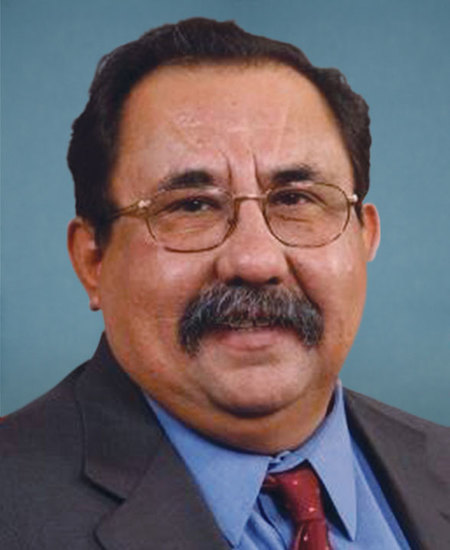
Rep. Raúl M. Grijalva
Sponsored bills
Maddy summaryHR 1645, the Climate and Health Protection Act, continues the Climate and Health program within the CDC's National Center for Environmental Health (or a successor program) through 2026 and beyond. It directs the program to translate climate science for state, local, Tribal, and territorial governments; create tools to help communities prepare for climate impacts; and lead public health planning for climate change. The bill authorizes $110 million annually for this program, with a strict rule that these funds cannot be redirected to other CDC programs. This funding and structure directly affect public health agencies and communities preparing for climate-related health risks.
Maddy summaryThe Pell Grant Sustainability Act (HR 1666) requires the federal government to automatically adjust the maximum Pell Grant amount each year based on inflation, starting with $1,060 for the 2024-2025 academic year. This adjustment uses the Consumer Price Index (CPI) to ensure grants keep pace with rising college costs, directly affecting low-income students who rely on Pell Grants to afford higher education. The bill amends the Higher Education Act to mandate this annual inflation-based increase, rounding the final amount to the nearest $5. It aims to reverse the decades-long decline in grant purchasing power, which covered 80% of college costs in 1974-75 but only 31% by 2022-23.
Maddy summaryThe Keep Americans Safe Act (HR 1674) restricts the sale, transfer, and possession of large capacity ammunition feeding devices (LCFDs) - defined as magazines or similar devices holding more than 15 rounds of ammunition - for most individuals. Exceptions allow law enforcement officers (including campus law enforcement), retired officers, and nuclear security personnel to possess LCFDs under specific conditions. The bill requires new LCFDs to have serial numbers and manufacturing dates, permits federal seizure of violative devices, and authorizes federal grant programs to fund buy-back initiatives for LCFDs. It directly affects gun owners and manufacturers while preserving access for covered law enforcement and security personnel.
Maddy summaryThe MEME Act prohibits federal officials - including the president, vice president, members of Congress, and their immediate family - from issuing, sponsoring, or promoting financial assets (such as cryptocurrencies, meme coins, or securities) for personal financial gain. It applies during their term of service and for 180 days before/after, targeting misuse of public office for private profit. Violations carry civil penalties up to $250,000, require disgorgement of profits, and allow private lawsuits for harm caused. The bill specifically defines "covered assets" to include digital assets like meme coins, aiming to prevent conflicts of interest and corruption through financial exploitation.
Maddy summaryThe PAST Act of 2025 amends the Horse Protection Act to ban harmful practices known as "soring," which deliberately cause pain to horses to exaggerate their gait for shows. It specifically prohibits devices like action devices (e.g., boots causing friction) and weighted shoes on Tennessee Walking Horses, Racking Horses, and Spotted Saddle Horses at events. The bill increases penalties, including escalating disqualifications for repeat offenses (180 days → 1 year → 3 years) and raises fines for violations to $5,000 per offense. It also requires stricter licensing for inspectors and mandates public posting of violation records to help event organizers enforce rules.
Maddy summaryThe American Dream and Promise Act of 2025 would create pathways to permanent residency for certain immigrant youth who entered the U.S. as children (Dream Act component) and for individuals from countries with Temporary Protected Status or Deferred Enforced Departure (American Promise Act component). To qualify, applicants must meet continuous physical presence requirements (since January 1, 2021 for Dream Act applicants, and for 3+ years for American Promise applicants), pass background checks, and satisfy educational or employment criteria. Conditional permanent resident status would be granted initially, with the option to convert to full permanent residency after meeting additional requirements like earning a degree, serving in the military for two years, or demonstrating three years of earned income. The bill includes fee exemptions for low-income applicants, establishes a grant program to assist applicants with legal help, and creates specific procedures for background checks and appeals.
Maddy summaryThis bill expands Medicare, Medicaid, and CHIP coverage for specific cancer diagnostic tests, directly affecting cancer patients enrolled in these programs. It requires Medicare to cover genetic tests like DNA sequencing (80% of cost) and limits testing frequency to once at diagnosis, once for recurrence, and as needed for treatment planning. Medicaid and CHIP must include these tests as mandatory coverage starting January 1, 2027, with states given flexibility to comply via state legislation. The bill also mandates a new HHS education program to inform doctors and the public about genomic testing for cancer care.
Maddy summaryHR 1591, the Security Clearance Review Act, requires the FBI Director to approve security clearances and access to classified information for political appointees and special government employees working in the Executive Office of the President. It prohibits these individuals from holding such clearances or accessing classified information without the FBI Director’s specific authorization. If the FBI denies or revokes clearance, the Director must immediately notify the President and Congress; if the President overrides this decision, they must provide written justification to Congress within 30 days. The bill directly affects high-level political appointees and special government employees in the White House and its immediate offices, altering the clearance process for this specific group.
Maddy summaryHR 1638, the CROWN Act of 2025, prohibits discrimination based on hair texture or hairstyle that is commonly associated with race or national origin, particularly affecting Black individuals who wear natural or protective styles like braids, locs, cornrows, twists, or Afros. The bill explicitly expands protections under existing federal civil rights laws (including the Civil Rights Act of 1964 and the Fair Housing Act) to cover hair-based discrimination in federally funded programs, housing, public accommodations, employment, and equal rights. It requires schools, employers, and other entities receiving federal funds to eliminate grooming policies that disproportionately target these hairstyles. The law clarifies that such discrimination violates federal law and provides enforcement through existing civil rights mechanisms.