

Maddy summaryThe Stateless Protection Act of 2024 would create "stateless protected status" for noncitizens in the United States who are stateless (not recognized as citizens by any country). The bill would allow these individuals to apply for protection from deportation, employment authorization, travel documents, and adjustment to lawful permanent resident status (a green card). It establishes a process for determining statelessness, requiring the Department of Homeland Security to consider evidence from various sources including international organizations and foreign governments. The legislation directly affects approximately 218,000 stateless people living in the U.S., who currently face barriers to work, education, healthcare, and travel due to their legal status. The bill also includes provisions for preventing statelessness internationally and updating U.S. laws to prevent future cases of statelessness.
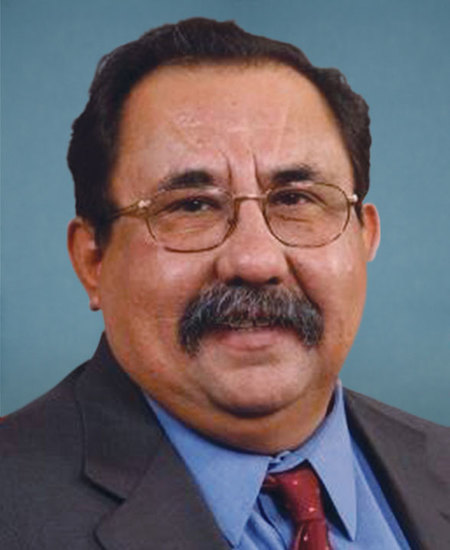
Rep. Raúl M. Grijalva
Sponsored bills
Maddy summaryThis bill would create a new wealth tax on individuals with significant assets, targeting those with net assets exceeding $50 million. It would tax assets between $50 million and $1 billion at 2%, and assets above $1 billion at 3% (potentially increasing to 6% if certain health care legislation is enacted). The tax would apply to individuals, married couples treated as a single taxpayer, and certain trusts, with specific valuation and reporting requirements for assets. The bill also includes $70 billion in funding over 10 years for the IRS to enforce this new tax and related reporting requirements.
Maddy summaryHCONRES 99 is a symbolic congressional resolution honoring Wadee Alfayoumi, a 6-year-old Palestinian-American boy murdered in a hate crime on October 14, 2023, after being stabbed 26 times by a perpetrator who made anti-Muslim and anti-Palestinian remarks. The resolution recognizes Congress's condemnation of hate crimes, Islamophobia, and anti-Palestinian discrimination, while affirming the United States' "zero tolerance" for such violence. As a procedural resolution (not a law), it does not create new policies but formally honors Wadee and his family, emphasizing the need to reject dehumanizing rhetoric targeting religious or ethnic groups.
Maddy summaryThe National Patient Safety Board Act of 2024 establishes an independent board within the Department of Health and Human Services to prevent patient safety events in healthcare settings. The Board analyzes de-identified health data to identify safety patterns, recommend solutions, and address disparities, while ensuring reports cannot be used in liability cases. It requires annual public reporting on progress, solutions, and unmet needs, and mandates that at least three board members have patient safety expertise and two have personal experience with safety events. This bill directly affects healthcare providers, systems, and patients by creating a data-driven system to proactively improve safety outcomes nationwide.
Maddy summaryHR 7634, the Plastic Pellet Free Waters Act, prohibits plastic pellets and pre-production plastic materials from being discharged into water through wastewater, spills, or runoff from specific facilities. It directly affects plastic polymer production facilities, plastic molding and forming facilities, and any point source (like packaging or transport operations) handling plastic pellets. The bill requires the EPA to issue a final rule within 60 days of enactment banning these discharges and updating all relevant wastewater, stormwater, and performance standards in permits and regulations. This creates a legal requirement for facilities to prevent plastic pellet pollution in waterways, targeting a major source of ocean plastic pollution.
Maddy summaryThis concurrent resolution (HCONRES 97) recognizes the gender wage gap, noting that women working full-time earn 84 cents for every dollar earned by men. It highlights racial disparities (e.g., Latinas earn 57 cents, Black women 69 cents) and the economic impact of the gap, including $965 billion in annual lost wages for women. As a symbolic resolution, it does not create new laws or policies but formally acknowledges the issue and reaffirms Congress’s commitment to addressing wage inequality.
Maddy summaryHRES 1074 is a symbolic House resolution reaffirming congressional support for a two-state solution to the Israel-Palestine conflict. It explicitly states the House supports Israel's right to exist as a Jewish, democratic state and recognizes Palestinians' right to sovereignty through a separate state. The resolution identifies a two-state solution as the best path to lasting peace and condemns efforts opposing this approach. As a non-binding resolution, it does not create new law or policy but formally expresses the House's position on this issue. It was introduced by multiple House members on March 12, 2024.
Maddy summaryHCONRES 95 is a symbolic resolution recognizing March 10, 2024, as "Abortion Provider Appreciation Day." It expresses congressional support for abortion providers and staff who deliver care amid heightened restrictions following the Dobbs decision. The resolution honors their work, acknowledges the threats they face, and condemns the impact of abortion bans on access and provider safety. It does not create new laws or alter existing policies, serving only as a non-binding statement of support.
Maddy summaryHRES 1068 is a symbolic House resolution condemning all forms of rape and sexual violence against women globally, both during conflicts and in peacetime. It specifically denounces the weaponization of sexual violence in recent conflicts (including Hamas attacks on Israel, Sudan, Ukraine, and others) and highlights ongoing issues in the U.S. and worldwide. The resolution calls for international action to hold perpetrators accountable and prioritize eliminating gender-based violence in conflict settings. As a non-binding statement, it does not create new laws or allocate funding but formally expresses congressional disapproval of sexual violence.
Maddy summaryThis bill requires states to immediately stop Medicaid recovery claims against beneficiaries' estates. Specifically, it mandates that states withdraw all existing liens within 90 days of enactment and notify affected individuals or their estates about the withdrawal. The law also prohibits states from initiating, maintaining, or collecting any future Medicaid recovery claims for benefits correctly paid. It directly affects Medicaid recipients and their heirs who were previously subject to state recovery efforts. The key mechanism is the 90-day deadline for states to remove existing liens and cease all new recovery actions.