

Maddy summaryHR 7940, the Coal Cleanup Taxpayer Protection Act of 2024, changes bonding rules for coal mining reclamation. It bans self-bonding (where mining companies guarantee their own cleanup costs) for both federal and state programs, requiring operators to replace existing self-bonds within 90 days or at permit renewal. The bill also mandates states to submit detailed reports on past bond forfeitures and financial forecasts, and establishes new rules for surety bonds and collateral - prohibiting coal mines, equipment, or coal itself as collateral. These changes directly affect coal mining operators, state regulators, and federal oversight under the Surface Mining Control and Reclamation Act.
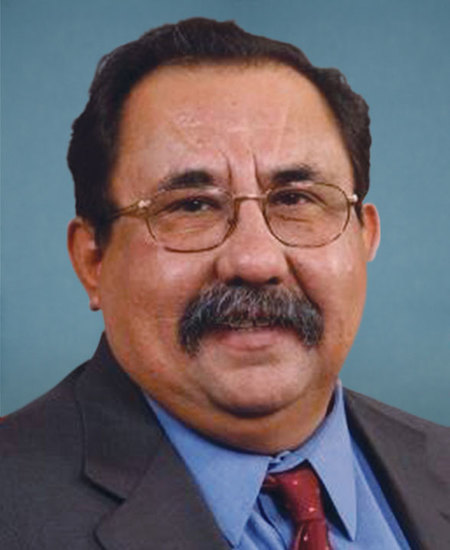
Rep. Raúl M. Grijalva
Sponsored bills
Maddy summaryThe Bond Improvement and Reclamation Assurance Act updates bond requirements for surface coal mining under the 1977 Surface Mining Control and Reclamation Act. It requires mining operators to post bonds covering the full cost of land reclamation, with amounts adjusted annually for inflation and based on factors like mine closure timing, topography, and reclamation difficulty. The bill mandates bond recalculations when permits are transferred, conditions change (e.g., mine closure or water pollution), or permit renewals occur, and holds both original operators and controlling owners jointly liable for reclamation costs. This ensures sufficient funds are available to reclaim mined land if operators fail to meet their obligations, protecting public lands and water resources.
Maddy summaryHRES 1128 is a non-binding resolution recognizing the Muslim holy month of Ramadan and extending best wishes for Eid al-Fitr. It formally acknowledges Ramadan's significance as a period of fasting and spiritual renewal for Muslims worldwide, and expresses solidarity with Muslim communities in the United States and globally. The resolution does not create new laws or policies - it is purely ceremonial, affirming respect for the observance without any concrete policy changes or direct effects on individuals or groups. Introduced by Representatives Dingell, Tlaib, Carson, Grijalva, Cárdenas, Omar, and Schakowsky on April 10, 2024, it serves as a symbolic gesture of inclusion.
Maddy summaryThis bill amends a 1955 law to expand tribal leasing authority. It allows federally recognized tribes to lease land held in trust for them for up to 99 years, including land for tribes not specifically named in the original law. The change specifically adds language to cover all tribes listed by the Secretary under the 1994 Tribal Recognition Act. This directly affects all federally recognized tribes by giving them standardized leasing flexibility for trust lands. The bill makes a technical update to existing law without creating new programs or funding.
This resolution recognizes the anniversary of the Civil Rights Act of 1866 and its impact on establishing that all Americans are protected equally under the law.
Maddy summaryThe STAGE Act establishes a federal grant program to support professional nonprofit theaters. Eligible theaters (nonprofits producing live performances with fair wages, 3+ years of programming, and financial need or community focus) can receive grants covering payroll, facility repairs (prioritizing accessibility), marketing, and workforce training. Grants max out at $16 million per entity or 20% of its prior year's expenses, with $1 billion annually allocated for 2024-2028. The bill also mandates a federal study on sustaining the nonprofit arts sector, including input from artists and community stakeholders.
Maddy summaryThe STAMP Act of 2024 bans state and local governments from taxing menstrual products. It prohibits taxes on items like pads, tampons, menstrual cups, discs, and period underwear that meet industry standards. The law directly affects consumers purchasing these products and state/local governments that previously imposed such taxes. It takes effect 120 days after enactment, removing tax burdens on menstrual products nationwide.
Maddy summaryThis bill establishes federal grant programs to expand physician training in rural areas. It provides funding to create new rural residency programs (requiring over 50% of training to occur in rural settings) and technical assistance for organizations developing these programs. Grants for new programs last 3 years (extendable) and target high-need specialties like primary care, maternal health, and psychiatry. The bill authorizes $12.7 million annually from 2025-2029 for these initiatives, directly affecting rural hospitals, medical schools, and health centers seeking to train physicians for rural practice.
Maddy summaryHCONRES 101 is a symbolic resolution introduced in the U.S. House of Representatives on March 22, 2024, by multiple cosponsors. It recognizes that people with disabilities face daily barriers accessing federally funded facilities and reaffirms support for the existing Americans with Disabilities Act (ADA) and Architectural Barriers Act of 1968. The resolution pledges to prioritize "universal and inclusive design" in future federal infrastructure projects but does not create new legal requirements or alter current accessibility standards. As a concurrent resolution, it has no binding effect and serves only to express congressional support for accessibility goals.
Maddy summaryHRES 1110 is a symbolic resolution passed by the U.S. House of Representatives in March 2024 to commemorate March 2024 as National Women’s History Month. It formally supports the month’s goals, recognizes women and organizations advancing women’s history education, and highlights the intersectional contributions of Black, Hispanic, Asian, Native American, Pacific Islander, LGBTQ+, and disabled women throughout U.S. history. The resolution has no legal effect or policy changes - it serves solely as a ceremonial acknowledgment of historical milestones and ongoing advocacy for gender equality. It directly affects all Americans by affirming the significance of women’s historical contributions through official congressional recognition.