

Border Business COVID-19 Rescue Act This bill establishes and provides funding for a program whereby the Small Business Administration (SBA) must make loans to border businesses directly impacted by COVID-19 (i.e., coronavirus disease 2019). A border business is any entity, otherwise eligible for an SBA disaster loan, that (1) has its principal office in the United States, (2) has annual revenue of up to $500,000, and (3) is located within 25 miles of the U.S. border. The SBA shall make loans of up to $500,000 to border businesses, and these loans must have a zero percent interest rate. Loan recipients must use the funds to mitigate the effects of COVID-19 on their business, including by (1) providing paid sick leave to employees unable to work because of the pandemic, (2) making rent or mortgage payments, (3) purchasing personal protective equipment, or (4) paying for logistical expenses associated with border closures due to the pandemic. Recipients may also request an advance on the loan, which shall not be less than $10,000. Further, certain recipients may be forgiven up to 100% of the loan, less any amount received under other specified COVID-19 economic relief programs.
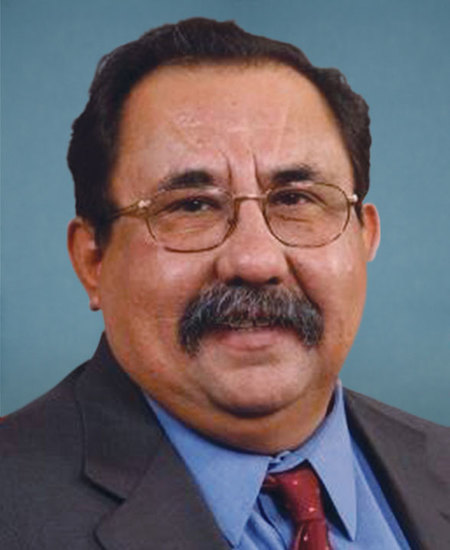
Rep. Raúl M. Grijalva
Sponsored bills
Bicycle Commuter Act of 2021 This bill modifies provisions relating to the tax exclusion for employer-provided fringe benefits for bicycle commuting. Specifically, the bill (1) repeals the suspension (for the period between 2018 and the end of 2025) of the exclusion, (2) includes bikeshare (a bicycle rental operation providing for pick up and drop off) and low-speed electric bicycle within the definition of bicycle for purposes of the exclusion, and (3) modifies the limitation on the exclusion to provide for a specified monthly limitation amount (i.e., 30% of the parking fringe benefit amount).
Presidential Tax Transparency Act This bill requires the President, the Vice President, and certain candidates for President and Vice President to disclose federal income tax returns for the ten most recent taxable years. The returns must be disclosed to the Federal Election Commission (FEC), which must make the returns publicly available after redacting information that is necessary for protecting against identity theft, such as Social Security numbers. If the tax returns are not disclosed to the FEC as required by this bill, the Internal Revenue Service must provide the returns to the FEC upon receiving a written request from the FEC.
Incentivizing Medicaid Expansion Act of 2021 This bill provides an enhanced federal matching rate to every state that expands Medicaid coverage for individuals who are newly eligible under the Patient Protection and Affordable Care Act, regardless of when such expansion takes place. Under current law, the enhanced Federal Medical Assistance Percentage (FMAP) is equivalent to 100% in 2014 through 2016, 95% in 2017, 94% in 2018, 93% in 2019, and 90% thereafter. The bill retains this enhanced FMAP, but bases it on a term of years rather than on specific dates. The bill applies retroactively.
This joint resolution prohibits the issuance of a manufacturing license, technical assistance license, or export license with respect to certain proposed agreements or transfers of specified defense articles or services to Saudi Arabia, the United Kingdom, Spain, or Italy.
This joint resolution prohibits the proposed foreign military sale of certain defense articles and services to Saudi Arabia.
Transparent Representation Upholding Service and Trust in Congress Act or the TRUST in Congress Act This bill requires a Member of Congress, as well as any spouse or dependent child of a Member, to place specified investments into a qualified blind trust (i.e., an arrangement in which certain financial holdings are placed in someone else's control to avoid a possible conflict of interest) until 180 days after the end of their tenure as a Member of Congress.
Wall Street Tax Act of 2021 This bill imposes a 0.1% excise tax on certain purchases of stocks, bonds, and derivatives. The tax applies to the purchase of a security if (1) such purchase occurs on, or is subject to the rules of, a qualified board or exchange located in the United States; or (2) the purchaser or seller is a U.S. person. The tax applies to transactions with respect to a derivative if (1) the derivative is traded on, or is subject to the rules of, a qualified board or exchange located in the United States; or (2) any party with rights under the derivative is a U.S. person. The bill exempts from such tax (1) initial issues of securities; and (2) any note, bond, debenture, or other evidence of indebtedness which is traded on or is subject to the rules of, a qualified board or exchange located in the United States, and has a fixed maturity of not more than 100 days. The tax applies to transactions by a controlled foreign corporation and must be paid by its U.S. shareholders.
This resolution expresses support for the goals and ideals of Korean American Day and honors the 118th anniversary of the arrival of the first Korean immigrants to the United States.
This resolution expresses the sense of the House of Representatives that Congress should ensure that the U.S. Postal Service is not privatized and remains an independent establishment of the federal government.