

Ultra-Millionaire Tax Act of 2021 This bill imposes a tax on the net value of all taxable assets of the taxpayer on the last day of any calendar year (wealth tax). The amount of such tax shall be equal to the sum of 2% of the amount of taxpayer assets exceeding $50 million but not in excess of $1 billion, plus the applicable percentage (3% or 6% if certain legislation is in effect) of the net value of such taxable assets exceeding $1 billion. There is no tax on the net value of taxable assets not in excess of $50 million. The bill defines net value of all taxable assets as the value of all property of the taxpayer, real or personal, tangible or intangible, wherever situated reduced by any debts (including secured debts) owed by the taxpayer. The definition excludes property with a value of $50,000 or less, tangible personal property, certain property used in a trade or business, and collectibles. The Internal Revenue Service (IRS) must audit annually not less than 30% of taxpayers required to pay the tax imposed by this bill. The bill provides funding to the IRS for FY2022-FY2032 for enforcement of the requirements of this bill, taxpayer services, and for business system modernization.
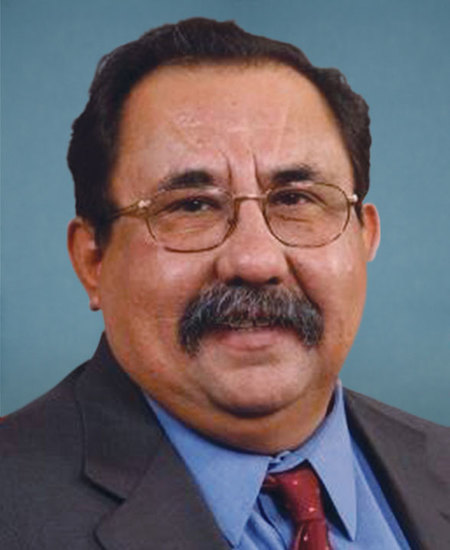
Rep. Raúl M. Grijalva
Sponsored bills
Arctic Refuge Protection Act This bill repeals the Arctic National Wildlife Refuge oil and gas program. The bill designates approximately 1,559,538 acres of land within Alaska in the Arctic National Wildlife Refuge as a component of the National Wilderness Preservation System.
Coronavirus Containment Corps Act This bill requires the Centers for Disease Control and Prevention (CDC) to develop, within 21 days, a nationwide contact tracing strategy for COVID-19 (i.e., coronavirus disease 2019) that addresses issues including workforce needs. To implement that strategy, the bill establishes grant programs in the CDC and the Indian Health Service (IHS). It also expands programs in the Department of Labor. The CDC must award grants to state and local health departments to, among other purposes, hire and train individuals for contact tracing positions and related roles. The IHS must award similar grants to tribes and tribal organizations. Additionally, Labor must award grants for states and other jurisdictions to support recruitment and employment of dislocated workers and other individuals in public health roles. Grants and contracts that include contact tracing in their scope of work must comply with prevailing wage requirements that apply to federal service contracts. Employees who work under such grants or contracts must receive similar compensation to that prevailing in the locality where work is performed. The CDC and Labor must report certain information on specified timelines, and the Government Accountability Office must evaluate the activities of grantees.
Federal Death Penalty Abolition Act of 2021 This bill prohibits the imposition of a death penalty sentence for a violation of federal law. It eliminates statutory authority for the death penalty as a sentencing option for federal offenses. It also requires a person who was sentenced to death before enactment of this bill to be resentenced.
Expanded Genetic Screening Act of 2021 This bill requires state Medicaid programs to cover noninvasive prenatal genetic screening for pregnant women. (Noninvasive prenatal genetic screening uses naturally occurring fetal DNA from the mother's blood to screen for genetic abnormalities.)
This resolution celebrates the life and achievements of Cecil Corbin-Mark, an environmental justice change agent, and expresses condolences to his family, friends, and colleagues on his passing.
This resolution supports the designation of National Tribal Colleges and Universities Week.
This resolution recognizes Black History Month as an important time to celebrate the unique contributions of all LGBTQ+ Black Americans in U.S. history.
Muhammad Ali Congressional Gold Medal Act This bill provides for the posthumous award of a Congressional Gold Medal to Muhammad Ali.
Coronavirus Medicaid Response Act This bill increases the Medicaid federal matching rate, also known as the Federal Medical Assistance Percentage (FMAP), for states and U.S. territories that experience economic downturns (i.e., high unemployment) beginning on or after January 1, 2020, in accordance with specified requirements and limitations. The bill's increase is in addition to previously enacted FMAP increases relating to COVID-19 (i.e., coronavirus disease 2019) but may not result in an FMAP greater than 95%.