

Newborn Screening Saves Lives Reauthorization Act of 2021 This bill reauthorizes through FY2026 and revises several programs and activities relating to newborn screening for certain conditions and genetic, endocrine, and metabolic diseases. Among its changes, the bill reauthorizes and makes mandatory the Hunter Kelly Research Program at the National Institutes of Health, and national surveillance activities conducted by the Centers for Disease Control and Prevention. The bill also aligns statutory requirements for research on non-identified newborn blood spots with federal regulations governing research on human subjects. These blood spots are collected as part of newborn screening programs, and some states make them available for biomedical and public health research. Under current regulations, research on non-identified bio-specimens such as blood spots is not considered to be research on human subjects, to which additional protections apply.
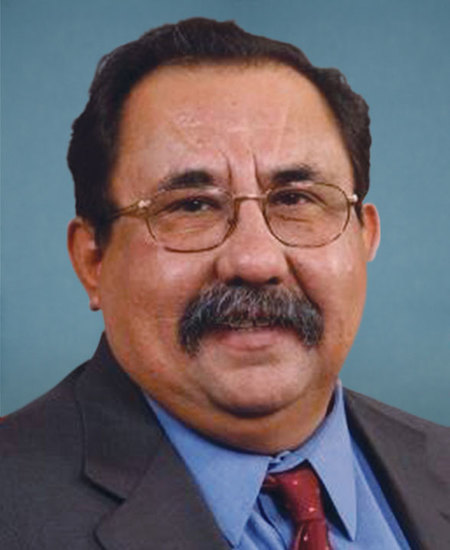
Rep. Raúl M. Grijalva
Sponsored bills
Healthy Future Students and Earth Pilot Program Act of 2021 This bill establishes a pilot program for providing 100% plant-based food and milk options in school meals. The Department of Agriculture must award up to 50 grants to school food authorities. Recipients may use funds for activities including training food service personnel on serving 100% plant-based options and covering additional costs of buying plant-based foods and milks.
Vanessa Guillén Military Justice Improvement and Increasing Prevention Act This bill modifies the process and policy related to the disposition of charges and convening of courts-martial for certain sexual assault cases and other specified offenses under the Uniform Code of Military Justice (UCMJ). Among other elements, the bill provides that the determinations on the preferral, disposition, and referral of charges for specified offenses under the UCMJ must be made by a commissioned officer of the Armed Forces who is designated as a court-martial convening authority (in grade O-6 or higher) and who is available for detail as trial counsel, has significant trial experience, and is outside the chain of command of the member subject to the charges.
Blue Carbon Protection Act This bill establishes programs, grants, and requirements to protect and restore marine and blue carbon ecosystems, which are vegetated coastal habitats and include mangroves, tidal marshes, and other tidal or salt-water wetlands that have the capacity to sequester and store carbon.
Presumptive Benefits for War Fighters Exposed to Burn Pits and Other Toxins Act of 2021 This bill establishes a presumption of service-connection for specified diseases associated with exposure to burn pits (an area used for burning solid waste in open air without equipment) and other toxins by veterans who were awarded specified medals on or after August 2, 1990. Under a presumption of service-connection, specific conditions diagnosed in certain veterans are presumed to have been caused by the circumstances of their military service. Health care benefits and disability compensation may then be awarded. Under the bill, if the Department of Veterans Affairs (VA) receives a written petition to add a disease to the list, the VA must request a determination by the National Academies of Sciences, Engineering, and Medicine with respect to whether there is a positive association between the exposure of humans to a covered toxin and the occurrence of the disease in humans. The bill makes disability or death of certain employees from specified diseases compensable as a work injury. Specifically, such employees are those who were employees of the Department of State, the Department of Defense, or an element of the intelligence community on or after August 2, 1990, and carried out job responsibilities for at least 30 days during a contingency operation.
Puppy Protection Act of 2021 This bill requires the Department of Agriculture to expand standards that govern the humane handling, care, treatment, and transportation of animals to include new requirements for commercial dog dealers. Specifically, the standards must require dog dealers to provide to dogs adequate housing, exercise, and veterinary care; appropriate and nutritious food; continuous access to potable water; and meaningful socialization with humans and compatible dogs for at least 30 minutes each day. The standards must also include requirements for breeders to use safe breeding practices and make all reasonable efforts to find humane placement for retired breeding dogs.
Renewable Energy for Puerto Rico and the U.S. Virgin Islands Act This bill addresses renewable energy, energy efficiency, and energy storage in Puerto Rico and the Virgin Islands. Specifically, the Department of Agriculture (USDA) must establish a grant program under which USDA may award grants for renewable energy systems, energy efficiency activities, energy storage, smart grids, or microgrids. In addition, USDA may award grants to train residents of Puerto Rico or the Virgin Islands to develop, construct, maintain, or operate renewable energy systems. The Department of Energy must ensure that its national laboratories offer to provide technical assistance to grant recipients. The Government Accountability Office must study and report on renewable energy and energy efficiency in Puerto Rico and the Virgin Islands.
This joint resolution nullifies the Oil and Natural Gas Sector: Emission Standards for New, Reconstructed, and Modified Sources Review rule published by the Environmental Protection Agency on September 14, 2020. The rule finalized amendments to new source performance standards under the Clean Air Act for the oil and natural gas sector, such as an amendment that removed limitations on methane emissions from such sector.
Work Without Worry Act This bill modifies eligibility for Social Security Disability Insurance (SSDI) benefits for individuals who have a disability that began before age 22. Under current law, these individuals may obtain SSDI benefits based on the work record of a retired, disabled, or deceased parent. However, an individual with earnings after age 22 that exceed a specified monetary limit (i.e., constitute substantial gainful activity) permanently loses eligibility for such benefits. This bill allows individuals to retain eligibility for such benefits regardless of the amount of earnings after age 22. Additionally, individuals who apply for SSDI benefits on a parent's record and also independently qualify for Social Security benefits on their own record will receive the larger of the two benefit amounts.
This bill repeals the Authorization for Use of Military Force Against Iraq Resolution of 2002.