

Maddy summaryThe Marriage Equality for Disabled Adults Act removes a rule requiring disabled adult children to remain unmarried to receive Social Security benefits. It ensures married disabled adult children, or their spouses, can maintain eligibility for Social Security Disability Insurance and Medicaid without losing benefits due to marriage. The bill changes how income and resources are counted, so a spouse's income and resources are no longer deemed against the disabled adult child for benefit calculations. It also requires states to preserve Medicaid eligibility for these individuals at the same level as if they were unmarried.
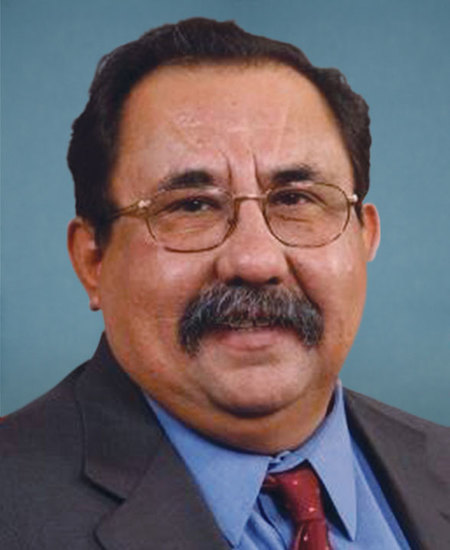
Rep. Raúl M. Grijalva
Sponsored bills
Maddy summaryThis bill modifies Medicare Part B late enrollment penalties to better accommodate people with temporary coverage gaps. It increases the penalty rate from 10% to 15% of the monthly premium but limits the penalty period to twice the months without coverage (instead of 12-month increments). It also excludes months with COBRA, retiree, or VA health coverage from penalty calculations and creates a special enrollment period when such coverage ends. These changes directly affect Medicare Part B enrollees who lost employer or retiree coverage, reducing their potential extra fees for late enrollment.
Maddy summaryThis bill adds audiology services to Medicare's covered benefits under Section 1861(s)(2)(KK), effective January 1, 2025. It allows qualified audiologists to provide hearing and balance assessments and diagnostic/treatment services without requiring a physician referral or supervision, directly affecting Medicare beneficiaries seeking these services and audiologists practicing under state law. Payment will be 80% of the lower of actual charge or the Medicare fee schedule. The bill does not expand the types of audiology services covered but changes how they are accessed and paid for under Medicare.
Maddy summaryHR 6417 amends the existing "Ending Importation of Russian Oil Act" to ban imports of energy products (classified under Harmonized Tariff Schedule chapter 27) produced at any refinery using crude oil originating in Russia. This directly affects U.S. importers and companies bringing in such refined petroleum products. The key provision prohibits these imports regardless of where the refinery is located, targeting oil that has been "laundered" through foreign processing. The bill updates the existing law by adding this origin-based import ban as a new section.
Maddy summaryThis bill creates a framework for states to develop their own universal health care systems by applying for waivers from certain federal health care requirements. States must demonstrate they can provide comprehensive coverage meeting or exceeding current federal standards (like Medicaid, Medicare, and CHIP) for at least 95% of residents within 5 years, with the federal government redirecting funds that would have gone to federal programs to support state systems. States must include specific protections like reproductive health care coverage and submit regular reports on coverage rates, affordability, and quality. The bill includes special provisions to protect Indian health care services and ensure they remain accessible under state plans. States that fail to meet coverage goals may face consequences, including potential termination of their waiver.
Maddy summaryThe Medicare Advantage Consumer Protection and Transparency Act requires Medicare Advantage plans to submit detailed, standardized data about supplemental benefits, healthcare services provided (encounter data), coverage denials, prior authorization requirements, quality measures, and provider networks. Plans must submit this information annually in standardized formats, with penalties of up to 10% in reduced payments for incomplete submissions. The data will be publicly reported, increasing transparency for beneficiaries and oversight officials. This law directly affects Medicare Advantage plans and beneficiaries by providing clearer information about plan offerings and performance. It focuses on concrete data collection and reporting requirements rather than altering benefit structures.
Maddy summaryHR 5840, the Transportation Security Screening Modernization Act of 2024, simplifies the process for transportation workers to obtain multiple TSA security credentials. It requires the TSA to allow individuals to apply for and renew programs like the TWIC (Transportation Worker Identification Credential) and HAZMAT Endorsement through a single enrollment at any TSA center, with a combined fee lower than separate applications. The bill mandates coordinated expiration dates for all credentials and ensures state-issued commercial driver's licenses reflect the correct HAZMAT endorsement validity. These changes aim to reduce duplication and costs for workers needing multiple security clearances. The TSA must implement these changes within two years and publish details online.
Maddy summaryThe Climate Resilience Workforce Act establishes a coordinated federal system to build a workforce for climate resilience, directly affecting workers in climate-related sectors and prioritizing frontline communities (low-income, communities of color, Tribal communities) and populations facing employment barriers (undocumented individuals, formerly incarcerated people). Key mechanisms include grant programs for state and local climate resilience planning, job creation grants requiring 40% of jobs to go to frontline communities and populations facing barriers, and minimum labor standards including $15/hour wages (increasing annually), employer-paid health insurance, and protections against discrimination. The bill creates an Office of Climate Resilience, a Climate Resilience Equity Advisory Board, and a Center for the Climate Resilience Workforce to define climate resilience sectors and ensure equitable hiring practices. It also removes employment barriers through immigration status protections, criminal record reforms, and drug testing policy changes for climate resilience workers.
Maddy summaryThe End Diaper Need Act of 2023 creates a federal program that will provide free diapers and incontinence supplies to low-income families with infants, toddlers, medically complex children (3+ years old with chronic health conditions), and low-income adults with disabilities. It allocates $200 million annually from 2024-2027 to fund this assistance through states and community organizations, making medically necessary diapers eligible for reimbursement through health savings accounts and other health benefit programs. The legislation requires integration with existing services like Medicaid, WIC, and TANF, and includes annual reporting requirements and an evaluation of the program's effectiveness within two years.
Maddy summaryHR 5663, the ALS Better Care Act, creates a new Medicare payment system to improve reimbursement for specialized care services provided to ALS patients. It establishes a $800 per visit payment rate starting in 2025 for qualified ALS care facilities, with annual increases based on market basket adjustments. The bill requires the Comptroller General to report on appropriate payment amounts and ensures this new payment is in addition to, not replacing, existing Medicare payments for ALS-related services. This aims to reduce wait times, support facilities in rural areas through telehealth access, and address funding challenges for ALS clinical trials.