

College Student Hunger Act of 20 21 This bill expands the eligibility of students at institutions of higher education to participate in the Supplemental Nutrition Assistance Program (SNAP). SNAP eligibility for students is expanded to include certain low-income students who (1) are employed a minimum of 10 hours per week (currently 20 hours) during the regular school year, (2) are eligible for a federal Pell Grant, (3) have an expected family contribution equal to zero, or (4) are independent. Additionally, the bill directs the Department of Education to provide notification to certain students regarding their eligibility for SNAP benefits, the Inspector General of the Department of Agriculture (USDA) to conduct an audit of the operations of the Food and Nutrition Service to examine the procedures and outreach practices used by the service to provide to states information about the eligibility of students at institutions of higher education for participation in the program, USDA to update its state outreach plan guidance, and USDA to implement projects to decrease student hunger at institutions of higher education and to reduce barriers to college students fully utilizing SNAP benefits at these institutions.
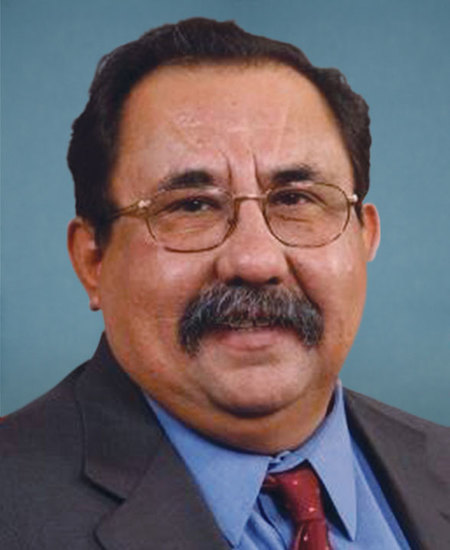
Rep. Raúl M. Grijalva
Sponsored bills
This concurrent resolution recognizes the disparity between wages paid to Latina women, and its impact on women, families, and the nation and reaffirms Congress' commitment to supporting equal pay and to narrowing the gender wage gap.
Caring for Survivors Act of 2021 This bill increases the monthly rate of dependency and indemnity compensation payable to surviving spouses through the Department of Veterans Affairs. The bill also adjusts the amount payable to surviving spouses and children of veterans who were rated as totally disabled for a period of less than 10 years before their death.
This concurrent resolution supports the goals and ideals of the National Day of Silence (during which students vow to remain silent to bring attention to the harassment and discrimination faced by lesbian, gay, bisexual, transgender, queer and questioning individuals in schools).
Maddy summaryThis resolution (HRES 356) expresses the U.S. House of Representatives' condemnation of police brutality worldwide, including excessive force, extrajudicial killings, and disproportionate harm to racial minorities, women, migrants, and LGBTQIA+ communities. It urges the U.S. government to stop arms sales to countries with documented police brutality, end militarized policing tactics domestically and abroad, and redirect funds toward community programs. As a symbolic resolution, it does not create new laws but calls for specific policy actions from the executive branch and businesses.
Maddy summaryHRES 344 is a non-binding resolution that declares racism a public health crisis in the United States, directly affecting Black, Latino, Native American, and other communities of color who experience severe health disparities. It cites historical and ongoing systemic racism as a root cause of unequal health outcomes, including higher infant mortality, chronic disease rates, and barriers to care. The resolution commits the federal government to developing a national strategy to address health inequities, dismantle systemic racism, and tackle social determinants of health affecting marginalized groups. It does not create new laws or funding but urges cross-government action based on established public health criteria.
This resolution calls for the creation of a Green New Deal with the goals of achieving greenhouse gas and toxic emissions reductions needed to stay under 1.5 degrees Celsius of warming; establishing millions of high-wage union jobs and ensuring economic security for all; investing in infrastructure and industry; securing clean air and water, climate and community resiliency, healthy food, access to nature, and a sustainable environment for all; and promoting justice and equality. The resolution calls for accomplishment of these goals through a 10-year national mobilization effort. The resolution also enumerates the goals and projects of the mobilization effort, including building smart power grids (i.e., power grids that enable customers to reduce their power use during peak demand periods); upgrading all existing buildings and constructing new buildings to achieve maximum energy and water efficiency; removing pollution and greenhouse gas emissions from the transportation and agricultural sectors; cleaning up existing hazardous waste and abandoned sites; ensuring businesspersons are free from unfair competition; and providing higher education, high-quality health care, and affordable, safe, and adequate housing to all.
This resolution recognizes the opportunity for Black Maternal Health Week to raise national awareness of the state of Black maternal health in the United States.
This resolution rejects the Supreme Court's decisions in the Insular Cases (a series of cases regarding the application of constitutional rights in U.S. territories) and recognizes that constitutional and democratic principles apply throughout the states and territories of the United States.
Protecting the Rights Of Towns against federal Enforcement contrary to Constitutional Tenets for Immigration Act of 2021 or the PROTECT Immigration Act of 2021 This bill establishes that the authority to investigate, apprehend, or detain aliens for the purposes of immigration enforcement is limited to immigration officers and authorized Department of Homeland Security employees, except when such authority is provided to other individuals under specified statutes. Specifically, this restriction does not apply in certain instances involving (1) an actual or imminent mass influx of aliens, (2) persons bringing in and harboring aliens in violation of immigration laws, or (3) an alien illegally present in the United States who had previously left or was deported after being convicted of a felony. The bill repeals the authority allowing the Department of Justice to enter into agreements authorizing state or local government employees to perform immigration enforcement functions.