Anna Westin Legacy Act of 2022 This bill requires the Substance Abuse and Mental Health Services Administration to maintain the National Center of Excellence for Eating Disorders (NCEED). The bill specifies required activities for NCEED, including providing training for frontline health care providers and other professionals.
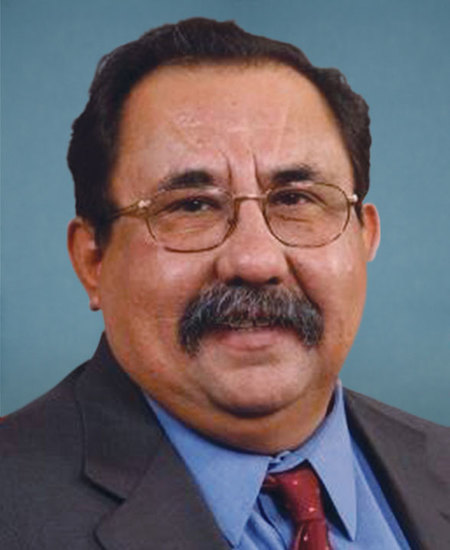
Rep. Raúl M. Grijalva
Sponsored bills
Honoring the Oath Act of 2021 This bill establishes the Military Family Immigration Advisory Committee and modifies the naturalization procedures for a noncitizen in the Armed Forces. U.S. Immigration and Customs Enforcement shall notify the committee when any individual in removal proceedings is a (1) member of the Armed Forces, (2) veteran, or (3) noncitizen spouse or minor child of such an Armed Forces member or veteran. The committee shall review the case of any such individual and make recommendations to the Department of Homeland Security (DHS) and the Department of Justice as to how the case should be resolved. Such an individual shall not be removed until the committee has provided its recommendations. DHS and the Department of Defense shall jointly carry out a program allowing a noncitizen individual who serves on active duty in the Armed Forces (and any noncitizen spouse or minor children of the individual) to become a U.S. citizen if the individual is not otherwise ineligible for citizenship. The Armed Forces member shall be given the opportunity to apply for citizenship during the accession process into the Armed Forces. DHS shall adjudicate such an individual's application by the last day of the individual's active service in the Armed Forces.
Veteran Deportation Prevention and Reform Act This bill provides protections from deportation for noncitizen veterans and contains other related provisions. U.S. Immigration and Customs Enforcement (ICE) must identify each individual in removal proceedings who is a member of the Armed Forces, a veteran, or a noncitizen spouse or minor child of such an individual. That individual may not be removed until (1) ICE has transferred that individual's case files to an advisory committee created under this bill, and (2) that committee has provided recommendations as to the outcome of the case. The Department of Homeland Security (DHS) shall create a system to share information across various agencies about noncitizen veterans who may be subject to removal to ensure that such a veteran's military service is taken into consideration in immigration-related cases. DHS shall also create a system for (1) identifying noncitizens who are or may be veterans, and (2) collecting data relating to such noncitizens who are in removal proceedings or may have been removed. DHS and the Department of Defense must jointly carry out a program to naturalize a noncitizen (and the noncitizen's spouse and minor children) who serves on active duty in the Armed Forces and is not otherwise ineligible for citizenship if that noncitizen submits an application. DHS shall also establish a program for eligible noncitizen veterans (generally those not convicted for certain serious crimes) to obtain permanent resident status. Similarly, the Department of Justice shall provide permanent resident status to such an eligible veteran in removal proceedings or subject to a final order of removal.
Emmett Till Antilynching Act This bill makes lynching a federal hate crime offense. Specifically, the bill imposes criminal penalties—a fine, a prison term of up to 30 years, or both—on an individual who conspires to commit a hate crime offense that results in death or serious bodily injury or that includes kidnapping or an attempt to kidnap, aggravated sexual abuse or an attempt to commit aggravated sexual abuse, or an attempt to kill.
This resolution supports the goals and ideals of National Women's History Month and recognizes the women and organizations that continue to promote the teaching of women's history.
Family Health Care Affordability Act of 2022 This bill modifies the requirement for determining the affordability of employer-sponsored minimum essential health care coverage under the Patient Protection and Affordable Care Act (PPACA). (Under current law, the coverage is unaffordable, and an employee may be eligible for premium assistance tax credits, if the employee's required contribution for an individual plan exceeds 9.5% of household income.) The bill specifies that, with respect to an employee's family members who are eligible to enroll in the plan, affordability must be determined using the cost of family coverage rather than individual coverage to expand the eligibility of families for premium assistance tax credits.
Tracking Pathogens Act This bill requires the Centers for Disease Control and Prevention (CDC) to take specified actions related to the genomic sequencing of pathogens. Specifically, the CDC must issue guidance on sharing specimens and other activities to support collaboration in the genomic sequencing of pathogens. The CDC must also strengthen and expand activities related to the use of genomic sequencing of pathogens in public health surveillance, including by providing technical assistance to health departments. The CDC may award grants, contracts, or cooperative agreements to academic and other laboratories related to these activities. In addition, the CDC must establish through public health agencies (or partnerships of such agencies) centers of excellence to promote innovation in pathogen genomics and molecular epidemiology.
Forced Arbitration Injustice Repeal Act of 2022 or the FAIR Act of 2022 This bill prohibits a predispute arbitration agreement from being valid or enforceable if it requires arbitration of an employment, consumer, antitrust, or civil rights dispute.
This resolution recognizes the important role of local nutrition programs supported through the Older Americans Act of 1965 in addressing senior hunger, malnutrition, and isolation.
Dr. Lorna Breen Health Care Provider Protection Act This bill establishes grants and requires other activities to improve mental and behavioral health among health care providers. Specifically, the Department of Health and Human Services (HHS) must award grants to hospitals, medical professional associations, and other health care entities for programs to promote mental health and resiliency among health care providers. In addition, HHS may award grants for relevant mental and behavioral health training for health care students, residents, or professionals. Additionally, HHS must conduct a campaign to (1) encourage health care providers to seek support and treatment for mental and behavioral health concerns, and (2) disseminate best practices to prevent suicide and improve mental health and resiliency among health care providers. HHS must also study and develop policy recommendations on improving mental and behavioral health among health care providers, removing barriers to accessing care and treatment, and identifying strategies to promote resiliency. Furthermore, the Government Accountability Office must report on the extent to which relevant federal grant programs address the prevalence and severity of mental health conditions and substance use disorders among health care providers.