

This resolution condemns attacks and abuses perpetrated against Guatemalan society, including judges, anticorruption prosecutors, human rights defenders, and indigenous communities. It also affirms support for, and calls on the federal government to take actions to advance, the rule of law and democracy in Guatemala.
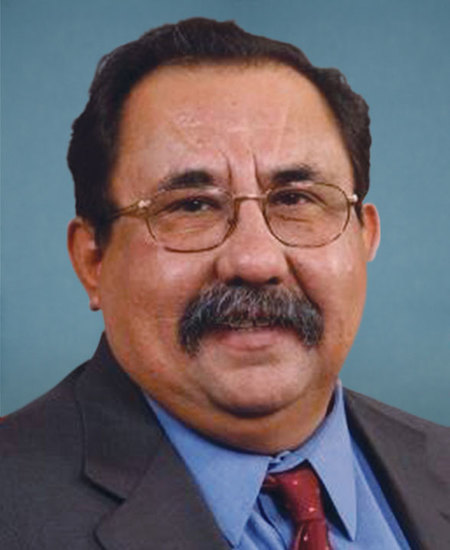
Rep. Raúl M. Grijalva
Sponsored bills
Stopping Abuse and Fraud in Electronic Lending Act of 2022 or the SAFE Lending Act of 2022 This bill revises requirements related to consumer financial protection and small-dollar lending, including matters concerning remotely created checks, electronic fund transfers, registration of small-dollar lenders, overdraft fees, and the collection of personal information. Under the bill, remotely created checks may only be issued by a person specifically designated in writing by a consumer and provided to the consumer's depository institution. (A remotely created check is a check not issued by the bank and not signed by the account owner.) A voluntary agreement to repay a small-dollar consumer credit transaction by an electronic fund transfer is subject to certain protections, including the right of the consumer to stop payment. Small-dollar consumer credit providers must register with the Consumer Financial Protection Bureau. Any small-dollar consumer credit transaction is subject to the laws of the state in which the consumer resides. The bill also prohibits overdraft fees on prepaid accounts.
Preventing Unnecessary Deaths During Life-Threatening Events Act This bill modifies the procedures for terminating electric service under the Public Utility Regulatory Policies Act of 1978; utilities may not terminate electricity during an extreme heat weather event or extreme cold weather event.
Revitalizing the Economy of Coal Communities by Leveraging Local Activities and Investing More Act of 2021 or the RECLAIM Act of 2021 This bill revises requirements concerning the Abandoned Mine Reclamation Fund, including by expanding the eligible uses of the fund. Specifically, the bill allows the fund to be used to provide support for economic revitalization, diversification, and development in economically distressed mining communities through the reclamation and restoration of land and water resources adversely affected by abandoned coal mines. In addition, it requires specified amounts to be annually distributed from the fund through FY2026 to states and Indian tribes for reclaiming and restoring lands and waters so affected.
Surface Mining Control and Reclamation Act Amendments of 2021 This bill reauthorizes the Department of the Interior to collect fees on the production of coal through FY2036, expands the eligible uses of the Abandoned Mine Reclamation Fund, and revises requirements concerning the fund. Under current law, operators of active coal mines must pay such fees through FY2021. Revenue from the fees are deposited into the Abandoned Mine Reclamation Fund, which is used for the reclamation of abandoned coal mines. The bill authorizes Interior to reimburse states and tribal governments from the fund for the emergency restoration, reclamation, abatement, control, or prevention of adverse effects of coal mining practices. It also increases the minimum amount of funds from $3 million to $5 million that Interior must award to states and Indian tribes that have approved abandoned mine reclamation programs.
This bill authorizes the Department of Commerce to award competitive grants to Indian tribes to further achievement of tribal coastal zone objectives. Specifically, these tribal coastal zone objectives include protecting, restoring, or preserving areas in the zone that hold important ecological, cultural, or sacred significance for the tribes or traditional, historic, and aesthetic values essential to the tribes; preparing and implementing a special area management plan and technical planning for important coastal areas; and implementing any coastal or shoreline stabilization measure for the purpose of public safety, public access, or cultural or historical preservation.
Offshore Accountability Act of 2021 This bill establishes disclosure and reporting requirements for operators of offshore oil or gas facilities after equipment failures of critical systems. Such operators must notify the Department of the Interior and the manufacturers of the equipment of such failures. In addition, the operators must provide equipment failure analyses to Interior and the manufacturers. Interior must post the analyses on its website. Finally, operators must report to Interior on changes made by such manufacturers to the design of critical systems as the result of reported failures and changes in the operators' procedures as a result of reported failures.
Prevent All Soring Tactics Act of 2022 or the PAST Act of 2022 This bill addresses the practice of soring horses. The soring of horses includes various actions taken on horses' limbs to produce higher gaits that may cause pain, distress, inflammation, or lameness. Specifically, the bill expands soring regulation and enforcement at horse shows, exhibitions, sales, and auctions, including by establishing a new system for inspecting horses for soring. In addition, the bill increases penalties for violations.
This bill requires the Federal Bureau of Investigation and the Department of State to report to Congress on the death of Shireen Abu Akleh. The report shall also be made available to the public on the State Department's website. (Abu Akleh was a U.S. citizen and journalist who was shot and killed in the city of Jenin in the West Bank in May 2022. At the time of her shooting, Israeli security forces and Palestinians were trading fire in the area.)
Maddy summaryHRES 1459 is a symbolic House resolution formally acknowledging the service and sacrifices of veterans who served during the Korean War (1950-1953) and current Korean Defense Veterans stationed in South Korea. It recognizes the contributions of approximately 1.8 million U.S. military personnel who served under the UN Command, including the 36,574 U.S. service members who died. The resolution specifically honors the ongoing service of nearly 25,000 U.S. personnel currently stationed in South Korea to maintain the armistice. As a non-binding resolution, it does not create new benefits or policy changes but serves as a formal statement of congressional recognition.