

Methane Waste Prevention Act of 2021 This bill establishes requirements to reduce methane emissions from the oil and natural gas sector. Methane is emitted during the production and transport of coal, natural gas, and oil. Specifically, the Environmental Protection Agency (EPA) must issue regulations that require the sector to reduce methane emissions over time. By 2025, methane emissions must be at least 65% below 2012 emissions. By 2030, the emissions must be at least 90% below 2012 emissions. The Department of the Interior must also establish regulations to reduce and prevent the waste of natural gas on federal land and Indian lands, including waste from venting, flaring, and fugitive releases. The regulations must include consistent enforcement mechanisms for any oil or gas operations that are not in compliance.
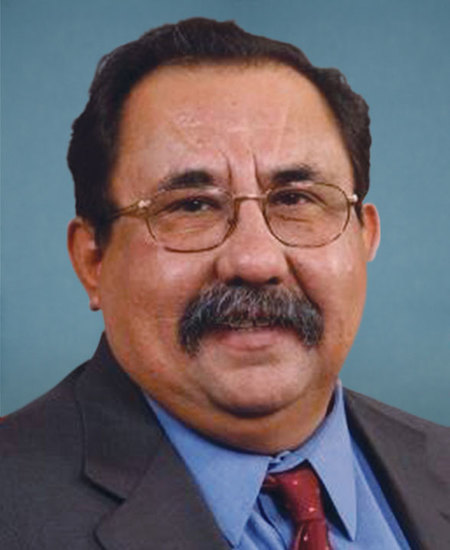
Rep. Raúl M. Grijalva
Sponsored bills
Faster Payments to Veterans' Survivors Act of 2022 This act modifies policies and procedures related to the payment of benefits under certain life insurance programs administered by the Department of Veterans Affairs (VA). If a primary beneficiary has not made a claim for payment within one year (currently two years) after the death of the insured under the National Service Life Insurance (NSLI) program or the United States Government Life Insurance (USGLI) program, the VA is authorized to make payment to another designated beneficiary as if the primary beneficiary had predeceased the insured. If no designated beneficiary makes a claim within two years (currently four years) after the death of the insured, the VA is authorized to make a payment to a person the VA deems to be equitably entitled to such benefit. The act also modifies the beneficiary designation process under NSLI and USGLI. Specifically, if a person does not designate a beneficiary for insurance, or if the designated beneficiary predeceases the insured person, the VA must determine the beneficiary in a specified order of succession. Additionally, the act requires the VA to improve its processes and procedures with respect to identifying, locating, and paying hard-to-find beneficiaries of life insurance policies, including by improving its website search tools.
This act designates the facility of the United States Postal Service located at 16605 East Avenue of the Fountains in Fountain Hills, Arizona, as the Dr. C.T. Wright Post Office Building.
Old Pascua Community Land Acquisition Act This act directs the Department of the Interior to take tribally owned lands in Pima County, Arizona, into trust for the benefit of the Pascua Yaqui Tribe of Arizona. Lands taken into trust shall be part of the Pascua Yaqui Reservation. The act allows gaming on the land taken into trust.
21st Century President Act This act revises the definition of immediate family for purposes of a criminal offense involving a threat to kill, kidnap, or inflict bodily harm on a former President or a member of the immediate family of a former President. Specifically, it replaces gender-specific references to a former President's wife and widow with the gender-neutral terms spouse and surviving spouse .
Bus Rapid Transit Act This bill directs the Federal Transit Administration (FTA) to establish a grant program to provide grants to state, local, and tribal governments for the design and implementation of bus rapid transit systems, including for the redesign, retrofit, renovation, update, and repair of existing bus systems. As a condition of receiving a grant, eligible entities must certify that fares for riding the bus rapid transit system shall not increase solely due to improvements carried out with grant funds and for any reason for at least one year after completion of a project funded by the bill. In carrying out the program, the FTA must prioritize projects located in economically disadvantaged communities.
This resolution affirms that there is well-established authority for the Food and Drug Administration to approve, license, and otherwise regulate reproductive health products under the Federal Food, Drug, and Cosmetic Act and the Public Health Service Act. The resolution also affirms that (1) such federal laws preempt (i.e., supersede conflicting state or local laws) any state or local laws that prohibit or limit access to or use of any reproductive health product, and (2) the Department of Justice has authority to enforce the preemptive effect of such federal laws by suing any state or political subdivision of a state that prohibits or limits access to or use of any reproductive health product.
Medicare for America Act of 2019 [ sic ] This bill establishes several health insurance programs and otherwise modifies certain requirements relating to health care coverage, costs, and services. In particular, the bill establishes a national health insurance program to be administered by the Department of Health and Human Services (HHS). Among other requirements, the program must (1) cover all U.S. residents; (2) cover specified items and services, including hospital services, prescription drugs, dental services, and home- and community-based long-term care; and (3) be fully implemented in 2026. HHS must also offer a transitional public health option that provides certain minimum coverage through health insurance exchanges in 2024 and 2025. The bill also makes a series of other changes to health care and tax provisions. For example, the bill (1) allows federal funds to be used for abortions; (2) sunsets a specified tax reform law that, among other things, repealed the penalty for failing to maintain minimum essential health coverage; and (3) prohibits excessive prices for prescription drugs and medical devices, as determined by a newly established federal regulatory board.
Expanding the Voluntary Opportunities for Translations in Elections Act or the Expanding the VOTE Act This bill expands access to voting materials for individuals with limited proficiency in the English language, including by establishing incentive grants for states and political subdivisions to provide translated voting materials. Additionally, the bill directs the Government Accountability Office to study the impact of (1) reducing the threshold requirement under Section 203 of the Voting Rights Act of 1965, and (2) expanding the definition of language minorities to include native speakers of additional languages.
Safeguard Tribal Objects of Patrimony Act of 2021 This act prohibits the exportation of Native American cultural items and archaeological resources that were illegally obtained; provides for the return of such items, including voluntary returns; and establishes and increases related criminal penalties. Specifically, the act makes it a federal crime to export, attempt to export, or otherwise transport from the United States Native American cultural items and archaeological resources without obtaining an export certification. U.S. Customs and Border Protection must detain any item requiring an export certification that does not have one. The act requires the Department of the Interior and the Department of State to each designate a liaison to facilitate and hold trainings and workshops on the voluntary return of human remains and cultural items. Additionally, Interior must refer individuals and organizations to Indian tribes and Native Hawaiian organizations to facilitate the voluntary return of human remains and cultural items; convene an interagency working group; and convene a Native working group consisting of representatives of Indian tribes and Native Hawaiian organizations to provide advice on issues concerning the return of, and illegal trade in, human remains and cultural items. The act also increases the maximum criminal penalties for violating the Native American Graves Protection and Repatriation Act. In particular, the act increases from 5 years to 10 years the maximum prison term for an individual convicted of a second or subsequent violation of selling, purchasing, using for profit, or transporting for sale or profit human remains or cultural items that were illegally obtained.