

Maddy summaryHR 926 would require the Supreme Court to establish a code of conduct for justices within 180 days of enactment, along with procedures for handling ethics complaints against them. The bill mandates minimum disclosure standards for gifts, income, and reimbursements received by justices and their law clerks, and requires justices to recuse themselves when they or their family received gifts from parties in a case. It would also require parties and amici curiae to disclose gifts given to justices and lobbying contacts related to justices' nominations, and establish a judicial investigation panel to review complaints against justices. The legislation aims to increase transparency in Supreme Court ethics processes and provide clearer recusal standards for justices.
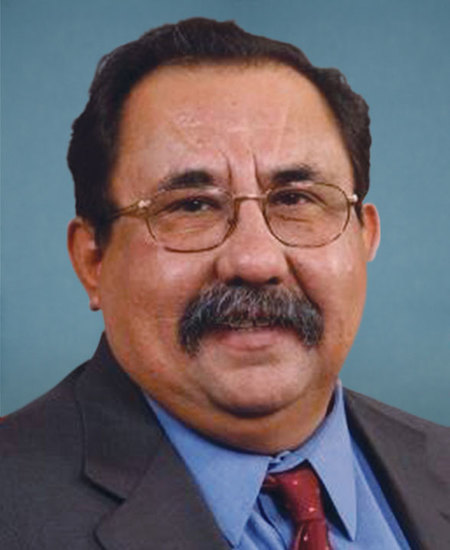
Rep. Raúl M. Grijalva
Sponsored bills
Maddy summaryThis bill makes significant changes to US corporate tax rules to prevent tax avoidance through foreign operations. It requires corporations to calculate foreign income tax liabilities country-by-country, limits interest deductions for large international financial reporting groups, and modifies rules for "inverted corporations" (where US companies move tax residence abroad). The bill also creates new rules treating foreign corporations managed primarily in the US as domestic corporations for tax purposes. These changes aim to close tax loopholes related to outsourcing and foreign tax planning.
Maddy summaryHR 969 (GAAME Act of 2023) requires public schools receiving federal funding under the Elementary and Secondary Education Act to provide structured, standards-aligned arts and music education. It mandates that schools offer sequential arts education (defined as dance, media arts, theater, and visual arts) taught by state-certified arts educators, and sequential music education taught by state-certified music educators. The bill also directs targeted funding for schools to support certified educators, professional development, supplies, instruments, and other resources needed for these programs. This directly affects all public elementary and secondary schools participating in federal education programs, aiming to ensure consistent access to arts and music instruction.
Presidential Tax Transparency Act This bill requires the President, the Vice President, and certain candidates for President and Vice President to disclose federal income tax returns for the ten most recent taxable years. The returns must be disclosed to the Federal Election Commission (FEC), which must make the returns publicly available after redacting information that is necessary for protecting against identity theft, such as Social Security numbers. If the tax returns are not disclosed to the FEC as required by this bill, the Internal Revenue Service must provide the returns to the FEC upon receiving a written request from the FEC.
Maddy summaryHRES 110 is a non-binding resolution supporting the designation of "Career and Technical Education (CTE) Month" to recognize CTE's role in preparing students for high-demand careers. It encourages educators, school counselors, and parents to promote CTE as a respected pathway for students seeking credentials in fields like healthcare, technology, and skilled trades. The resolution highlights CTE's benefits, including reducing high school dropout rates and aligning education with workforce needs, without creating new funding or policy changes. It directly affects schools, educators, and students by affirming CTE's value in workforce development.
This resolution condemns the attack against Brazil's government institutions on January 8, 2023. The resolution opposes any attempt to overturn Brazil's 2022 election results and calls for the U.S. government to cooperate with requests for assistance from Brazilian authorities investigating the attack.
Maddy summaryHR 882, the American Teacher Act, requires states to ensure full-time teachers in public elementary and secondary schools earn at least $60,000 annually (adjusted for inflation), with part-time teachers receiving proportional pay. It provides federal grants to states to fund these salary increases, mandating sustainability plans beyond the 4-year grant period and prioritizing schools in high-poverty areas. The bill also includes cost-of-living adjustments tied to the Consumer Price Index and funds a national campaign to promote teaching as a career. It explicitly states grant funds must supplement existing education budgets without reducing current teacher pay or state loan forgiveness programs.
Maddy summaryHR 865, the United States Colored Troops Congressional Gold Medal Act, authorizes a posthumous Congressional Gold Medal to be presented to all African American soldiers and sailors who served with Union forces during the Civil War. The medal, designed by the Treasury Secretary, will be awarded collectively to this group in recognition of their service and bravery. After presentation, the gold medal will be donated to the Smithsonian Institution for public display, with the option to sell bronze duplicates to cover costs. This bill does not change existing laws but formally honors the historical contributions of approximately 200,000 African American soldiers in the Union Army and 19,000 in the Union Navy.
Maddy summaryThis joint resolution expresses congressional support for designating February 6-10, 2023, as "National School Counseling Week." It honors school counselors' roles in supporting students' academic, social-emotional, and career development, while encouraging public awareness of their contributions. The bill does not create new policies or funding but symbolically recognizes counselors' work in schools. It directly affects school counselors and the broader school community by promoting recognition of their vital role.
Maddy summaryThis bill creates a federal grant program to fund additional school counselors in secondary schools with low graduation rates. It targets schools where fewer than 60% of students earn a regular diploma within four years, providing 4-year grants to hire counselors focused on at-risk students (aiming for a 1:250 student-to-counselor ratio). Grants cover counselor salaries, professional development, and related services like individual graduation plans, while requiring schools to demonstrate at least a 10% improvement in graduation rates to renew funding. The program is limited to 10 schools initially, with $5 million authorized annually for 2023-2026.