

Maddy summaryThe American Dream and Promise Act of 2025 would create pathways to permanent residency for certain immigrant youth who entered the U.S. as children (Dream Act component) and for individuals from countries with Temporary Protected Status or Deferred Enforced Departure (American Promise Act component). To qualify, applicants must meet continuous physical presence requirements (since January 1, 2021 for Dream Act applicants, and for 3+ years for American Promise applicants), pass background checks, and satisfy educational or employment criteria. Conditional permanent resident status would be granted initially, with the option to convert to full permanent residency after meeting additional requirements like earning a degree, serving in the military for two years, or demonstrating three years of earned income. The bill includes fee exemptions for low-income applicants, establishes a grant program to assist applicants with legal help, and creates specific procedures for background checks and appeals.
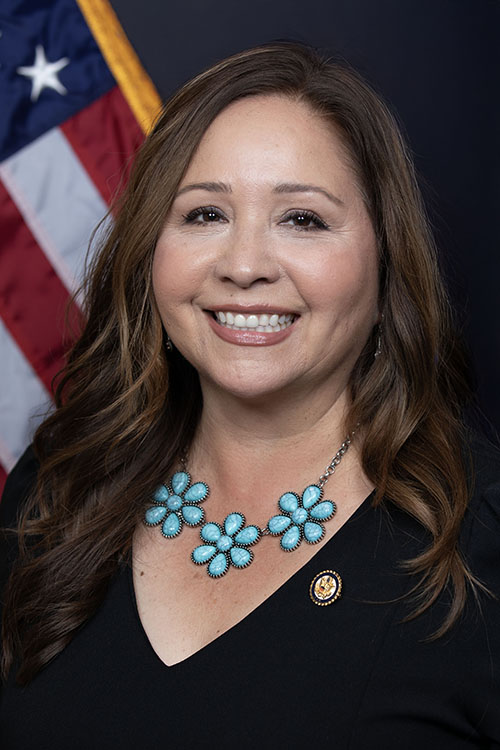
Rep. Adelita S. Grijalva
Sponsored bills
Maddy summaryEthan's Law requires gun owners to store firearms securely in homes where minors live or where residents are legally prohibited from owning guns. It makes it unlawful to leave firearms unsecured if a minor or ineligible person could access them, with fines of $500 per violation and harsher penalties if injury or death occurs. The bill creates a federal grant program to help states implement similar secure storage laws and treats unsafe storage as negligence in legal cases. It directly affects households with children or residents who cannot legally possess firearms, aiming to reduce accidental shootings and unauthorized access.
Maddy summaryThe Access Technology Affordability Act of 2025 creates a new tax credit for individuals who purchase technology designed to assist blind people, such as screen readers or braille displays. This credit covers up to $2,000 in expenses per three-year period for qualified access technology used by the taxpayer, their spouse, or a blind dependent. The credit adjusts for inflation after 2026 but does not apply to costs already covered by other tax benefits. The credit expires after 2030, with adjustments for cost-of-living changes starting in 2027.
More Options to Develop and Enhance Remote Nutrition in WIC Act of 2025 or the MODERN WIC Act of 2025 This bill permanently allows individuals to remotely certify their eligibility for, and receive benefits through, the Special Supplemental Nutrition Program for Women, Infants, and Children (WIC). Specifically, the bill requires that a state agency allow an individual seeking a WIC certification, recertification, or a nutritional risk evaluation to do so by phone or through video teleconference, in addition to the in-person option. A state agency has 90 days to collect data for a nutritional risk evaluation for a remotely certified individual. Further, a state agency may consider an applicant who meets the income eligibility standards to be temporarily eligible on an interim basis to participate in the program and may certify the individual for immediate participation without waiting for a nutritional risk evaluation. The bill also allows states to provide benefits on WIC electronic benefit transfer cards through mail or remote issuance instead of requiring participants to pick up or reload benefits in person at a WIC office. Further, the Department of Agriculture must report to Congress about the use of remote technologies and other digital tools in the WIC program. Currently, individuals are generally required to be physically present to certify their WIC eligibility and receive benefits, with exceptions. The Food and Nutrition Service has temporarily waived these requirements and allowed remote certification and benefits using authorities that were provided by laws that were enacted to address COVID-19.
Maddy summaryThis bill doubles key tax benefits for child care expenses. It increases the maximum child and dependent care credit from $3,000 to $6,000 per child (and $6,000 to $12,000 for two or more children) and doubles the dependent care assistance program limit from $5,000 to $10,000 annually. It also doubles the employer credit for providing child care from $150,000 to $300,000 per year. These changes directly affect working parents paying for child care and employers offering on-site or subsidized care, applying to tax years starting in 2025.
Maddy summaryHR 1300, the PSA Screening for HIM Act, requires health insurance plans and issuers to cover prostate cancer screenings without cost-sharing (like copays or deductibles) for men aged 40+ who are at high risk of prostate cancer. This directly affects African-American men and men with a family history of prostate cancer, as defined by the bill. The law amends existing insurance coverage rules to mandate this specific screening coverage, effective for plan years starting January 1, 2026. It does not change screening guidelines but removes financial barriers to recommended screenings for these high-risk groups.
Maddy summaryHR 1330 establishes the Smithsonian National Museum of the American Latino, authorizing its location within the National Mall's "Reserve" area. The bill requires the Smithsonian Board to coordinate with federal agencies managing potential museum sites, including notifying relevant congressional committees before land transfers. It mandates that the museum's exhibits and programs accurately represent the diverse cultures, histories, and viewpoints of Hispanic and Latino communities in the U.S., seeking input from a broad range of community experts. The Smithsonian must also submit regular reports to Congress detailing compliance with these representation requirements.
Maddy summaryThis bill proposes a constitutional amendment stating that only "natural persons" (living humans) have rights protected by the U.S. Constitution, explicitly denying constitutional rights to corporations, LLCs, and other artificial entities. It would require governments to regulate campaign contributions and spending to prevent money from influencing elections, banning the view that spending to influence elections constitutes protected speech under the First Amendment. The amendment would not affect the constitutional right to a free press. This change would directly impact how corporations and other non-human entities can legally challenge laws or regulations in court.
Alternatives to Prevent Addiction In the Nation Act or the Alternatives to PAIN Act This bill reduces cost-sharing and prohibits the imposition of certain utilization requirements under the Medicare prescription drug benefit for certain non-opioid pain management drugs. Specifically, the bill requires such drugs to be covered without a deductible and to be placed on the lowest cost-sharing tier (if any). The bill also prohibits the imposition of prior authorization requirements (i.e., requiring prior approval from a plan) or step therapy requirements (i.e., requiring the use of alternative drugs before a drug is covered under a plan) with respect to such drugs.
Rural Obstetrics Readiness Act This bill creates and expands federal grant programs within the Health Resources and Services Administration (HRSA) to increase capacity to provide emergency obstetric health services in rural areas or areas without practitioners or facilities specializing in obstetric services. Specifically, HRSA must establish a program for providing grants to certain hospitals or consortiums that include hospitals in rural areas or areas with maternal health care professional shortages for training, developing a workforce, and purchasing equipment relating to obstetric emergencies. In addition, the bill requires HRSA’s Alliance for Innovation on Maternal Health Capacity program to provide grants for training on emergency obstetric services for practitioners in rural health care facilities without dedicated obstetric units. HRSA must also establish a pilot program to provide grants to government entities for developing or improving telehealth access programs to support urgent maternal health care in rural facilities without a dedicated obstetric unit.