

Maddy summaryHR 285, the Advanced Border Coordination Act of 2025, requires the Department of Homeland Security to establish at least two Joint Operations Centers along the southern border within six months of enactment. These centers will enable coordinated operations between federal (including DHS, Defense, and Justice), state, local, and tribal law enforcement agencies to address threats like drug trafficking, human trafficking, illegal border crossings, and weapons seizures. Key mechanisms include centralized communication for field operations, shared information protocols, personnel deployment tracking, and annual reporting to Congress on center operations, resource use, and communication gaps. The bill directly affects border agencies and tribes participating in these coordinated efforts, aiming to improve interagency collaboration without specifying new enforcement powers.
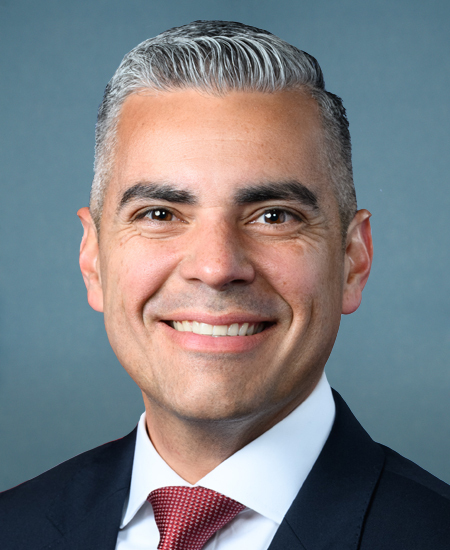
Rep. Juan Ciscomani
Sponsored bills
Maddy summaryThis bill requires federal employees who telework at least one day weekly (or 20% of their time under alternative schedules) to be paid at the "Rest of U.S." locality pay rate without future adjustments. It excludes employees who telework daily, those with disabilities receiving accommodations, Foreign Service members, law enforcement officers, and military personnel on active duty. Covered employees will no longer receive annual pay adjustments under standard federal pay schedules. The policy takes effect at the start of the first full fiscal year after the bill becomes law. It directly affects federal workers meeting the telework threshold, altering their pay structure based on location.
Maddy summaryThe D.C. Robert F. Kennedy Memorial Stadium Campus Revitalization Act transfers administrative control of the 174-acre Robert F. Kennedy Memorial Stadium Campus from the federal government to the District of Columbia. This allows the District to develop the campus for residential, commercial, and public purposes, including designating at least 30% as "Robert F. Kennedy Memorial Park" for recreation. The District must pay all transfer and development costs, maintain public access to the Anacostia River, and follow specific environmental and development requirements. The transfer is for a minimum of 99 years, with provisions for federal reversion if the District fails to meet requirements. The bill also repeals the 1957 Stadium Act and terminates a 1988 lease agreement.
Maddy summaryThis proposed constitutional amendment would limit Members of Congress to serving a maximum of three terms in the House of Representatives or two terms in the Senate. It directly affects current and future members by preventing those who have already served the maximum terms from seeking re-election. Key provisions include counting vacancies filled for more than a year (House) or three years (Senate) as a full term toward the limit, while excluding terms served before ratification from the count. As a constitutional amendment proposal, it requires approval by three-fourths of state legislatures to become law.
Maddy summaryHR 82, the Social Security Fairness Act of 2023, repeals two provisions that reduce Social Security benefits for certain government workers. It eliminates the Government Pension Offset (GPO), which cuts spousal or survivor benefits for people with pensions from jobs not covered by Social Security (like federal or state government roles), and the Windfall Elimination Provision (WEP), which lowers retirement benefits for those with similar pensions. The law takes effect for benefits paid after December 2023, requiring the Social Security Administration to adjust benefit calculations to remove these reductions. This change directly affects public-sector employees who previously had their Social Security benefits reduced due to their government pensions.
Maddy summaryThe AACE Act (HR 5443) changes how appraisers can work on Department of the Interior (DOI) real property transactions. It requires that appraisers only need one state license to value property nationwide for DOI transactions, rather than needing licenses in every state where property is located. The bill mandates the DOI Secretary to submit annual reports tracking appraisal request timelines, workforce staffing, and cases where out-of-state appraisers were used under specific conditions (unavailability, lack of qualifications, or higher cost). It also requires all DOI policies related to appraisals to be published online within 90 days. This directly affects DOI contractors, appraisers working on federal land transactions, and DOI's internal appraisal processes.
Maddy summaryThis bill requires Congress to approve major federal regulations before they take effect. It would mandate that agencies submit detailed reports including cost-benefit analyses, economic impact assessments, and other information to Congress before implementing significant regulations. Major rules - defined as those with at least $100 million annual economic impact or significant effects on costs, competition, or employment - would need a joint resolution of approval from Congress within 70 session days. Nonmajor rules would follow a less stringent disapproval process. The bill aims to increase legislative oversight of the regulatory process, requiring Congress to formally review and approve rules that significantly impact the economy or public regulations.
Maddy summaryThis bill creates a 4-year transitional coverage period for Medicare to automatically cover "breakthrough medical devices" - new FDA-prioritized devices approved after March 2021 - as "reasonable and necessary" for treatment. During this period, these devices qualify for additional payments under Medicare's hospital and outpatient payment systems without requiring separate approval. After the 4-year period, Medicare must develop regular coverage based on additional data, with automatic coverage for all approved uses if no action is taken within two years. The bill requires Medicare to assign unique codes for these devices within three months of FDA approval and to update payment systems regularly. It also includes special provisions for "specified breakthrough devices" that lack existing Medicare benefit categories, requiring reports on their impact and cost to Congress.
Maddy summaryThis bill amends the Colorado River Basin Salinity Control Act to adjust federal cost-sharing requirements for salinity control projects. It specifies that the federal government will cover 75-85% of costs for various salinity control units (including on-farm measures), with states covering the remaining portion. The changes apply to projects authorized under existing sections of the law, directly affecting Colorado River Basin states and landowners who implement these measures. A special provision for fiscal years 2024-2025 increases federal coverage for certain projects to 75-85% of costs.
Maddy summaryThis bill reauthorizes and updates the U.S. Geological Survey's water monitoring program as the Federal Priority Streamgage Program, extending funding through 2028 at $4 million annually. It updates previous program descriptions to replace "national streamflow information program" with the new program name and requires regular stakeholder feedback to determine priorities. The bill specifically includes Tribes in program collaboration by adding provisions for "Tribal lands" and "Tribe" in program descriptions. It modifies reporting requirements to reference a 2022 USGS report on program priorities rather than a 2004 National Research Council review.