

Maddy summaryThis resolution (HRES 544) states that the House believes the U.S. President cannot bypass Congress's constitutional authority to declare war or authorize military force when acting under the North Atlantic Treaty (specifically Article 5, which triggers collective defense). It clarifies that even if military action is taken to protect NATO allies, Congress must still formally approve such hostilities through a declaration of war or specific authorization. The resolution does not change existing law but expresses the House's position on the separation of powers regarding military engagements. It directly addresses the relationship between treaty obligations and Congress's constitutional role in authorizing war.
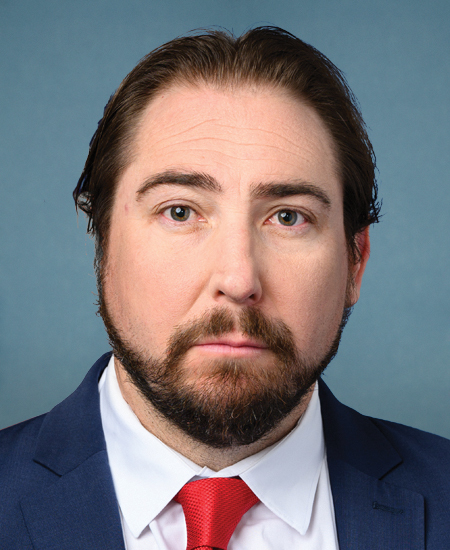
Rep. Elijah Crane
Sponsored bills
Maddy summaryHJRES 45 is a congressional disapproval resolution targeting a specific Department of Education rule about federal student loans. It seeks to block the rule implementing "One-Time Federal Student Loan Debt Relief" (including modifications to Perkins, FFEL, and Direct Loan programs) by invoking the Congressional Review Act. If passed, this resolution would nullify the rule, preventing the Department of Education from using it to modify or waive student loan obligations. The bill directly affects borrowers who might have qualified for debt relief under the targeted rule.
Maddy summaryHR 1640, the Save Our Gas Stoves Act, prevents the Department of Energy from implementing energy efficiency standards for gas stoves that would make them unavailable in the U.S. market. It amends federal law to require that any new standard for gas stoves must not result in the unavailability of gas stove types, directly affecting gas stove manufacturers and consumers who rely on these appliances. The bill specifically blocks the implementation of the 2023 proposed rule (Energy Conservation Program: Energy Conservation Standards for Consumer Conventional Cooking Products) and any similar rule. This is a policy change focused on maintaining the availability of gas stoves by altering the criteria for energy standard approval.
Maddy summaryThis bill requires medical providers to provide written parental notification (delivered personally or via certified mail) for abortions performed on unemancipated minors under 18, with a 96-hour waiting period after notification. Parents (including legal guardians) may seek a federal court injunction to block an abortion, which must be granted temporarily until the court rules. Exceptions exist for medical emergencies where immediate treatment is needed to prevent the minor’s death, with documentation required in medical records. Violations carry fines up to $100,000 or one year in prison per offense. The law does not override stricter state parental notification requirements.
Maddy summaryThe Protecting Veteran Community Care Act expands access to mental health and substance-use services through the Veterans Community Care Program for veterans who cannot get timely care in VA residential treatment facilities. It requires community providers to meet state licensing and accreditation standards and prohibits the VA from denying community care solely because community providers cannot meet the same wait time standards as VA facilities. The bill also mandates the VA to track and report on requests for mental health care, including approvals, denials, and appeals. This applies directly to veterans facing delays in accessing VA residential mental health programs.
This bill expands the definition of critical mineral under the Energy Act of 2020 to include copper. Thus, this bill requires the Department of Energy and other agencies to conduct a variety of efforts to ensure a secure and reliable supply chain of copper.
Domestic Uranium Saves America Act or the Domestic USA Act This bill includes uranium on the critical minerals list. In 2018, the U.S. Geological Survey (USGS) published a list of critical minerals, including uranium, in response to an executive order that called for a federal strategy to ensure secure and reliable supplies of critical minerals. The USGS updates the list every three years and includes certain minerals that are essential to economic or national security and have a supply chain vulnerable to disruption. In 2022, USGS removed uranium from the list. The bill reinstates uranium as a critical mineral.
Maddy summaryThis bill approves a 2000 treaty between the San Juan Southern Paiute Tribe and the Navajo Nation, establishing a 5,400-acre reservation within the existing Navajo Indian Reservation boundaries in northern Arizona and southern Utah. The San Juan Southern Paiute Tribe (federally recognized since 1989) will gain exclusive jurisdiction over this land, including water rights, resolving long-standing disputes that previously prevented the Tribe from providing essential services like housing and healthcare on their ancestral lands. Key provisions include transferring all land and water rights within the designated Northern and Southern Areas to the Tribe, with the U.S. holding them in trust, and ending Navajo Nation jurisdiction over these areas once boundaries are finalized. The bill also resolves pending litigation and requires the Secretary of the Interior to survey and fence the reservation boundaries within 18 months.
Maddy summaryHR 2139 limits funding for Independent Agencies and the Privacy and Civil Liberties Oversight Board to $5 million for fiscal year 2024, restricting their available funds for salaries and expenses. This bill directly affects those specific agencies by capping their budget authority for the 2024 fiscal year. The key provision is a hard spending cap, prohibiting any funds above $5 million from being used for these entities' operations. The bill does not alter agency functions or create new policies, only restricting their financial resources.
Maddy summaryThis bill prohibits the use of Department of Defense funds for adult cabaret performances. It bans the Defense Department from hosting, advertising, or supporting such events, which are defined as performances featuring topless dancers, strippers, exotic dances, or male/female impersonators appealing to prurient interest. The restriction applies to all Defense Department funds and facilities, preventing their use for these specific types of entertainment.