

Maddy summaryHJRES 28 proposes a constitutional amendment to permanently fix the number of justices on the U.S. Supreme Court at nine. This would require ratification by 38 state legislatures (three-fourths of states) within seven years to become part of the Constitution. The amendment directly affects the structure of the Supreme Court, which has had nine justices since 1869 but could otherwise be altered by future congressional action. It does not change current court operations or create new laws, but instead seeks to make the nine-justice composition a permanent constitutional requirement.
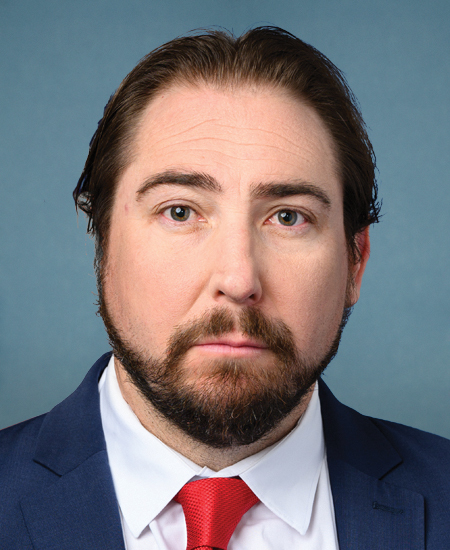
Rep. Elijah Crane
Sponsored bills
Maddy summaryHR 606, the "Energy Opportunities for All Act," formally nullifies Public Land Order No. 7923. This order had withdrawn public lands surrounding Chaco Culture National Historical Park in San Juan County, New Mexico, from mineral development. The bill reverses that withdrawal, making those lands available for potential energy development. It directly affects land management decisions in that specific New Mexico area and the federal process for mineral leasing. The bill is procedural, focusing solely on repealing the prior land withdrawal order.
Maddy summaryHR 632 prohibits federal funding (directly or indirectly) for colleges and universities that host or are affiliated with campus health clinics providing abortion drugs or abortions to students or employees. Institutions must annually certify to federal education and health agencies that no such services are offered at their campus sites. The bill defines "abortion drugs" broadly as any medication intended to terminate pregnancy (excluding cases for live birth, miscarriage management, or ectopic pregnancy treatment). This policy directly affects institutions receiving federal funds, requiring them to ensure campus health services comply with the prohibition to maintain eligibility.
Maddy summaryHR 629, the "Ending Chemical Abortions Act of 2025," would criminalize the prescription, distribution, or sale of drugs used for chemical abortions (like mifepristone and misoprostol) under federal law, with penalties up to 25 years in prison. It directly affects healthcare providers who prescribe or dispense these drugs, while exempting contraceptive use before pregnancy, treatment of miscarriages, and life-threatening pregnancy conditions certified by a physician. The bill defines "abortion" as intentionally ending a pregnancy, excludes women from prosecution, and redefines "unborn child" to begin at fertilization. This legislation would replace existing federal abortion-related provisions and apply nationwide, making chemical abortion drugs subject to new criminal penalties.
Birthright Citizenship Act of 2025 This bill limits birthright citizenship by redefining what it means to be subject to the jurisdiction of the United States. Currently, a person born in the United States and subject to U.S. jurisdiction is entitled to citizenship. Under the bill, a person is subject to U.S. jurisdiction if he or she is born to a parent who is (1) a U.S. citizen or national, (2) a lawful permanent resident residing in the United States, or (3) a non-U.S. national ( alien under federal law) with a lawful immigration status who is performing active service in the Armed Forces. The bill does not affect the citizenship or nationality status of any person born before the bill's enactment date.
Maddy summaryHR 473, the SHOW UP Act of 2025, requires federal executive agencies to return to pre-pandemic telework policies within 30 days of enactment, limiting work-from-home options to those in place on December 31, 2019. Agencies must then conduct a 6-month study analyzing pandemic-era telework impacts - including effects on mission performance, costs from underused office space, and employee productivity tools - and submit a plan to Congress if they seek to expand telework beyond these baseline levels. The plan requires certification from the Office of Personnel Management confirming it will improve mission performance, reduce real estate costs, lower locality pay expenses, and ensure secure remote work capabilities without increasing agency costs. This bill directly affects all federal executive agencies (excluding the Government Accountability Office) and their employees by restricting telework flexibility and imposing strict requirements for any future expansion.
Maddy summaryThis bill amends the Internal Revenue Code to require a valid Social Security Number (SSN) for all qualifying children claimed on the Child Tax Credit. Specifically, it mandates that taxpayers must include the SSN of both the taxpayer (or both spouses on a joint return) and each qualifying child on their tax return to claim the credit. The requirement applies to all taxpayers except members of the Armed Forces (who may use a spouse's SSN), and excludes individuals without an SSN issued to a U.S. citizen or under specific Social Security Act provisions. The change takes effect for taxable years beginning after the bill's enactment date.
Maddy summaryThis bill amends the Antiquities Act to require Congress, not the president, to authorize the creation or expansion of national monuments. It directly affects presidents and federal agencies by ending the current practice of presidentially designating monuments under the Antiquities Act. The key provision replaces the existing authority with a requirement for explicit congressional approval for any new monument or extension. This would change the legal process for establishing protected public lands, shifting decision-making power from the executive branch to Congress.
Maddy summaryHR 507, the Veterans Member Business Loan Act, amends the Federal Credit Union Act to explicitly include loans made to veterans as qualifying "member business loans" under credit unions. This change directly affects veterans seeking business financing through federal credit unions, allowing them to access these loans under the same framework as other small business borrowers. The key mechanism is adding a new definition category ("made to a veteran") to the existing eligibility criteria for business loans, using the standard military definition of "veteran" from Title 38, U.S. Code. The bill does not create new funding or programs but expands existing credit union lending options to include veterans. This definition change takes effect six months after the bill's enactment.
Maddy summaryHR 404, the "Hearing Protection Act," reclassifies firearm silencers (devices that reduce gunfire noise) as firearms for federal tax and regulatory purposes. It imposes a 10% federal tax on silencers, requires the destruction of all existing federal silencer registration records within one year, and preempts state laws that tax or regulate silencers. The bill clarifies that silencers are treated as firearms under federal law, including for licensing and marking requirements, and defines "firearm silencer" to include specific components. Note: The bill’s title is misleading - it addresses firearm silencer regulation, not hearing protection for people.