

Strength in Diversity Act of 2021 This bill establishes a program through which the Department of Education may award planning and implementation grants to specified educational agencies (e.g., local educational agencies) to improve diversity and reduce or eliminate racial or socioeconomic isolation in publicly funded early childhood education programs, public elementary schools, or public secondary schools.
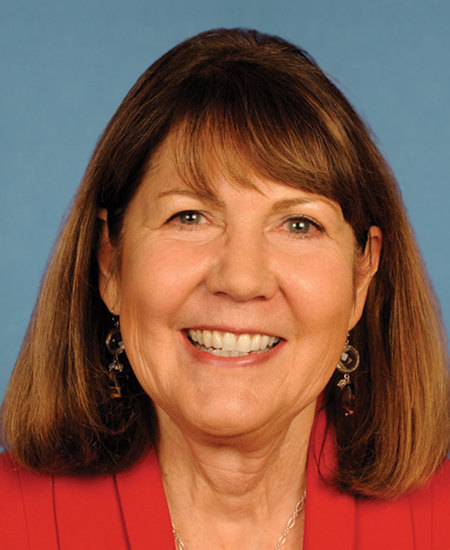
Rep. Ann Kirkpatrick
Sponsored bills
Maddy summaryHR 6020, the Supporting Medicare Providers Act of 2021, extends temporary Medicare payment increases for physicians through 2022 instead of ending them on January 1, 2022. It updates specific dates in Medicare law (Section 1848(t) of the Social Security Act) to maintain current payment rates for doctors treating Medicare patients. This directly affects physicians and clinics participating in Medicare who rely on these temporary payment adjustments. The bill makes no new policy changes but ensures existing payment levels continue for providers during 2022.
Access to Birth Control Act This bill requires pharmacies to comply with certain rules related to ensuring access to contraceptives. Specifically, pharmacies must provide without delay a customer with any contraceptive or related medication that is in stock. If the contraceptive is not in stock, the pharmacy must immediately inform the customer and either order the contraceptive or refer the customer to a pharmacy that has it in stock. Laws in some states provide pharmacists with the right to refuse to dispense contraceptive-related drugs on religious or conscience grounds. Pharmacies may refuse to provide a contraceptive to a customer (1) if the customer lacks a valid prescription for a prescription contraceptive or is unable to pay for the contraceptive, or (2) based on a pharmacy employee's professional clinical judgment. The bill also establishes a private cause of action and civil monetary penalties for violations of the bill.
Traveling Exotic Animal and Public Safety Protection Act of 2021 This bill prohibits the use of exotic or wild animals in performances of a traveling animal act, such as a circus, carnival, or parade. The prohibition does not apply to zoos, aquariums, research facilities, wildlife sanctuaries, and other entities. The prohibition also does not apply to domestic animals or farm animals.
This resolution recognizes the members of the Armed Forces who conducted the noncombatant evacuation operation airlift from Hamid Karzai International Airport in Kabul, Afghanistan, and honors the service and sacrifice of the men and women who participated in and supported Operation Allies Refuge. The resolution applauds the members of the U.S. Transportation Command and the Air Mobility Command of the Air Force who provided hope, saved lives, and executed their mission.
This concurrent resolution declares that Congress should not impose any new performance fee, tax, royalty, or other charge relating to the public performance of sound recordings on a local radio station for broadcasting sound recordings over the air, or on any business for such public performance of sound recordings.
Honoring Our Promises through Expedition for Afghan SIVs Act of 2021 or the HOPE for Afghan SIVs Act of 2021 This bill authorizes the Department of State and the Department of Homeland Security (DHS) to postpone the medical exam requirement for qualifying citizens or nationals of Afghanistan seeking entry into the United States as special immigrants. Specifically, this bill applies to an existing program that provides special immigrant status to an individual (or the spouse or child of such an individual) who (1) faithfully performed sensitive and trusted duties for the U.S. government or the International Security Assistance Force in Afghanistan on or after October 7, 2001, and (2) has experienced or is experiencing an ongoing serious threat due to the performance of those duties. Under this bill, the State Department and DHS may jointly issue a blanket waiver of any requirement for such individuals to undergo a medical exam before admission into the United States. DHS shall ensure, to the greatest extent practicable, that individuals admitted under such a waiver undergo medical exams no later than 30 days after admission into the United States. Such an individual shall be admitted as a conditional permanent resident. DHS shall remove the conditions once the individual receives and passes a medical examination.
Freedom for Families Act This bill prohibits using federal funds for facilities used to detain noncitizen families and addresses related issues. Specifically, no funds made available may be used to operate or construct a family detention center, whether operated by U.S. Immigration and Customs Enforcement or a contractor. This prohibition shall also apply to funds made available before this bill's enactment. Funds obligated to operate such centers must instead be used for implementing and developing nondetention programs that are community-based and consistent with international best practices. The Department of Homeland Security (DHS) may place an apprehended noncitizen family into such a nondetention program if DHS makes an individualized determination that doing so will facilitate the family's compliance with immigration laws. The programs must provide to participants a legal orientation and meaningful access to counsel.
Let Our Cities And Local businesses Help Employees Achieve Long-Term Health Act or the LOCAL HEALTH Act This bill authorizes private businesses and local governments and agencies to require the use of face masks and take other measures aligned with Centers for Disease Control and Prevention guidelines to prevent the spread of COVID-19, provided that the required measures accommodate individuals with disabilities and include exemptions for sincerely held religious beliefs. The bill also (1) prohibits a state from establishing or enforcing a law that restricts an authorized measure, and (2) provides immunity to private businesses and local government entities from federal or state claims arising from an authorized measure unless the claim involves negligent behavior or willful misconduct.
This bill establishes within the Office of the Director of the Centers for Disease Control and Prevention (CDC) the Office of Rural Health. The office must serve as the primary point of contact within the CDC on rural health matters, coordinate public health research on issues affecting rural populations, and carry out related activities.