

Maddy summaryThe AIDEN Act requires the U.S. Attorney General to administer a standardized survey to federal prisoners during their intake process to document their personal history with child welfare interventions, such as foster care placement or abuse investigations. The bill mandates that states conduct similar surveys for individuals in state custody and submit annual reports to the Department of Health and Human Services to maintain eligibility for certain Justice Department grants. Collected data is stripped of personally identifiable information before being shared with state governments, where it serves as an evidentiary resource for evaluating and improving local child welfare agency planning and support services.
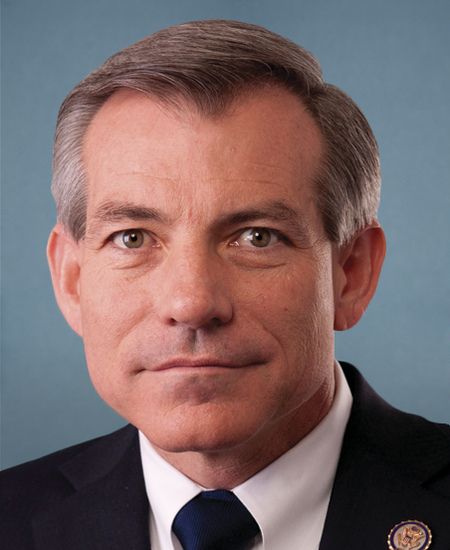
Rep. David Schweikert
Sponsored bills
Maddy summaryThe Intelligent Arbitration Act of 2026 permits parties in arbitration proceedings to use artificial intelligence for tasks such as identifying relevant laws, organizing documents, and delivering final decisions, provided all parties give written consent. While the bill allows for the use of AI tools in these specific areas, it explicitly prohibits the use of generative artificial intelligence in any arbitration under the law. Additionally, the legislation states that parties cannot later challenge an arbitration award solely because an error occurred during the use of approved AI tools. These changes directly affect individuals and organizations involved in arbitration by establishing new rules for technology use and limiting certain legal challenges based on AI involvement.
Maddy summaryThis bill requires Medicare Advantage plans to implement electronic pre-approval systems for medical services by 2028 and meet transparency reporting standards starting in 2027. Plans must publicly report data on approval/denial rates, appeal outcomes, response times, and technology use for pre-approval requests, including details on how denials relate to clinical criteria. It establishes a 24-hour response timeframe for certain requests and mandates annual reviews of pre-approval requirements based on data and input from seniors and providers. The law directly affects Medicare Advantage plans, seniors enrolled in these plans, and healthcare providers who submit pre-approval requests. These changes aim to make the pre-approval process faster, more transparent, and more accountable for seniors seeking covered medical services.
Maddy summaryThis bill directs U.S. Customs and Border Protection to launch a two-year pilot program at land ports of entry along the Arizona border to test an artificial intelligence tool designed to detect unusual patterns in data. The system aims to assist officers in screening for illicit drugs and contraband by improving inspection accuracy, processing speed, and overall border security while addressing staffing challenges. To ensure safety and effectiveness, the program requires strict cybersecurity oversight and allows for collaboration with federal agencies and private sector experts. Throughout the pilot, officials must submit regular reports to Congress detailing the algorithm's performance metrics, costs, and any successes or failures before deciding whether to expand its use.
Maddy summaryThis bill directs U.S. Customs and Border Protection to identify high-risk land ports of entry based on high volumes of drug seizures and mandate the use of advanced scanning technology there. Specifically, it requires these ports to install large-scale, non-intrusive inspection systems, such as x-ray or gamma-ray scanners, to screen at least 40 percent of passenger vehicles and 70 percent of commercial vehicles. The law also establishes a process for evaluating the effectiveness of this technology and requires annual reports to Congress on its performance and potential new innovations. Additionally, the bill mandates that relevant personnel receive training on operating these new systems to ensure proper implementation.
Maddy summaryThe End EPA Abuse Act of 2026 amends the Clean Air Act to limit the Environmental Protection Agency's authority to create new regulations. Specifically, it prohibits the EPA Administrator from issuing rules that restrict the sale or use of internal combustion engine vehicles, force power plants to switch fuel sources, or reduce the reliability of the electric grid. The bill also bars the agency from mandating technologies that are commercially unavailable, too expensive without subsidies, or technically unfeasible due to geographic or infrastructure limitations. Additionally, the law prevents the EPA from expanding its regulatory power beyond what Congress originally intended. These changes directly affect the EPA's ability to enforce environmental standards and impact industries such as automotive manufacturing and energy production.
Maddy summaryThe REAL Butter Act requires food manufacturers to clearly label products made from lab-created milkfat as "lab-created butter" on their packaging. This rule applies to any item marketed as butter that uses non-agricultural sources for its milkfat instead of traditional dairy. The law defines these products specifically as those that do not meet the existing federal standard of identity for butter. By mandating this specific wording on labels, the bill aims to ensure consumers can easily distinguish between traditional butter and synthesized alternatives.
Repealing Big Brother Overreach Act This bill repeals the Corporate Transparency Act. The act requires existing companies and newly created companies to report beneficial ownership information to the Department of the Treasury’s Financial Crimes Enforcement Network for purposes of addressing the financing of terrorism and money laundering.
Maddy summaryThis resolution commemorates the 30th anniversary of Taiwan's first direct presidential election in 1996 and expresses support for the preservation of its democratic institutions. It acknowledges Taiwan's history of free elections and peaceful transfers of power while reaffirming U.S. policy commitments under the Taiwan Relations Act and previous agreements. The text explicitly states that it does not authorize the use of military force, serving as a symbolic statement rather than a legislative action that changes laws or policy.
Maddy summaryThis bill would add pharmacist services to Medicare Part B coverage for beneficiaries, specifically covering pharmacist-led testing and treatment for illnesses like flu, COVID-19, or strep throat during public health emergencies. It defines covered services as those performed under state law, often requiring collaboration with a physician, and sets payment at 80% of the lesser of the actual charge or 85% of physician payment rates. Pharmacists would be prohibited from balance billing for these services, ensuring Medicare beneficiaries pay only their standard copayment. The changes would take effect January 1, 2026.