

Head start Education And Development Workforce Advancement and Yield Act or the HEADWAY Act This bill allows some teachers in Early Head Start programs to teach while in the process of earning their Child Development Associate (CDA) credential and completing training. Currently, the Department of Health and Human Services (HHS) must ensure that all teachers providing direct services to children and families in Early Head Start centers (1) have a minimum of a CDA credential and have been trained in early childhood development, and (2) have been trained in early childhood development with a focus on infant and toddler development. The bill revises this requirement by requiring at least one teacher per classroom (instead of all teachers) to have a CDA credential and training. In particular, the bill requires HHS to ensure that (1) each additional teacher providing direct services to children and families is in the process of earning a CDA credential and completing training, and (2) the Early Head Start agency provides a mentor to oversee the progress and guide the work of a teacher who is in the process of earning a CDA credential and completing training.
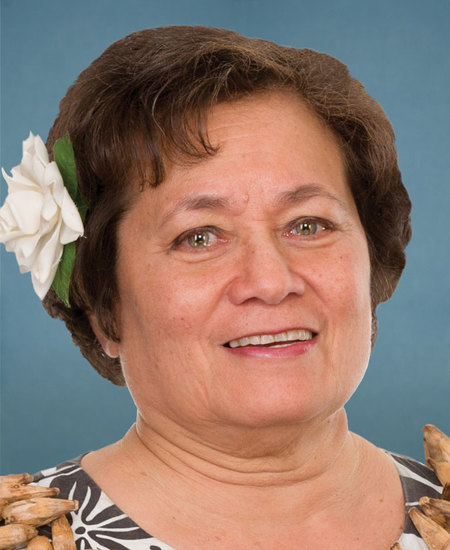
Rep. Aumua Amata Coleman Radewagen
Sponsored bills
Maddy summaryHR 315 waives specific federal procurement rules for Puerto Rico, the District of Columbia, American Samoa, and the U.S. Virgin Islands during emergencies declared under the Robert T. Stafford Disaster Relief Act. It prevents the FEMA Administrator from requiring these areas to follow Chapter 83 of Title 41 (which governs federal procurement standards) when purchasing emergency supplies or issuing contracts. This allows faster, more flexible emergency response without needing to comply with standard federal buying procedures. The bill directly affects territorial and local governments' ability to rapidly acquire resources during declared disasters.
This resolution honors the life, achievements, legacy, and distinguished public service of former President Jimmy Carter. The resolution also (1) acknowledges President Carter's contributions to the state of Georgia, the United States, and the world; and (2) establishes his legacy as one of the great leaders and statesmen of the United States.
Maddy summaryHR 314, the Empowering Nonprofits Act, reduces the cost-sharing requirement for certain nonprofit organizations receiving federal grants. Specifically, it lowers the nonprofit's share of grant costs by 25% for five years after enactment for organizations located in states where over 20% of people live below the federal poverty line. This applies only to 501(c)(3) nonprofits that are exempt from federal income tax. The bill directly affects eligible nonprofits in high-poverty states by making federal grants more accessible with lower upfront financial obligations. It modifies existing grant rules without creating new programs or changing eligibility for other organizations.
Maddy summaryHR 82, the Social Security Fairness Act of 2023, repeals two provisions that reduce Social Security benefits for certain government workers. It eliminates the Government Pension Offset (GPO), which cuts spousal or survivor benefits for people with pensions from jobs not covered by Social Security (like federal or state government roles), and the Windfall Elimination Provision (WEP), which lowers retirement benefits for those with similar pensions. The law takes effect for benefits paid after December 2023, requiring the Social Security Administration to adjust benefit calculations to remove these reductions. This change directly affects public-sector employees who previously had their Social Security benefits reduced due to their government pensions.
Maddy summary# Summary of the EXPLORE Act Legislative Text This is a comprehensive legislative text (likely the "EXPLORE Act" - Enhancing Recreation Opportunities for People of All Abilities, and Veterans) that establishes several key initiatives to improve outdoor recreation access across Federal lands. ## Key Focus Areas: ### 1. Accessibility for People with Disabilities (Title II - Access America) - Requires comprehensive assessments of outdoor recreation facilities on Federal lands within 5 years - Mandates development of 3 new accessible trails per region for each agency (Forest Service, National Park Service, BLM, USFWS) within 1 year - Requires development of 2 new accessible recreation opportunities per region within 1 year - Requires making accessibility information available on public websites within 7 years - Requires development of accessible features including trail bridges, parking, and restrooms ### 2. Military and Veterans Programs - Requires educational materials for military members/veterans on accessing Federal lands free of charge within 2 years - Establishes Military Veterans Outdoor Recreation Liaisons within relevant agencies within 1 year - Requires a National Strategy for Military and Veteran Recreation within 1 year - Creates a pilot program for veteran employment in conservation positions - Promotes partnerships with organizations providing outdoor recreation for veterans ### 3. Youth Access - Requires a strategy to increase youth recreation visits to Federal lands within 2 years - Extends the "Every Kid Outdoors" program until September 30, 2031 - Focuses on increasing opportunities for underserved youth ### 4. Recreation Permitting Modernization (Title III) - Defines special recreation permits and establishes fee structures - Creates categories for different types of recreation permits - Establishes a process for application and review of permits - Includes provisions for multijurisdictional trips across different Federal lands The legislation aims to improve access to outdoor recreation for people with disabilities, veterans, and youth while modernizing the permitting process for recreational activities on Federal lands. It requires specific timelines for implementation and includes detailed definitions and requirements for each component of the bill.
Maddy summaryHR 6062 repeals a provision requiring a two-thirds vote for American Samoans to approve constitutional amendments, restoring the ability for the territory's residents to vote on such changes using simple majority rule. This directly affects American Samoan citizens, who would now need only a majority vote (instead of a two-thirds vote) to approve constitutional amendments. The bill removes a restriction established by Public Law 98-213, aligning with historical authority under Executive Order 10264 (1951) that previously allowed constitutional amendments without congressional approval. The change aims to strengthen self-governance in American Samoa through democratic voting processes.
Maddy summaryThe FISHES Act (HR 5103) streamlines access to emergency disaster funds for fisheries by setting strict deadlines for federal review. It requires the Secretary of Commerce to review and provide notice on spend plans within 10 days of submission and mandates that funds be made available to grantees no later than 90 days after a complete spend plan is received. This directly affects fisheries that have received a formal "fishery resource disaster" determination, ensuring faster disbursement of funds for recovery efforts. The bill also prohibits the Office of Management and Budget from delaying these timelines during concurrent review. The law aims to reduce bureaucratic delays in post-disaster funding without altering the underlying disaster assistance program.
Maddy summaryThis bill requires the U.S. Secretary of the Interior to study whether Lahaina, Hawaii (specifically the census-designated place in Maui County) should become a National Heritage Area - a federal program recognizing places with significant cultural or historical resources. The study will assess if designating Lahaina as such is suitable and feasible, involving coordination with Maui County, Hawaii state officials, historic preservation groups, and tourism entities. It does not create the heritage area itself but evaluates the potential for future designation. The bill directly affects Lahaina residents, local historic preservation efforts, and tourism stakeholders in the area.
Maddy summaryThis bill approves new agreements that amend the Compact of Free Association between the United States and the Federated States of Micronesia, the Republic of the Marshall Islands, and the Republic of Palau. It incorporates related agreements including fiscal procedures and trust fund agreements that govern how U.S. funding is managed and distributed to these nations. The bill provides funding for 2024-2043 to support programs like healthcare, education, veterans' services, and economic development in the Freely Associated States. It establishes reporting requirements and oversight mechanisms for federal agencies implementing these agreements. The bill directly affects U.S. federal agencies, the Freely Associated States, and U.S. funding mechanisms for these Pacific Island nations.