

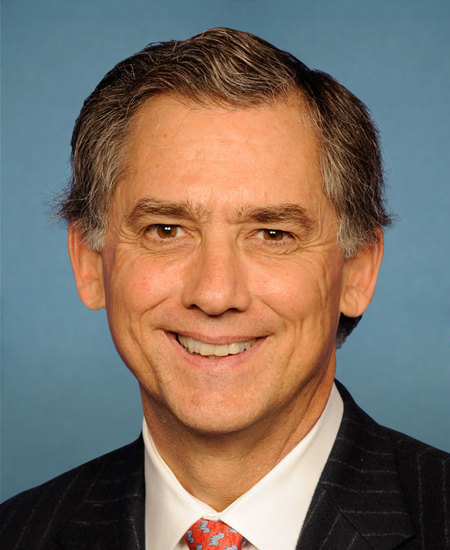
Photo of J. French Hill
R United States House · District 2 · Arkansas On the 2026 ballot

Rep. J. French Hill

Compare
Total votes
2,837
all sessions
Attendance
99%
31 missed
Near the chamber average
With party
95%
of cast votes
Near the chamber average
Bipartisan score
3%
crosses aisle rarely
Near the chamber average
Sponsored
666
bills & resolutions
Lower than 86% of chamber peers
Committees
4
assignments
666 bills and resolutions

Sponsored bills

Total
666
Primary
93
Co-sponsor
573
This page
666
matching current filters
Co-sponsor HR 9278
In committee · United States House · Co-sponsor
To amend section 5336 of title 31, United States Code, to provide existing small businesses with an additional year to file beneficial ownership information, and for other purposes.

Maddy summaryHR 9278 extends the deadline for small businesses to file beneficial ownership information with FinCEN. It amends U.S. Code Section 5336 to give small business concerns (as defined in the Small Business Act) until December 31, 2025, to submit required ownership details. This change applies directly to small businesses already subject to the reporting rules under the Corporate Transparency Act. The bill provides a one-year extension from the original deadline, allowing these businesses additional time to comply with the filing requirement.

In committee Aug 2, 2024 1 co-sponsor
Co-sponsor HR 9282
In committee · United States House · Co-sponsor
Counter SNIPER Act

Maddy summaryThe Counter SNIPER Act (HR 9282) establishes a formal process for presidential and vice-presidential candidates seeking protective details from the U.S. Secret Service. If the Secretary of Homeland Security denies a request, they must provide a written explanation within 14 days, detailing the criteria not met, and allow candidates to request reconsideration with supporting evidence. The Secretary must then issue a final written decision within 14 days of the reconsideration request. Additionally, the bill requires the Director of the U.S. Secret Service to be appointed by the President with Senate confirmation.

In committee Aug 2, 2024 1 co-sponsor
Co-sponsor HR 9260
In committee · United States House · Co-sponsor
Freedom from Unfair Gun Taxes Act of 2024

Freedom from Unfair Gun Taxes Act of 2024 This bill prohibits states or localities from imposing a levy or collecting an excise tax on the sale of a firearm, ammunition, or any part or component thereof, by a manufacture or retailer.

In committee Aug 2, 2024 1 co-sponsor
Co-sponsor HJRES 127
In committee · United States House · Co-sponsor
Providing for congressional disapproval under chapter 8 of title 5, United States Code, of the rule submitted by the Securities and Exchange Commission relating to "The Enhancement and Standardization of Climate-Related Disclosures for Investors".

Maddy summaryHJRES 127 is a congressional disapproval resolution targeting a Securities and Exchange Commission (SEC) rule requiring public companies to standardize climate-related financial disclosures. It seeks to block the SEC’s March 2024 rule (89 Fed. Reg. 21668), which would mandate consistent reporting on climate risks for investors. If passed, this resolution would prevent the SEC rule from taking effect, directly affecting publicly traded companies required to comply with the proposed disclosure standards. The bill uses a specific congressional process under Title 5, U.S. Code, to nullify the rule without creating new regulations.

In committee Jul 30, 2024 1 co-sponsor
Co-sponsor HJRES 124
In committee · United States House · Co-sponsor
Providing for congressional disapproval under chapter 8 of title 5, United States Code, of the rule submitted by the Office of the Comptroller of the Currency relating to "Principles for Climate-Related Financial Risk Management for Large Financial Institutions".

Maddy summaryHJRES 124 is a resolution seeking congressional disapproval of a rule issued by the Office of the Comptroller of the Currency (OCC) that required large financial institutions to adopt climate-related risk management practices. The rule, published in October 2023 (88 Fed. Reg. 74183), would have mandated major banks to assess and manage climate change risks in their operations. This resolution, if passed, would block the rule from taking effect by invoking the congressional disapproval process under Title 5 of the U.S. Code. It directly affects large banks and financial institutions that would have been required to comply with the climate risk management standards. The bill does not create new rules but aims to prevent the implementation of the OCC's existing proposal.

In committee Jul 30, 2024 1 co-sponsor
Co-sponsor HJRES 126
In committee · United States House · Co-sponsor
Providing for congressional disapproval under chapter 8 of title 5, United States Code, of the rule submitted by the Federal Deposit Insurance Corporation relating to "Principles for Climate-Related Financial Risk Management for Large Financial Institutions".

Maddy summaryHJRES 126 is a congressional disapproval resolution targeting a Federal Deposit Insurance Corporation (FDIC) rule issued in October 2023. The resolution seeks to block the FDIC's "Principles for Climate-Related Financial Risk Management for Large Financial Institutions" rule, which required major banks to assess climate risks. If passed, this resolution would nullify the rule, directly affecting large financial institutions by removing a requirement to manage climate-related financial risks. The resolution uses a procedural mechanism under federal law to halt the rule's implementation without creating new regulations.

In committee Jul 30, 2024 1 co-sponsor
Co-sponsor HJRES 122
In committee · United States House · Co-sponsor
Providing for congressional disapproval under chapter 8 of title 5, United States Code, of the rule submitted by the Bureau of Consumer Financial Protection relating to "Credit Card Penalty Fees (Regulation Z)".

Maddy summaryHJRES 122 is a resolution seeking to block a rule by the Consumer Financial Protection Bureau (CFPB) that would have regulated credit card penalty fees. The rule, published on March 15, 2024, aimed to limit how credit card companies charge fees for late payments or other violations. If approved, this resolution would disapprove the rule under a specific legal process, preventing it from taking effect. This directly affects credit card issuers (banks and financial institutions) by allowing them to continue current fee practices without the proposed restrictions.

In committee Jul 30, 2024 1 co-sponsor
Co-sponsor HRES 1395
In committee · United States House · Co-sponsor
Expressing the sense of the House of Representatives that it is unacceptable that the People's Republic of China and the Russian Federation are outpacing the United States in expanding nuclear energy production and global nuclear market share.

Maddy summaryHRES 1395 is a non-binding House resolution expressing concern that the U.S. is being outpaced by China and Russia in nuclear energy production and global market share. It cites statistics showing China has 56 operational reactors (vs. the U.S.'s 94, including retired ones) and is actively constructing more, while the U.S. has no reactors under construction. The resolution states it is "unacceptable" that the U.S. is no longer dominant in nuclear energy and urges expanding domestic nuclear capacity and supply chains. As a symbolic resolution, it does not create new laws or funding but highlights perceived strategic competition in nuclear technology.

In committee Jul 30, 2024 1 co-sponsor
Co-sponsor HR 9202
In committee · United States House · Co-sponsor
Nuclear Waste Reprocessing Act

Maddy summaryHR 9202, the Nuclear Waste Reprocessing Act, directs the U.S. Department of Energy to create policies supporting the commercial recycling of spent nuclear fuel. It requires the Energy Secretary to work with private industry to advance reprocessing technologies, establish partnerships for research and commercialization, and collaborate with the Nuclear Regulatory Commission to align procedures. The bill mandates annual progress reports to Congress on efforts to develop this technology, aiming to address nuclear waste challenges and position the U.S. as a leader in international reprocessing. It directly affects federal agencies, nuclear energy companies, and the management of nuclear waste materials. The key change is shifting focus toward recycling nuclear fuel components rather than solely storing spent fuel as waste.

In committee Jul 30, 2024 1 co-sponsor
Co-sponsor HR 9200
In committee · United States House · Co-sponsor
Atomic Supply Chain Solutions Act

Maddy summaryThis bill requires the U.S. Energy Secretary to conduct a comprehensive evaluation of the domestic nuclear supply chain within 270 days of enactment. The evaluation must assess regulatory hurdles (like N-stamp certification for safety components), explore how advanced technologies (such as 3D printing and AI) could improve efficiency, analyze U.S.-Canada collaboration, and plan for future demand from advanced nuclear reactors. It directly affects nuclear energy companies, manufacturers, and regulators by mandating a federal review to identify supply chain bottlenecks and opportunities for modernization. The bill does not change existing regulations or funding but sets the stage for potential future policy decisions based on the evaluation’s findings.

In committee Jul 30, 2024 1 co-sponsor
Showing 211 to 220 of 666 bills
Previous 1 … 21 22 23 … 67 Next