

Maddy summaryHR 5641, the Pay Our Troops Act, ensures military personnel and their support staff continue receiving pay during fiscal year 2024 if Congress fails to pass regular budget appropriations. It appropriates existing Treasury funds to cover pay and allowances for active-duty troops, reserve components, and civilian employees or contractors supporting military operations. The bill automatically terminates on January 1, 2025, or earlier if Congress enacts a regular budget or continuing resolution. This provision directly affects service members, Department of Defense staff, and Coast Guard personnel (when not under the Navy) during budget implementation gaps.
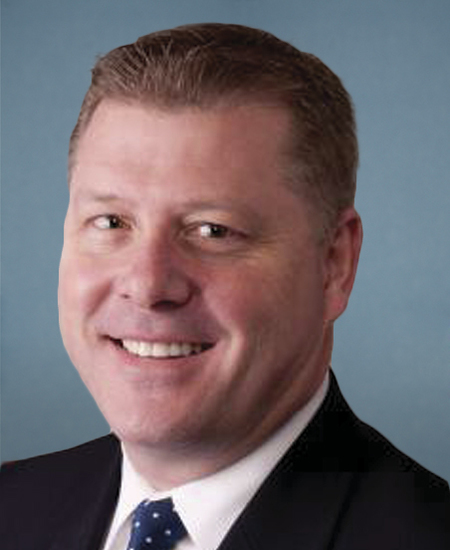
Rep. Eric A. "Rick" Crawford
Sponsored bills
This concurrent resolution recognizes the 10th anniversary of the Rice Stewardship Partnership and the contributions of Ducks Unlimited and USA Rice to environmental stewardship.
Maddy summaryThis bill extends existing aviation programs and tax authorities through December 2023. It modifies deadlines for airport improvement grants (extending $842 million in funding for Q4 2023), unmanned aircraft regulations, FAA operations, and key tax collections like fuel and ticket taxes. These changes maintain current funding levels for airports, airlines, and FAA programs relying on the Airport and Airway Trust Fund. The bill does not create new programs but ensures continuity of existing authorizations. It directly affects airports receiving federal grants, airlines paying aviation taxes, and FAA operational activities.
Pay Our Border Patrol and Customs Agents Act This bill provides FY2024 appropriations for the salaries and expenses of certain U.S. Customs and Border Protection (CBP) employees who are required to work during a lapse in appropriations (i.e., government shutdown) in FY2024. Specifically, the bill provides appropriations to CBP for the salaries and expenses of agents of the U.S. Border Patrol and officers of the Office of Field Operations who are excepted from furlough (i.e., required to work) during a lapse in discretionary appropriations in FY2024.
Maddy summaryHR 5561, the Protecting the Right to Keep and Bear Arms Act of 2023, prevents federal agencies from using emergency declarations to implement gun control measures. It specifically prohibits the President from declaring a national emergency under the National Emergencies Act or the Robert T. Stafford Act for gun control purposes, and stops the Health and Human Services Secretary from declaring a public health emergency under the Public Health Service Act for the same reason. The bill also amends the Stafford Act to explicitly prohibit any emergency-related restrictions on possessing, manufacturing, selling, or transferring firearms, ammunition, ammunition feeding devices, or firearm accessories. This directly affects how federal agencies can respond during emergencies without violating the Second Amendment. The law aims to limit executive actions during emergencies that could restrict gun rights.
Maddy summaryHRES 684 is a symbolic congressional resolution passed by the U.S. House of Representatives on September 14, 2023, condemning New Mexico Governor Michelle Lujan Grisham's emergency order that temporarily suspended open and concealed carry firearm rights for 30 days. The resolution asserts the order violated the Second Amendment, citing Supreme Court precedents (Heller, McDonald, Bruen) and noting a federal judge had already blocked the order's firearm restrictions. It does not change any laws or impose legal consequences - it is solely a formal expression of disapproval from Congress. The resolution directly addresses the Governor's actions but has no effect on New Mexico's laws or citizens' rights.
Maddy summaryHR 5455, the Collision Avoidance Systems Act of 2023, allows automakers to install pulsating light systems as rear-end collision avoidance technology on new vehicles. The bill requires the Secretary of Transportation to issue new regulations within 180 days updating Federal Safety Standard 108 to include performance-based rules for these systems. Specifically, it defines a "pulsating light system" as a high-mounted brake light that flashes rapidly (up to 4 times for no more than 1.2 seconds) before switching to steady light, with a 5-second lockout period after braking stops. This directly affects vehicle manufacturers who must comply with the updated safety standards for brake lights.
Maddy summaryHR 5448, the Countering CCP Fentanyl Trafficking Act, requires the President to identify and sanction Chinese government officials who knowingly assist Mexican drug cartels with fentanyl production or trafficking. The bill mandates the President to submit a public list of these officials within 60 days of enactment, updating it annually for 10 years. Sanctions include blocking U.S. assets of listed individuals and denying them visas or entry into the United States. The law includes limited exemptions for UN-related activities and national security operations, and expires after 10 years.
Maddy summaryThis bill prohibits U.S. foreign aid to countries determined by the President to use foreign commercial spyware against U.S. persons. It requires the President to assess if a country has acquired such spyware, used it against journalists or activists, or failed to address misuse before blocking aid. The prohibition excludes military assistance and allows a presidential waiver for national security reasons. The President must annually report to Congress on spyware use by countries receiving aid, using intelligence community data.
Maddy summaryThis resolution supports designating September 22 as "National Military and Veterans Suicide Awareness Day" to raise public awareness about suicide prevention among active-duty service members and veterans. It does not create new policies or funding but aims to highlight mental health challenges like PTSD and depression that contribute to higher suicide rates in these communities. The resolution emphasizes reducing stigma and encouraging help-seeking during Suicide Prevention Awareness Month (September). It directly affects military personnel, veterans, and the public by promoting national attention to this issue through a designated awareness day.