

Maddy summaryThis bill authorizes a Congressional Gold Medal to honor the "Hello Girls" - female telephone operators who served in the Army Signal Corps during World War I. They provided critical battlefield communications in France (connecting 26 million calls), wore military uniforms, and faced combat risks, but were denied veteran benefits for 60 years due to being classified as civilian contractors. The medal recognizes their pioneering service, devotion, and the decades-long struggle to gain military recognition. The award follows similar recognition for other WWII women veterans and aims to correct the historical injustice they faced.
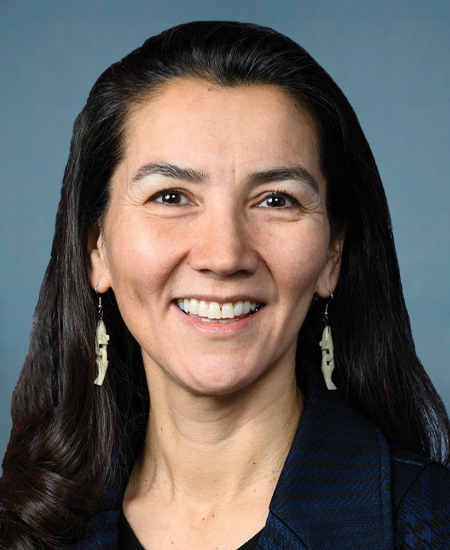
Rep. Mary Sattler Peltola
Sponsored bills
Maddy summaryThis bill removes federal restrictions that previously limited methadone prescribing for opioid use disorder, allowing certified addiction specialists and program employees to prescribe methadone through pharmacies for up to 30 days per electronic prescription. It directly affects patients with opioid use disorder who can now access treatment more flexibly outside traditional clinic settings, and healthcare providers who gain new prescribing authority. Key provisions include requiring electronic prescriptions, mandating patient informed consent about confidentiality differences, and permitting telehealth for counseling and ancillary services. The bill also requires annual reports to Congress tracking registered providers and patients served.
Maddy summaryThe Paycheck Fairness Act (HR 17) strengthens equal pay protections by amending the Fair Labor Standards Act. It prohibits pay discrimination based on sex, pregnancy, childbirth, sexual orientation, gender identity, and sex characteristics. The bill modifies employer defenses for pay differences to require demonstration that any disparity is job-related, consistent with business necessity, and accounts for the entire pay differential. It also prohibits employers from relying on wage history when making hiring decisions or setting pay, enhances penalties for violations, and requires the EEOC to collect compensation data disaggregated by sex, race, and national origin.
Maddy summaryHCONRES 22 is a symbolic resolution recognizing the persistent gender pay gap in the U.S., documenting that women earn significantly less than men across racial groups (e.g., Black women earn 67 cents for every dollar earned by White men). It highlights the economic impact of this disparity, noting women lose over $958 billion annually in wages and face barriers like occupational segregation and workplace harassment. The resolution does not create new laws or policies but formally acknowledges the issue and reaffirms Congress’s commitment to addressing the gap. It references specific Equal Pay Days (e.g., March 14 for all women) to underscore the time women must work to earn what men did the previous year.
Maddy summaryHR 1491, the Small Business Energy Loan Enhancement Act, increases the maximum loan amount for energy-related small business loans under the Small Business Investment Act of 1958 from $5.5 million to $10 million. This directly affects small businesses seeking financing for energy efficiency or renewable energy projects by doubling their potential loan access. The bill requires the Small Business Administration to submit annual reports to Congress detailing which industries and geographic areas received these enhanced loans. These changes aim to expand access to capital for qualifying energy projects without altering eligibility criteria.
Maddy summaryHR 1434, the "Stop Our Sexual Assault in the Military Act," requires active-duty members of the U.S. Armed Forces to receive monthly self-defense training focused on preventing sexual assault as part of their regular physical training. This training replaces one day of existing monthly physical training, without increasing the total required training days. The bill directly affects all active-duty military personnel by integrating this specific self-defense component into their standard monthly training schedule. It mandates this change through a new provision (Section 2018) added to Title 10 of the U.S. Code. The law focuses solely on implementing this training requirement, with no other substantive policy changes described.
Maddy summaryHR 1415 creates federal grants to help high-need schools hire or retain school social workers, aiming to achieve a ratio of one social worker for every 250 students (and one for every 50 students in high-need cases). The bill authorizes $100 million annually (2024-2028) for grants to local school districts, requiring funds to supplement - never replace - existing budgets. School social workers funded through these grants must provide mental health support, crisis intervention, trauma-informed services, and help address barriers like homelessness or food insecurity. The law also establishes a national center to share best practices on school social work staffing and outcomes.
Maddy summaryHR 1388 authorizes the minting of commemorative coins to honor the 1865 Sultana steamboat disaster, the deadliest maritime tragedy in U.S. history. It specifies three coin types ($5 gold, $1 silver, and half-dollar) with defined weights and compositions, to be sold at face value plus surcharges ($35, $10, and $5 per coin, respectively). All surcharges collected will fund the Sultana Historical Preservation Society for museum development, including exhibits, artifact preservation, and facility construction. The coins are legal tender but intended for collectors, with sales limited to a one-year period starting January 2023.
Patients' Right to Know Their Medication Act of 2023 This bill establishes requirements relating to the form, content, and distribution of patient safety labels for prescription drugs. Specifically, the Food and Drug Administration must issue regulations with requirements relating to the authorship, content, format, color, printing, and dissemination of such patient safety information. The regulations must require labels to include the drug's approved uses, known interactions with other drugs or substances, contact information for the drug's manufacturer, and other specified information relating to patient safety. The information must be in plain, neutral language and must be given in printed form with each prescription.
Advancing Safe Medications for Moms and Babies Act of 2023 This bill establishes programs and requirements to support the inclusion of pregnant and lactating women in clinical research. For example, the bill requires the Department of Health and Human Services to align the Food and Drug Administration's regulations for human subjects in clinical trials with other departmental regulations for pregnant women in clinical research. The bill also establishes (1) a national online clearinghouse with information about clinical trials that enroll pregnant and lactating women, (2) an advisory committee to help coordinate federal activities with respect to clinical research for pregnant and lactating women, and (3) an educational campaign on the importance of including pregnant and lactating women in clinical research. The National Institutes of Health must also prioritize certain research projects on new and existing medications for pregnant and lactating women based on need, feasibility, and the potential impact of the research.