

Maddy summaryHR 8859, the Deafblind DATA Act, requires the Census Bureau to create and publish a new annual table starting in 2026 showing the number of people in the U.S. who reported both hearing and vision loss in the American Community Survey. This table will display data by state, including sex, race, age, and economic factors like employment and income, without revealing personal details. The bill directly addresses the lack of a centralized count for deafblind individuals, who currently aren't accurately represented in census data. By cross-referencing existing survey responses, the Act aims to provide a clearer national picture to better understand and serve this population's needs.
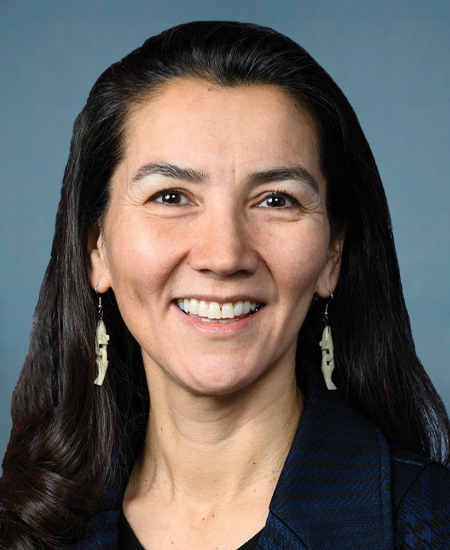
Rep. Mary Sattler Peltola
Sponsored bills
Maddy summaryThis bill requires the Secretary of Commerce to standardize and publish geospatial data about public ocean and waterway access rules on a public website within 4 years. It mandates detailed information on where fishing is restricted, waterway closures, speed limits, allowed vessel types (like motorboats or kayaks), and fishing method rules. The data will include geographic boundaries of protected areas, seasonal closures, and navigation details like depth charts. This directly affects recreational users (boaters, anglers) and commercial operators who need clear, up-to-date access information for Federal waterways and fishing areas. The bill does not change existing fishing regulations but makes compliance information more accessible.
Maddy summaryHR 6841 creates a new Coastal and Estuarine Resilience and Restoration Program under the Coastal Zone Management Act, authorizing the Secretary of Commerce to protect and restore coastal and estuarine areas. The program prioritizes lands with ecological, recreational, or community value that face development threats or climate impacts, with special focus on low-income communities and climate mitigation. It requires non-governmental organizations applying for grants to demonstrate public access or ecological protection, and includes $47 million annually (2024-2028) for these efforts. This directly affects coastal states, local communities, and conservation groups managing vulnerable coastal lands.
Maddy summaryThis bill establishes a Department of the Interior program to support Indian Tribes and Tribal organizations in managing buffalo and buffalo habitat on Indian land. It authorizes grants, contracts, and technical assistance for tribes to restore buffalo populations, develop commercial buffalo activities, and participate in related decision-making. The program requires ongoing consultation with tribes on buffalo management and protects culturally sensitive information shared with the Department. The program will end on September 30, 2030, and explicitly preserves existing tribal treaty rights.
Maddy summaryHR 8843, the American Music Tourism Act of 2024, amends the Visit America Act to direct the Assistant Secretary of Commerce for Travel and Tourism to identify and promote U.S. locations and events significant to music tourism for both domestic and international travelers. It requires the Assistant Secretary to specifically promote travel to music-related attractions (like museums, studios, and venues) and music festivals/concerts. The bill also defines "music tourism" as traveling to visit music sites or attend live music events. Finally, it mandates an annual report to Congress on progress toward these tourism goals, starting one year after the bill's enactment.
Maddy summaryThis bill (HR 1208) amends the 1934 Indian Reorganization Act to clarify that the Secretary of the Interior can take land into trust for any federally recognized tribe, updating outdated language. It specifically revises Section 19 to replace "any recognized Indian tribe now under Federal jurisdiction" with "any federally recognized Indian Tribe." The bill also ratifies and confirms all past land trust decisions made for federally recognized tribes, protecting those actions from legal challenges based on historical recognition status. This change directly affects federally recognized tribes by ensuring their land trust authority remains valid under current law.
Maddy summaryThis bill would make the Commandant of the Coast Guard a permanent voting member of the Joint Chiefs of Staff, the top military advisory body to the President. It amends Title 10 of U.S. Code to add the Commandant to the Joint Chiefs' membership and updates related references from "Navy" to "Navy or Coast Guard" in leadership appointments and duties. The Commandant would then be required to fulfill standard Joint Chiefs duties while keeping the Secretary of Homeland Security informed about military operations affecting the Coast Guard's responsibilities. The bill directly affects Coast Guard leadership and military coordination procedures, without changing the Coast Guard's operational authority or missions.
Maddy summaryHR 2964, the WIPPES Act, requires clear "Do Not Flush" labeling on specific premoistened wipes to prevent wastewater pollution. It directly affects manufacturers, retailers, and sellers (covered entities) of wipes marketed as baby wipes or certain household/personal care wipes containing petrochemical fibers with flush potential. The bill mandates that these products display both the text "Do Not Flush" and a standardized symbol on packaging in highly visible locations meeting specific size and contrast requirements, while banning "flushable" marketing claims. Violations would be enforced by the Federal Trade Commission as deceptive practices, with daily penalties up to $2,500 per violation.
Maddy summaryHR 537 authorizes a Congressional Gold Medal to honor 60 diplomats who saved Jewish lives during the Holocaust by issuing visas and passports against their governments' orders, risking expulsion and personal danger. The medal will be presented to the next of kin of these diplomats, alongside representatives from their home countries, and permanently displayed at the United States Holocaust Memorial Museum. The bill also permits the sale of bronze duplicates to cover production costs, with proceeds going to the U.S. Mint. This legislation recognizes the diplomats' humanitarian actions without creating new government programs or altering existing laws.
Maddy summaryThis resolution (HRES 1286) supports continued U.S. funding for Gavi, the Vaccine Alliance, to expand access to vaccines in low-income countries. It directly aids children and communities in these nations by enabling immunization against preventable diseases like measles, malaria, and polio, which has averted an estimated 17.3 million deaths since 2000. Key provisions highlight Gavi's role in reducing child mortality from vaccine-preventable diseases by 70%, achieving a $54 economic return for every $1 invested, and strengthening health systems through cold-chain infrastructure. The resolution urges sustained U.S. financial commitments to maintain Gavi's market-shaping impact, support malaria vaccine rollout, and ensure global health security.