

Advancing International and Foreign Language Education Act This bill reauthorizes through FY2027 and otherwise revises international education programs. These programs provide grants to institutions of higher education and related entities to (1) enhance instruction in international and foreign language studies, and (2) promote international business skills and education. First, the bill reauthorizes programs related to international and foreign language studies. Specifically, it extends (1) the Graduate and Undergraduate Language and Area Centers and Programs, which include the National Resource Centers program; (2) the Language Resource Centers; (3) the Undergraduate International Studies and Foreign Language Programs; and (4) the American Overseas Research Centers. Next, the bill revises the Foreign Language and Area Studies Fellowships program to permit graduate students to receive a stipend for the beginning, intermediate, or advanced study of a foreign language related to the student's area of specialization. Further, the bill replaces the existing Technological Innovation and Cooperation for Foreign Information Access program with an international research and innovation program. Additionally, the bill reauthorizes programs related to international business skills and education. Specifically, it reauthorizes the Centers for International Business Education program. It also reauthorizes the Education and Training program and otherwise makes changes to the program, including by (1) renaming the program; and (2) mandating certain program activities, such as the incorporation of specified programs and studies into professional education and technical training curricula. Finally, the bill permits the Department of Education to prioritize grant applications from minority-serving institutions.
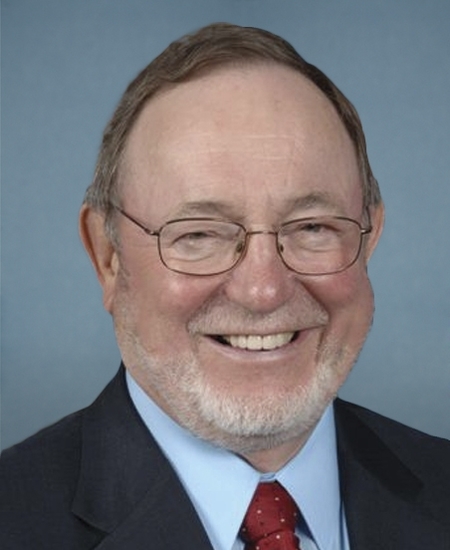
Rep. Don Young
Sponsored bills
Mark Takai Atomic Veterans Healthcare Parity Act This bill includes veterans who participated in the cleanup of Enewetak Atoll in the Marshall Islands between January 1, 1977, and December 31, 1980, as radiation-exposed veterans for purposes of the Department of Veterans Affairs presumption of service-connection for specified cancers. Under a presumption of service-connection, specific conditions diagnosed in certain veterans are presumed to have been caused by the circumstances of their military service. Health care benefits and disability compensation may then be awarded.
Mainstreaming Addiction Treatment Act of 2021 This bill removes the requirement that a health care practitioner apply for a separate waiver through the Drug Enforcement Administration (DEA) to dispense certain narcotic drugs (e.g., buprenorphine) for maintenance or detoxification treatment (i.e., substance use disorder treatment). Further, a community health aide or community health practitioner may dispense certain narcotic drugs for maintenance or detoxification treatment without registering with the DEA if the drug is prescribed by a health care practitioner through telemedicine. It preempts state laws related to licensure for this activity. The bill also directs the Substance Abuse and Mental Health Services Administration to conduct a national campaign to educate health care practitioners and encourage them to integrate substance use disorder treatment into their practices.
Pain-Capable Unborn Child Protection Act This bill establishes a new criminal offense for performing or attempting to perform an abortion if the probable post-fertilization age of the fetus is 20 weeks or more. A violator is subject to criminal penalties—a fine, a prison term of up to five years, or both. The bill provides exceptions for an abortion (1) that is necessary to save the life of the pregnant woman, or (2) when the pregnancy is the result of rape or incest. A physician who performs or attempts to perform an abortion under an exception must comply with specified requirements. A woman who undergoes a prohibited abortion may not be prosecuted for violating or conspiring to violate the provisions of this bill.
This resolution supports the naming of surviving family members of veterans who die by suicide as Gold Arrow Families . The resolution also promotes awareness for the needs of such family members and determines that suicide by veterans can be reduced through the adoption of programs and legislation that provide Gold Arrow Families with resources.
Life at Conception Act This bill declares that the right to life guaranteed by the Constitution is vested in each human being at all stages of life, including the moment of fertilization, cloning, or other moment at which an individual comes into being. Nothing in this bill shall be construed to authorize the prosecution of any woman for the death of her unborn child.
Protect Our Military Families' 2nd Amendment Rights Act This bill broadens the scope of allowable firearms transactions involving active duty service members and their spouses. Specifically, the bill allows a licensed gun dealer, importer, or manufacturer to sell or ship a firearm or ammunition to the spouse of a member of the Armed Forces on active duty outside the United States. Current law already allows a licensed dealer, importer, or manufacturer to sell or ship a firearm or ammunition to a member of the Armed Forces on active duty outside the United States. The bill also specifies that, for purposes of federal firearms laws, a member of the Armed Forces on active duty, or his or her spouse, is a resident of the state in which (1) the member or spouse maintains legal residence, (2) the permanent duty station of the member is located, and (3) the member maintains a home from which he or she commutes to the permanent duty station.
No Taxpayer Funding for Abortion and Abortion Insurance Full Disclosure Act of 2021 This bill modifies provisions relating to federal funding for, and health insurance coverage of, abortions. Specifically, the bill prohibits the use of federal funds for abortions or for health coverage that includes abortions. Such restrictions extend to the use of funds in the budget of the District of Columbia. Additionally, abortions may not be provided in a federal health care facility or by a federal employee. Historically, language has been included in annual appropriations bills for the Department of Health and Human Services (HHS) that prohibits the use of federal funds for abortions—such language is commonly referred to as the Hyde Amendment. Similar language is also frequently included in appropriations bills for other federal agencies and the District of Columbia. The bill makes these restrictions permanent and extends the restrictions to all federal funds (rather than specific agencies). The bill's restrictions regarding the use of federal funds do not apply in cases of rape, incest, or where a physical disorder, injury, or illness endangers a woman's life unless an abortion is performed. The Hyde Amendment provides the same exceptions. The bill also prohibits qualified health plans from including coverage for abortions. Currently, qualified health plans may cover abortion, but the portion of the premium attributable to abortion coverage is not eligible for subsidies.
Mongolia Third Neighbor Trade Act This bill allows the President to provide duty-free treatment for certain apparel and textile articles imported from Mongolia.
Finish the Wall Act This bill requires the Department of Homeland Security (DHS) to resume activities related to the construction of a barrier system along the U.S.-Mexico border and addresses other border-related issues. DHS must resume all such construction activities that were planned or underway prior to January 20, 2021. DHS must also expend all funds appropriated or explicitly obligated since October 1, 2016, for construction of this barrier system. DHS may not cancel contracts for activities related to such construction entered into on or before January 20, 2021. Furthermore, within 14 days of this bill's enactment, DHS must certify to Congress that U.S. Customs and Border Protection facilities that process adults taken into custody at the border are fully compliant with certain laws related to the collection of DNA. (Among other things, these laws allow for the collection of DNA samples from non-U.S. persons detained under U.S. authority.)