Issue · Veterans

Veterans (National Guard & Reserve)

Every veterans bill, vote, and legislator stance in United States, automatically classified by Maddy, our AI policy reader.

Total bills
125
119th Congress
Top supporter
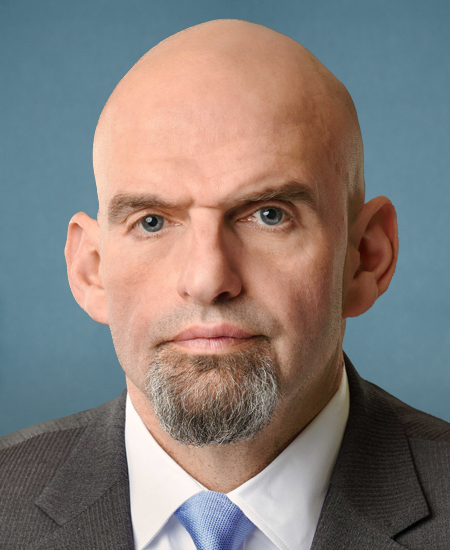
John Fetterman
100% support rate
Top opponent
Rand Paul
0% support rate
Ranked legislators
10
5 support · 5 oppose
Key legislators

Who's moving national guard & reserve in United States

Legislators moving national guard & reserve in United States
Legislator Party Stance Support rate Decisive votes
John Fetterman
John Fetterman Senate
D
Strong +
100% 22
Mike Johnson
Mike Johnson House · District 4
R
Strong +
100% 7
Clay Fuller
Clay Fuller House · District 14
R
Strong +
100% 6
Angus S. King, Jr.
Angus S. King, Jr. Senate
I
Strong +
92% 24
Ashley Moody
Ashley Moody Senate
R
Strong +
92% 24
Rand Paul
Rand Paul Senate
R
Strong −
0% 24
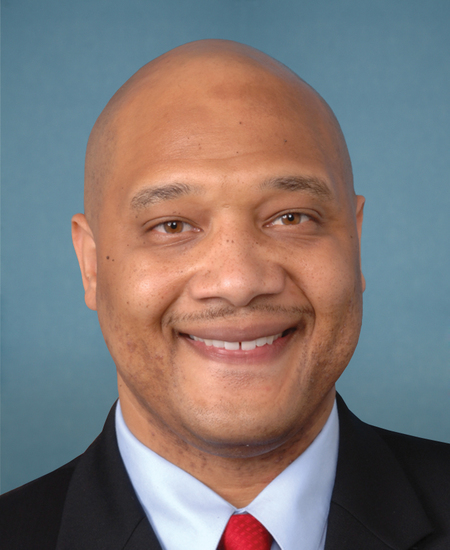
André Carson
André Carson House · District 7
D
Strong −
0% 8
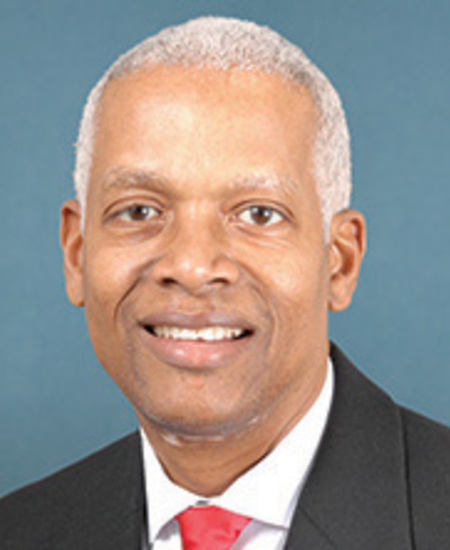
Henry C. "Hank" Johnson, Jr.
Henry C. "Hank" Johnson, Jr. House · District 4
D
Strong −
0% 8
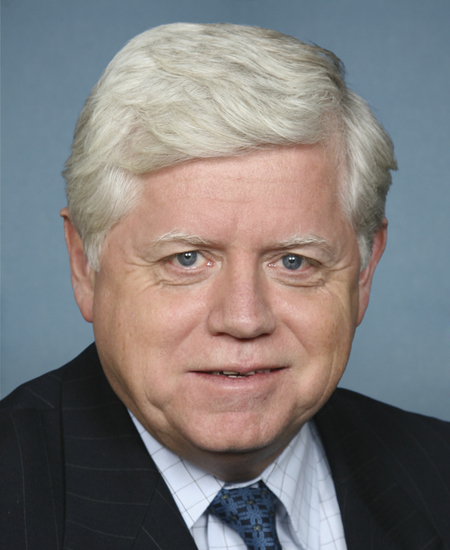
John B. Larson
John B. Larson House · District 1
D
Strong −
0% 8
Adelita S. Grijalva
Adelita S. Grijalva House · District 7
D
Strong −
0% 7
Showing 81–90 of 125 bills

All veterans bills

passed · United States · Senate Mar 16, 2026

S 2074: Servicemembers’ Credit Monitoring Enhancement Act

This bill amends the Fair Credit Reporting Act to update terminology related to military members' credit protections. It replaces the outdated term "active duty military consumer" with the broader "armed forces member consumer," which now includes all military members regardless of current duty status (e.g., active duty, reservists, National Guard). This change ensures credit reporting rules consistently apply to all service members when credit bureaus handle their information. The amendment directly affects how credit bureaus and lenders identify and apply protections under the Fair Credit Reporting Act for military personnel.
in committee · United States · House Aug 5, 2025

HR 4893: National Guard and Reserve Student Loan Fairness Act

This bill helps National Guard and Reserve members who make student loan payments while serving by counting their service time toward student loan forgiveness. It allows the government to automatically count each month of qualifying service (based on retirement points) as a qualifying payment for loan forgiveness programs, without requiring members to apply separately. The Department of Defense and Department of Education will jointly match service records with loan payment data to verify eligibility. This directly benefits reserve members who serve full or partial years (measured in retirement points) while making eligible student loan payments.
in committee · United States · House May 23, 2025

HR 3594: Gold Star Spouses Health Care Enhancement Act

The Gold Star Spouses Health Care Enhancement Act removes a three-year waiting period that previously prevented surviving spouses of military members who died in the line of duty (known as Gold Star spouses) from immediately accessing TRICARE Prime medical and dental benefits. The bill amends existing law to eliminate this time limit, allowing these spouses to qualify for coverage without delay, regardless of when their military spouse died. This change applies retroactively to all affected spouses, even if the death occurred before the bill's enactment. The legislation directly expands health care access for Gold Star spouses by removing a key barrier to receiving military health benefits.
in committee · United States · Senate Dec 9, 2025

S 972: Fairness in Veterans' Education Act of 2025

This bill amends how the military calculates contributions toward Post-9/11 GI Bill benefits for service members. It removes an outdated phrase in the existing law (Section 3327(f)(3) of Title 38) to adjust the repayment calculation method. The change directly affects veterans and active-duty service members who use or have used the Post-9/11 Educational Assistance benefit. The amendment takes effect on August 1, 2025, ensuring a clearer calculation process for contributions toward their education benefits.
in committee · United States · House Jun 17, 2025

HR 4045: Vietnam Veteran Commemoration Fund Act of 2025

HR 4045, the Vietnam Veteran Commemoration Fund Act of 2025, amends Section 598 of the 2008 National Defense Authorization Act to make the commemoration program for the 50th anniversary of the Vietnam War mandatory. The bill changes language from "may conduct" to "shall conduct" for the Secretary of Defense, requiring them to carry out the existing commemorative program starting November 11, 2025. This procedural change ensures the program continues without discretionary choice, directly affecting the Department of Defense's implementation of the commemoration. It does not create new funding or alter benefits, focusing solely on mandating the existing process.
in committee · United States · House May 6, 2025

HR 3219: GAMES Act

The GAMES Act (HR 3219) removes a one-year time limit for veterans to join military adaptive sports programs. Previously, veterans could only apply within one year of leaving the military, but this bill expands eligibility to allow participation at any time after separation. The change modifies Section 2564a of Title 10, U.S. Code, directly affecting veterans seeking access to these programs. This policy update simplifies access without altering program funding or structure.
passed · United States · Senate Nov 4, 2025

SRES 482: A resolution recognizing the week of November 3 through November 7, 2025, as "National Veterans Small Business Week".

SRES 482 is a ceremonial Senate resolution recognizing November 3-7, 2025, as "National Veterans Small Business Week." It does not create new laws or policies but formally acknowledges veteran-owned small businesses, which employ nearly 3.3 million people and generate over $952 billion in annual sales. The resolution expresses support for these businesses and appreciation for veterans' entrepreneurship, while highlighting the Senate Committee on Small Business and Entrepreneurship’s annual observance of this week. It has no direct impact on regulations, funding, or veteran business operations.
in committee · United States · House Dec 19, 2025

HR 4928: GRAVE Act

The GRAVE Act (HR 4928) expands eligibility for Department of Veterans Affairs headstones or grave markers to include members or former members of a Reserve component who are not classified as veterans solely because they did not meet the active-duty service requirements under current law (section 5303A of Title 38). Currently, reservists who served in the reserves but fell short of the active-duty minimum are excluded from this benefit, even if they completed qualifying reserve service. The bill amends a specific provision of federal law to redefine who qualifies for this honor, directly affecting reservists who have served but lack the required active-duty time. This change ensures these individuals receive the same burial recognition as other veterans without requiring additional active-duty service.
in committee · United States · Senate Jul 24, 2025

S 2454: Fair Debt Collection Practices for Servicemembers Act

S 2454, the Fair Debt Collection Practices for Servicemembers Act, prohibits debt collectors from threatening military penalties when collecting debts from servicemembers and certain dependents. It specifically bans threats to reduce a servicemember’s rank, revoke security clearance, or trigger prosecution under the Uniform Code of Military Justice (UCMJ). The bill applies to "covered individuals," defined as active-duty members, recent separation/discharge veterans (within 365 days), specific dependents, and Selected Reserve members. Debt collectors may still provide standard debt information but cannot use military consequences as collection tactics. A separate provision requires a GAO study on the bill’s impact on military readiness and security clearances.
in committee · United States · Senate May 21, 2025

S 599: DRIVE Act of 2025

The DRIVE Act of 2025 updates how the Department of Veterans Affairs reimburses veterans for using personal vehicles for VA-related travel. It requires the VA to set mileage reimbursement rates equal to or higher than the federal government’s standard rate for employee travel (currently 41.5 cents per mile), replacing the fixed rate in current law. The bill also mandates that veterans receive these reimbursements within 90 days of submitting a valid claim. This directly affects veterans who travel for VA appointments or services using their personal vehicles.
Showing 81 to 90 of 125 bills
Previous 1 … 8 9 10 … 13 Next