Issue · Veterans

Veterans (Veteran Benefits)

Every veterans bill, vote, and legislator stance in United States, automatically classified by Maddy, our AI policy reader.

Total bills
428
119th Congress
Top supporter
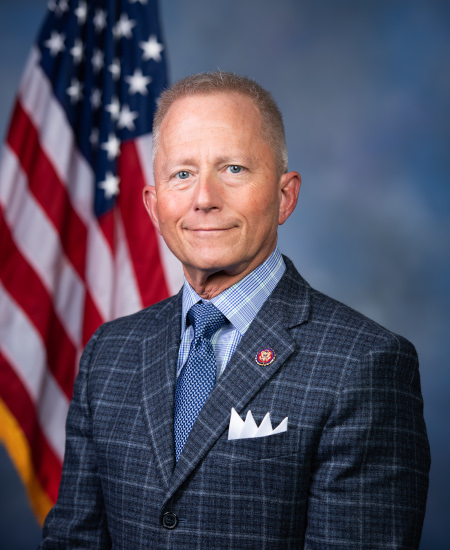
Jefferson Van Drew
100% support rate
Top opponent
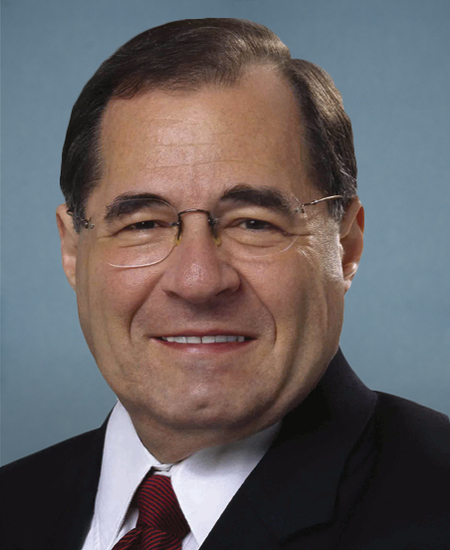
Jerrold Nadler
0% support rate
Ranked legislators
10
5 support · 5 oppose
Key legislators

Who's moving veteran benefits in United States

Legislators moving veteran benefits in United States
Legislator Party Stance Support rate Decisive votes
Jefferson Van Drew
Jefferson Van Drew House · District 2
R
Strong +
100% 4
Max L. Miller
Max L. Miller House · District 7
R
Strong +
100% 4
Elise M. Stefanik
Elise M. Stefanik House · District 21
R
Strong +
100% 3
Lauren Boebert
Lauren Boebert House · District 4
R
Strong +
100% 3
Wesley Hunt
Wesley Hunt House · District 38
R
Strong +
100% 3
Jerrold Nadler
Jerrold Nadler House · District 12
D
Strong −
0% 3
Mike Quigley
Mike Quigley House · District 5
D
Strong −
0% 3
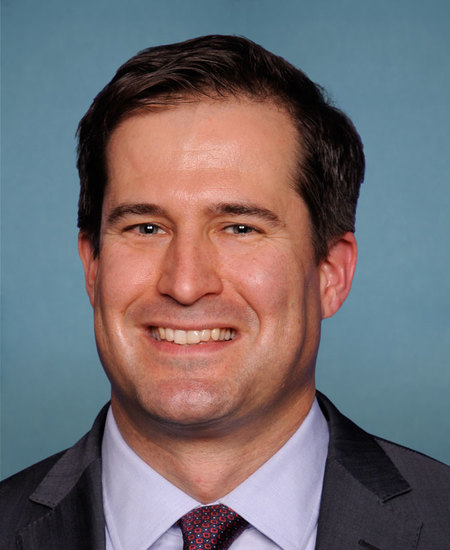
Seth Moulton
Seth Moulton House · District 6
D
Strong −
0% 3
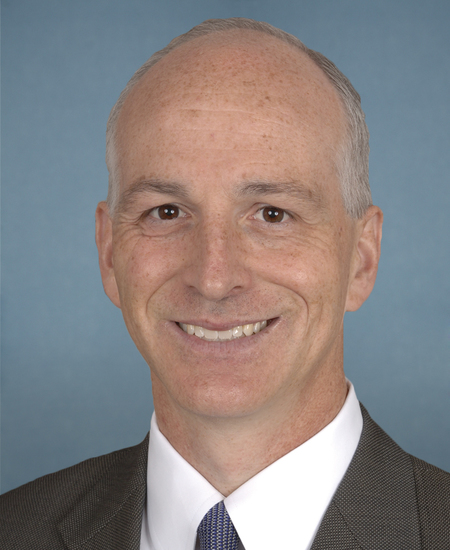
Adam Smith
Adam Smith House · District 9
D
Oppose
25% 4
Adelita S. Grijalva
Adelita S. Grijalva House · District 7
D
Oppose
25% 4
Showing 61–70 of 428 bills

All veterans bills

in committee · United States · Senate May 11, 2026

S 4487: Veterans’ Compensation Cost-of-Living Adjustment Act of 2026

Veterans' Compensation Cost-of-Living Adjustment Act of 2026 This bill requires the Department of Veterans Affairs (VA) to increase the amounts payable for wartime disability compensation, additional compensation for dependents, the clothing allowance for certain disabled veterans, and dependency and indemnity compensation for surviving spouses and children. Specifically, the VA must increase the amounts by the same percentage as the cost-of-living increase in benefits for Social Security recipients that is effective on December 1, 2026. The act requires the VA to publish the amounts payable, as increased, in the Federal Register. The VA is authorized to make a similar adjustment to the rates of disability compensation payable to persons who have not received compensation for service-connected disability or death.
in committee · United States · House May 11, 2026

HR 8732: Pensions for Retired Uniformed Servicemembers Act

This bill expands the Department of Defense Military Retirement Fund to include retired pay for members of the uniformed services beyond the current military branches. It specifically adds the National Oceanic and Atmospheric Administration and the Public Health Service to the list of agencies whose commissioned officers receive pensions from this fund. The legislation requires a calculation of the financial gap for these new groups by 2027 and establishes a schedule for paying off that debt over time. Additionally, the bill updates various legal definitions and administrative procedures to ensure these new services are treated consistently with existing military personnel regarding retirement benefits and survivor protections.
in committee · United States · House Sep 15, 2026

HRES 1247: Providing for consideration of the bill (H.R. 2102) to amend title 10, United States Code, to provide for concurrent receipt of veterans' disability compensation and retired pay for disability retirees with combat-related disabilities, and for other purposes.

This resolution provides for the consideration of the bill (H.R. 2102) to amend title 10, United States Code, to provide for concurrent receipt of veterans' disability compensation and retired pay for disability retirees with combat-related disabilities, and for other purposes.
in committee · United States · Senate Apr 14, 2026

S 4285: Guard Equal Benefits for Federal Missions Act

This bill, titled the Guard Equal Benefits for Federal Missions Act, aims to make certain National Guard members eligible for federal benefits that typically require service during a national emergency. It specifies that full-time National Guard duty, when authorized by the President or Secretary of Defense, will be treated as qualifying service if performed in direct support of federal law enforcement operations (such as those involving ICE or DEA) to address public safety threats like drug trafficking or organized crime. This change would make these National Guard members eligible for benefits including a reduction in retirement age, the Transitional Assistance Management Program, and the Post-9/11 GI Bill. Essentially, the bill expands the types of National Guard service that qualify for these federal benefits, treating specific federal law enforcement support missions as equivalent to national emergency service for benefit eligibility.
in committee · United States · House May 7, 2026

HR 7027: Restore Veterans’ Compensation Act of 2026

The Restore Veterans’ Compensation Act of 2026 modifies how the government recoups certain separation payments from former military members. This bill primarily affects veterans who received separation pay upon leaving service and later qualify for disability compensation or military retired pay. Specifically, it prevents the reduction of veterans' disability compensation due to their prior receipt of separation, severance, or readjustment pay. For those receiving military retired pay, the bill limits recoupment to the net amount of separation pay received (after taxes) and caps monthly deductions at 25% of their retired pay, unless they choose a faster repayment. It also requires a 90-day notice before deductions begin, allows the Secretary of Defense to waive recoupment in cases of financial hardship, and exempts members who were retirement-eligible when they received voluntary separation pay from having to repay it upon later retirement.
in committee · United States · House Mar 24, 2026

HR 8066: Carlton H. Ingram Veterans’ Benefits Improvement Act

The Carlton H. Ingram Veterans’ Benefits Improvement Act amends federal law to change how the Department of Veterans Affairs (VA) rates disabilities for veterans. The bill requires the VA's disability rating schedule to discount the beneficial effects of medication or treatment when assessing a veteran's condition, if a baseline without those effects can be established. This means the VA should rate the underlying severity of a service-connected disability, rather than its improved state due to ongoing treatment. However, the bill clarifies that this change does not prevent veterans from seeking compensation for additional disabilities caused by their medication or treatment, or for the aggravation of a pre-existing service-connected condition.
in committee · United States · House Apr 14, 2026

HR 8281: Guard Equal Benefits for Federal Missions Act

The Guard Equal Benefits for Federal Missions Act aims to expand eligibility for certain federal benefits for National Guard members. It does this by treating specific full-time National Guard duty as "service in response to a national emergency" for benefit purposes. This qualifying duty must be authorized by the President or Secretary of Defense, support federal law enforcement operations (such as those of ICE or DEA), and address issues like criminal activity or drug trafficking. As a result, National Guard members performing these duties would become eligible for benefits like the Post-9/11 GI Bill, retirement age reduction, and the Transitional Assistance Management Program.
in committee · United States · House May 20, 2026

HR 6833: ARCA Act of 2025

The ARCA Act of 2025 aims to reform the Department of Veterans Affairs' (VA) acquisition process, directly impacting how the VA procures services, supplies, and technology for veterans. It establishes an Assistant Secretary for Acquisition and an Office of Acquisition to consolidate all major acquisition, procurement, logistics, and supply chain functions under a single authority. The bill creates a Director of Cost Assessment and Program Evaluation to conduct independent cost estimates and evaluations, and mandates independent verification and validation for major acquisition programs. Additionally, it requires a standardized requirements development process for major programs and expands entry-level acquisition internship programs to strengthen the VA's acquisition workforce.
in committee · United States · House Apr 21, 2026

HJRES 158: Encouraging States to establish "Veterans Tax Relief Weekends" that coincide with Memorial Day, Independence Day, and Veterans Day, providing a practical way for communities across the country to recognize the service of veterans and members of the Armed Forces by providing financial relief to them.

This joint resolution encourages U.S. states to establish "Veterans Tax Relief Weekends" to benefit veterans, active duty military personnel, Reservists, and National Guard members. It proposes that states voluntarily implement three-day sales tax holidays coinciding with Memorial Day, Independence Day, and Veterans Day. During these periods, eligible individuals and their families would receive temporary relief from state sales taxes on consumer purchases, offering a practical way for communities to recognize their service.
in committee · United States · Senate Mar 24, 2026

S 4183: Veteran Education Assistance Adjustment Act of 2026

The Veteran Education Assistance Adjustment Act of 2026 increases the annual stipend for books, supplies, and other educational costs under the Post-9/11 Educational Assistance Program. This change directly affects veterans receiving education benefits through the Department of Veterans Affairs. The bill raises the fixed stipend amount from $1,000 to $1,500 for fiscal year 2026 and establishes a formula for future annual adjustments based on changes in the Consumer Price Index. These provisions ensure that educational cost allowances keep pace with inflation in subsequent years.
Showing 61 to 70 of 428 bills
Previous 1 … 6 7 8 … 43 Next