Issue · Veterans

Veterans

Every veterans bill, vote, and legislator stance in United States, automatically classified by Maddy, our AI policy reader.

Total bills
1,173
119th Congress
Top supporter
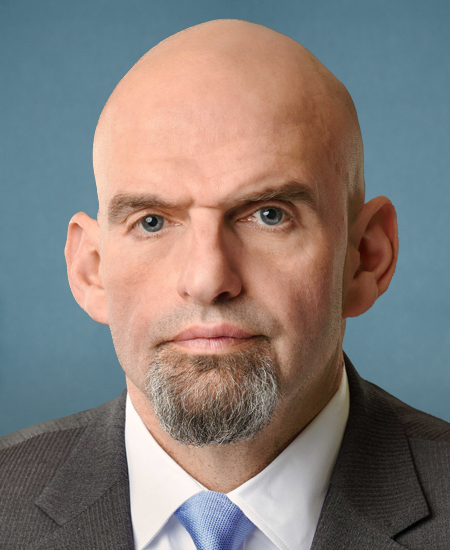
John Fetterman
88% support rate
Top opponent
Rand Paul
12% support rate
Ranked legislators
10
5 support · 5 oppose
Key legislators

Who's moving veterans in United States

Legislators moving veterans in United States
Legislator Party Stance Support rate Decisive votes
John Fetterman
John Fetterman Senate
D
Strong +
88% 40
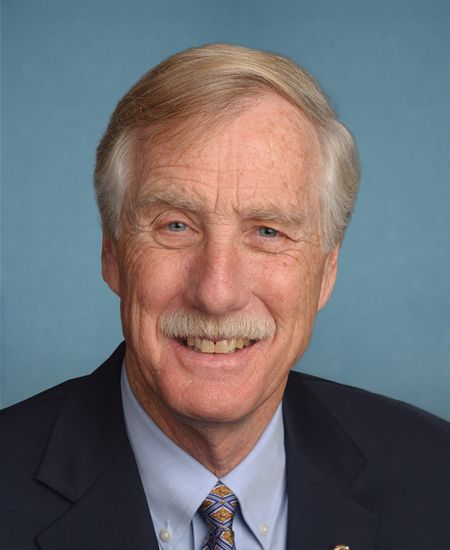
Angus S. King, Jr.
Angus S. King, Jr. Senate
I
Strong +
83% 42
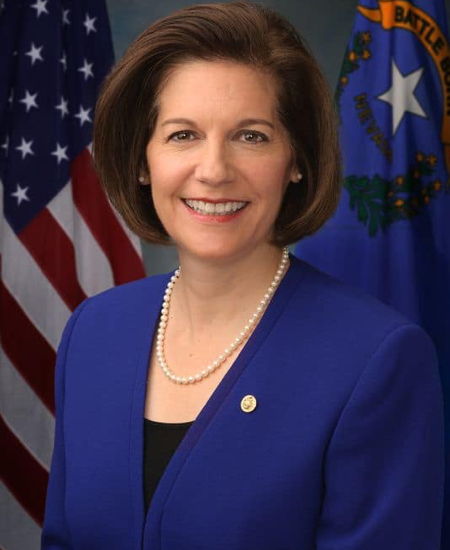
Catherine Cortez Masto
Catherine Cortez Masto Senate
D
Strong +
83% 42
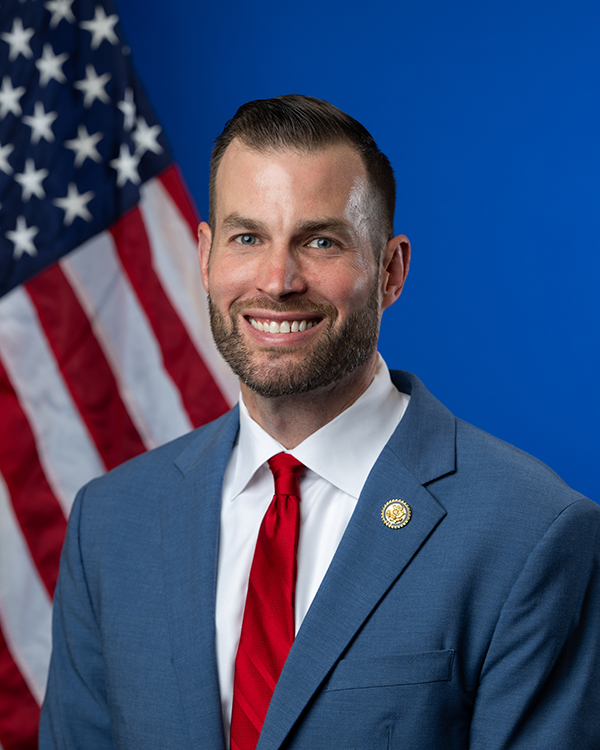
Clay Fuller
Clay Fuller House · District 14
R
Strong +
80% 10
Jefferson Van Drew
Jefferson Van Drew House · District 2
R
Support
76% 17
Rand Paul
Rand Paul Senate
R
Strong −
12% 42
Adelita S. Grijalva
Adelita S. Grijalva House · District 7
D
Strong −
18% 11
Analilia Mejia
Analilia Mejia House · District 11
D
Strong −
20% 10
Christian D. Menefee
Christian D. Menefee House · District 18
D
Strong −
20% 10
André Carson
André Carson House · District 7
D
Oppose
25% 16
Showing 381–390 of 1,173 bills

All veterans bills

in committee · United States · House Jun 25, 2025

HR 4145: Ensuring Justice for Camp Lejeune Victims Act of 2025

This bill makes technical corrections to the Camp Lejeune Justice Act of 2022 to streamline claims for individuals harmed by water contamination at Camp Lejeune. It clarifies the evidence required (30+ days at the base plus a link between contaminants and health harm), specifies that cases must be handled in North Carolina courts (with limited transfer options), and sets attorney fee caps (20% before suit, 25% after). These changes directly affect veterans and civilians who lived at Camp Lejeune and filed claims under the 2022 law. The bill does not create new eligibility but aims to improve the legal process for existing cases.
in committee · United States · House Jan 31, 2025

HR 893: Working Families Housing Tax Credit Act

The Working Families Housing Tax Credit Act creates a new tax credit to encourage the development of housing for working families, specifically targeting teachers, firefighters, police officers, veterans, and other hard-working Americans. It provides tax credits equal to 50% of the qualified basis for new buildings or 60% for rehabilitated buildings, with requirements that 40% or more of units be rent-restricted for households earning up to 180% of area median income. The credit period lasts 15 years, and buildings must maintain working families housing for at least 15 years after the credit period through a binding "extended working families housing commitment." The bill also authorizes $100 million in grants and loans for infrastructure projects in rural and exurban areas supporting qualified housing developments.
in committee · United States · House Feb 25, 2026

HRES 1077: Expressing the sense of the House of Representatives that the Citizens' Stamp Advisory Committee, as an entity of the United States Postal Service, should issue a commemorative stamp in honor of Charity Adams Earley.

HRES 1077 is a non-binding resolution expressing the House of Representatives' support for the U.S. Postal Service to honor Lieutenant Colonel Charity Adams Earley with a commemorative stamp. It directly requests the Citizens’ Stamp Advisory Committee (part of the USPS) to recommend such a stamp to the Postmaster General. The resolution highlights Adams Earley’s historic role as the first Black officer in the Women’s Army Corps (WAC), her leadership of the 6888th Central Postal Directory Battalion during WWII, and her post-war advocacy for Black leadership development. This resolution does not create new law or funding but formally urges the USPS to recognize her legacy through a postage stamp.
in committee · United States · House Mar 27, 2025

HR 2038: American Housing and Economic Mobility Act of 2025

# Summary of the American Housing and Economic Mobility Act of 2025 This comprehensive legislation addresses housing affordability, civil rights, financial inclusion, and tax policy through multiple titles: **Fair Housing Expansion (Title I):** - Expands protections under the Fair Housing Act to include gender identity, sexual orientation, marital status, source of income, and veteran status - Requires housing providers receiving federal assistance to comply with enhanced accessibility standards (twice as many units must be accessible) **Community Reinvestment Act Strengthening (Title II):** - Requires banks to form diverse Community Advisory Committees in each metropolitan area - Mandates regular biannual consultations between bank executives and community advisory groups - Requires detailed data collection on lending practices by demographic factors (including race, ethnicity, and disability status) - Establishes new requirements for banks to analyze and report on disparities in access to credit **Veterans' Housing Access (Title III):** - Expands eligibility for VA home loans to include direct descendants of veterans who served between June 22, 1944, and April 11, 1968, who are first-time, first-generation homebuyers **Public Housing Improvements (Title IV):** - Requires public housing agencies to analyze where participants live and develop strategies to increase access to higher-opportunity neighborhoods - Mandates regional collaboration among housing agencies to reduce disparities in access - Requires HUD to develop mapping tools to help agencies analyze neighborhood access **Estate Tax Reforms (Title V):** - Increases estate tax rates for large estates (over $13 million) - Reduces the basic exclusion amount from $13 million to $3.5 million - Imposes a 10% surtax on estates exceeding $1 billion - Increases the exclusion limit for farm real property from $750,000 to $3 million - Increases the exclusion for land subject to conservation easements from $500,000 to $2 million - Creates a new 5-8% surcharge on high-income estates and trusts **Additional Provisions:** - Strengthens credit union service to underserved areas - Raises public welfare caps for banks to increase investments in low-income communities - Requires new data collection and reporting requirements for financial institutions This legislation represents a significant expansion of housing rights, financial inclusion, and tax policy reforms aimed at reducing disparities in access to housing and financial services while reforming the estate tax system.
in committee · United States · Senate Dec 10, 2025

S 3429: Encouraging Public Service in Our National Parks and Public Land Act

This bill mandates free admission to all national parks and public lands on six specific annual dates, including Martin Luther King Jr. Day, Juneteenth, and Veterans Day. It directly affects all visitors to these sites by eliminating entrance fees on those days, encouraging broader public access and engagement. The key provision replaces the Secretary's previous discretion with a legal requirement for these six designated days each year. The law aims to align fee-free access with meaningful dates that promote community service and national celebration.
passed · United States · House Feb 5, 2025

HR 835: 9/11 Memorial and Museum Act

HR 835, the 9/11 Memorial and Museum Act, provides a one-time federal grant of $5-10 million to the National September 11 Memorial & Museum (operated by an IRS 501(c)(3) organization) for its operations, security, and maintenance. The bill requires the museum to offer free admission to veterans, first responders, and victims' families, plus weekly free public hours, and mandates annual financial audits and public reporting to Congress. Grant funds must be used to preserve the site, educate visitors, and increase access for economically disadvantaged groups. The funding is subject to annual appropriations and does not authorize ongoing federal support beyond the one-time grant.
in committee · United States · Senate Mar 19, 2026

S 2855: Immersive Technology for the American Workforce Act of 2025

S 2855, the *Immersive Technology for the American Workforce Act of 2025*, provides $50 million annually (2026-2035) to fund grants for workforce training programs using virtual reality (VR), augmented reality (AR), and similar immersive technologies. Eligible entities - including community colleges, career schools, and industry partnerships - can apply for 5-year grants to create career pathways that train workers for in-demand jobs, with priority given to programs serving veterans, rural communities, people with employment barriers (meeting ADA standards), and industries facing workforce shifts. The bill requires grantees to report on program outcomes, including participant success rates and employer needs, and mandates the Department of Labor to publish best practices for using immersive tech in training. It directly affects workers seeking new skills, training providers, and employers needing qualified staff in growing sectors.
in committee · United States · House Feb 4, 2025

HR 951: 250 Years of Service and Sacrifice Commemorative Coin Act

HR 951 authorizes the U.S. Mint to produce commemorative coins (gold $5, silver $1, and half-dollar) in 2028 to mark the 250th anniversary of the Declaration of Independence. Surcharges from coin sales ($35 per gold coin, $10 per silver, $5 per half-dollar) will fund the Stephen Siller Tunnel to Towers Foundation, supporting programs for Gold Star families, first responders, veterans, and their families. The coins must meet specific weight, size, and composition standards, with mintage limits set at 100,000 gold, 500,000 silver, and 750,000 half-dollar coins. All surcharge proceeds directly benefit the Foundation’s existing initiatives, such as mortgage-free housing and scholarships, without requiring additional federal funding.
in committee · United States · House Aug 1, 2025

HR 4845: To designate the National Memorial Day Parade, and for other purposes.

HR 4845 designates the annual National Memorial Day Parade held in Washington, DC, as the "National Memorial Day Parade" for recognition purposes. The bill formally acknowledges the parade's history, noting it began in 2004 after a 62-year hiatus and has grown to become the largest Memorial Day event in the U.S., drawing hundreds of thousands of attendees and viewers nationwide. It authorizes the Secretary of Defense to provide military support for the parade, including using active and reserve military units and federal funds for ceremonial displays of small arms and munitions. This bill does not create new benefits or obligations but formally recognizes an existing event and outlines limited military support mechanisms.
in committee · United States · House Aug 1, 2025

HR 4871: COVID–19 Military Backpay Act of 2025

HR 4871, the COVID-19 Military Backpay Act of 2025, allows military members discharged for non-compliance with the 2021 Department of Defense COVID-19 vaccination mandate to seek legal remedies. It provides a pathway for affected service members (active/reserve, National Guard) to file civil actions in the Court of Federal Claims, arguing their discharges were involuntary. If successful, the court can award compensation for missed inactive-duty training, retroactively count service time toward retirement (including 20-year or 18-year milestones), restore retirement benefits, and deem members eligible for reenlistment with two additional years of service. The bill specifically restores benefits like retirement pay and medical care that were lost due to the discharge, without reducing compensation for civilian employment earned afterward.
Showing 381 to 390 of 1,173 bills
Previous 1 … 38 39 40 … 118 Next