Issue · Veterans

Veterans (Military Families)

Every veterans bill, vote, and legislator stance in United States, automatically classified by Maddy, our AI policy reader.

Total bills
111
119th Congress
Top supporter
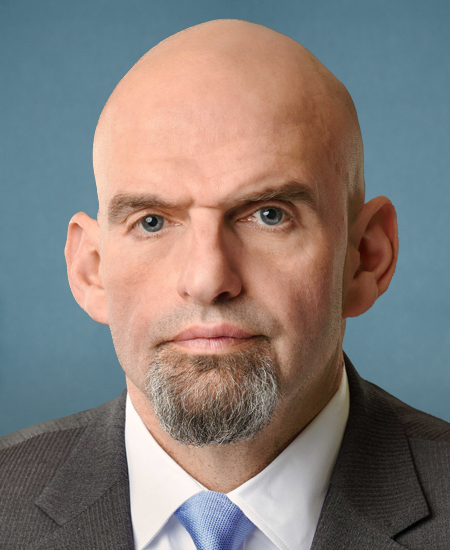
John Fetterman
100% support rate
Top opponent
Rand Paul
0% support rate
Ranked legislators
10
5 support · 5 oppose
Key legislators

Who's moving military families in United States

Legislators moving military families in United States
Legislator Party Stance Support rate Decisive votes
John Fetterman
John Fetterman Senate
D
Strong +
100% 22
Jared F. Golden
Jared F. Golden House · District 2
D
Strong +
100% 3
Angus S. King, Jr.
Angus S. King, Jr. Senate
I
Strong +
96% 24
Catherine Cortez Masto
Catherine Cortez Masto Senate
D
Strong +
96% 24
Susan M. Collins
Susan M. Collins Senate
R
Strong +
92% 24
Rand Paul
Rand Paul Senate
R
Strong −
0% 24
Thomas Massie
Thomas Massie House · District 4
R
Strong −
0% 3
Amy Klobuchar
Amy Klobuchar Senate
D
Strong −
12% 24
Brian Schatz
Brian Schatz Senate
D
Strong −
12% 24
Charles E. Schumer
Charles E. Schumer Senate
D
Strong −
12% 24
Showing 91–100 of 111 bills

All veterans bills

in committee · United States · Senate Mar 18, 2026

S 410: Love Lives On Act of 2025

The Love Lives On Act of 2025 modifies veterans' and military survivors' benefit rules to prevent remarriage from automatically ending eligibility. It directly affects surviving spouses of veterans or military members who remarried, ensuring they retain access to key benefits. Key provisions include: (1) preventing termination of veterans' dependency compensation (under 38 U.S.C. §1311/1562) due to remarriage; (2) stopping termination of military Survivor Benefit Plan annuities solely for remarriage, with specific rules for those who remarried before age 55; and (3) expanding TRICARE coverage to include remarried widows/widowers whose subsequent marriage ended (via death, divorce, or annulment). These changes restore or maintain benefits that were previously lost upon remarriage.
in committee · United States · House Dec 9, 2025

HR 5995: Have You Served Act

HR 5995, the "Have You Served Act," provides grants to states and tribes with veteran suicide prevention plans to fund "Ask the Question Campaigns." These campaigns train human services professionals, local governments, and community providers to respectfully ask clients if they or a loved one served in the military, then connect them to VA resources. The bill authorizes $6 million annually (2026-2030) for up to 25 grants of $200,000 each to support this training and outreach. It directly affects veterans and their families by improving access to VA services through community-based referrals, without changing eligibility for benefits.
in committee · United States · House Jun 11, 2025

HR 2720: Gold Star Family Education Parity Act

HR 2720, the Gold Star Family Education Parity Act, terminates the Survivors' and Dependents' Educational Assistance program (Chapter 35 of the U.S. Code) for Gold Star families on August 1, 2029. It directly affects surviving spouses and children of service members who died in combat, ensuring they can transition to the Post-9/11 GI Bill (Chapter 33) without losing benefits. The bill automatically switches eligibility to Chapter 33, bypassing standard service-credit restrictions that would otherwise reduce their benefit duration. This creates a seamless transition to continued education support while maintaining the same benefit level. The policy change takes effect on the specified termination date, 2029.
in committee · United States · Senate Sep 3, 2025

S 2698: Safeguarding Department of Veterans Affairs Dependent Education Benefits Act of 2025

This bill allows spouses and dependent children to regain Post-9/11 GI Bill education benefits that were terminated when a veteran was discharged due to domestic violence or sexual assault against them. It requires applicants to prove the veteran’s discharge resulted from a dependent-abuse offense (like domestic violence) with evidence, and reinstates only unused portions of previously transferred benefits. The application process must be trauma-informed, and denied requests can be reviewed by the Secretary of Defense or Homeland Security within 30 days. It directly affects veterans’ families who lost benefits due to abusive circumstances, not all discharged veterans.
in committee · United States · Senate Jul 31, 2025

S 2575: Healthcare for Our Troops Act

S 2575, the Healthcare for Our Troops Act, eliminates individual premiums for members of the Selected Reserve in the Armed Forces under the TRICARE Reserve Select military health plan. It establishes a uniform 28% monthly premium for family coverage (based on actuarial costs), replaces enrollment fees, and requires the Department of Defense to develop new forms for civilian providers to track reserve members' medical readiness and deployment fitness. The bill directly affects Selected Reserve service members and their immediate families, with changes taking effect one year after enactment. These provisions aim to reduce out-of-pocket costs for reserve members while standardizing family coverage costs.
in committee · United States · House Jun 11, 2025

HR 3031: Gold Star and Surviving Spouse Career Services Act

This bill expands eligibility for career services under the Disabled Veterans' Outreach Program to include spouses of military members who died in service (Gold Star spouses) and surviving spouses of service members who died while on active duty. It amends existing law to define "eligible person" as these spouses, replacing or adding to previous veteran-focused language. The key change allows these spouses to access career counseling, job training, and employment assistance previously available primarily to veterans themselves. This directly affects military families who have lost a loved one in the line of duty, providing them with new pathways to workforce support. The bill modifies specific sections of Title 38, U.S. Code, to implement this expanded eligibility.
passed · United States · Senate Dec 19, 2025

S 1204: Gold Star and Surviving Spouse Career Services Act

This bill expands access to career services by updating the Disabled Veterans' Outreach Program to include surviving spouses of service members who died while on active duty. It amends eligibility criteria to cover "eligible persons," defined as spouses of veterans who died in service (Gold Star spouses) or spouses of those who died while serving in the Armed Forces. The change ensures these surviving spouses can access job training, employment assistance, and career counseling previously available only to veterans themselves. This directly affects Gold Star families and surviving spouses of fallen service members seeking workforce support.
in committee · United States · Senate Jan 7, 2026

S 3592: PROTECT Military Families Act

The PROTECT Military Families Act (S 3592) creates a new immigration parole program for spouses, parents, children, and widows/widowers of current or former military members. It allows the Secretary of Homeland Security to grant temporary U.S. entry in one-year increments to eligible family members of active-duty service members, reservists, or honorably discharged veterans. Denials require a joint written justification from three cabinet secretaries (Homeland Security, Defense, and Veterans Affairs) and must be publicly posted with detailed reasoning (excluding personal information). This bill directly affects military families seeking reunification by establishing a structured, transparent process for temporary immigration relief.
in committee · United States · House Apr 9, 2025

HR 2780: Setting the Table for Transition Act

This bill temporarily expands food assistance eligibility for households including recently separated veterans. During a 100-day period starting when a veteran receives their military separation document (DD-214), only the veteran's income is counted toward determining SNAP (food assistance) eligibility. This means households with a veteran member will qualify for benefits based solely on the veteran's income during this transition period, rather than the combined household income. The change directly affects veterans transitioning from military to civilian life and their households during their initial 100 days of civilian status. The bill takes effect 90 days after enactment.
in committee · United States · House Dec 19, 2025

HR 4855: Veteran Families Health Services Act of 2025

The Veteran Families Health Services Act of 2025 expands reproductive health services for military members and veterans. It requires the Department of Defense to provide fertility preservation services, including cryopreservation of reproductive genetic material before deployment or hazardous assignments for active duty service members. The bill also mandates the Department of Veterans Affairs to provide fertility treatment, counseling, and adoption assistance to veterans and their partners without regard to sex, gender identity, or sexual orientation. The law establishes coordination between military and VA health services to ensure continuity of care during the transition from active duty to veteran status. It includes provisions allowing veterans to maintain control over stored genetic material and make decisions about its use.
Showing 91 to 100 of 111 bills
Previous 1 … 9 10 11 … 12 Next