Issue · Transportation

Transportation (Traffic Safety)

Every transportation bill, vote, and legislator stance in United States, automatically classified by Maddy, our AI policy reader.

Total bills
79
119th Congress
Top supporter
Rand Paul
64% support rate
Top opponent
Ted Budd
33% support rate
Ranked legislators
10
5 support · 5 oppose
Key legislators

Who's moving traffic safety in United States

Legislators moving traffic safety in United States
Legislator Party Stance Support rate Votes
Rand Paul
Rand Paul Senate
R
Support
64% 11
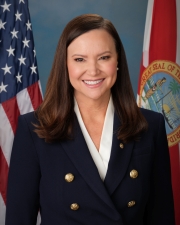
Ashley Moody
Ashley Moody Senate
R
Mixed
58% 12
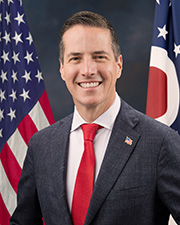
Bernie Moreno
Bernie Moreno Senate
R
Mixed
58% 12
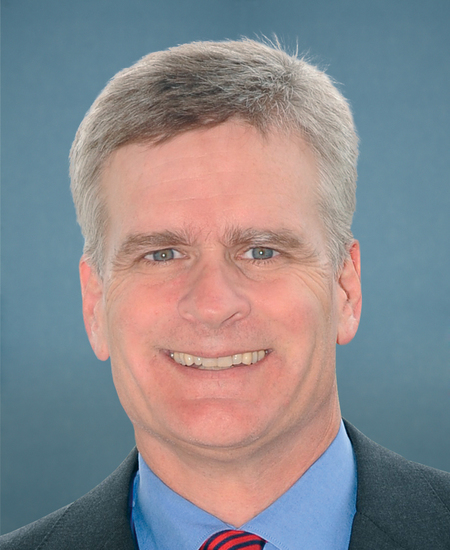
Bill Cassidy
Bill Cassidy Senate
R
Mixed
58% 12
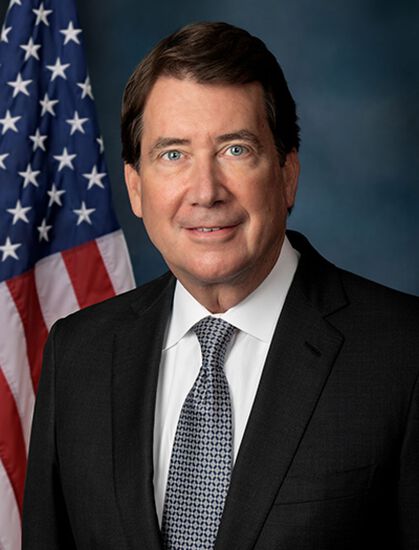
Bill Hagerty
Bill Hagerty Senate
R
Mixed
58% 12
Ted Budd
Ted Budd Senate
R
Oppose
33% 3
Mark R. Warner
Mark R. Warner Senate
D
Oppose
36% 11
Adam B. Schiff
Adam B. Schiff Senate
D
Mixed −
42% 12
Alex Padilla
Alex Padilla Senate
D
Mixed −
42% 12
Amy Klobuchar
Amy Klobuchar Senate
D
Mixed −
42% 12
Showing 71–79 of 79 bills

All transportation bills

in committee · United States · Senate Sep 18, 2025

S 2911: Streamlining State Highway Safety Submissions Act

This bill streamlines reporting requirements for state highway safety programs. It directs the Transportation Secretary to revise rules so that a triennial management review by the National Highway Traffic Safety Administration (NHTSA) can satisfy all documentation needs for a state's triennial highway safety plan submission during the same review period. This eliminates duplicate paperwork for states, as they will no longer need to submit separate reports for the same safety plan cycle. The change directly affects all states that submit highway safety plans under federal law.
in committee · United States · House Apr 10, 2025

HR 2814: Transportation Freedom Act

Transportation Freedom Act This bill reduces taxes on auto companies and repeals specified environmental regulations on cars and trucks. The bill establishes a new tax deduction equal to 200% of eligible wages paid or incurred by domestic producers of automobiles or automobile components, subject to limitations. It also allows an entity to reduce (and adjust) its financial statement income (for purposes of calculating liability for the alternative minimum tax) by the amount of eligible wages it elects to deduct. The bill nullifies the 2024 rules of the Environmental Protection Agency (EPA) regarding (1) the finalization of specified greenhouse gas (GHG) programs and the reduction of emissions from certain light-duty and medium-duty vehicles (e.g., cars and trucks that are under a certain weight) starting with model year 2027, and (2) phase three of GHG emission standards for heavy-duty vehicles (e.g., school buses and tractor-trailer trucks). It also repeals the 2024 rules of the National Highway Traffic Safety Administration (NHTSA) regarding corporate average fuel economy (CAFE) standards for certain cars, trucks, and vans.  Additionally, the bill eliminates (1) the option given to California to set standards for car emissions that are more stringent than those set under the Clean Air Act, and (2) the option for other states to adopt California's standards.  NHTSA and the EPA must establish new CAFE and GHG standards, respectively, for vehicles that are economically practicable and technologically feasible. The GHG standards may not require the production or sale of electric vehicles.
in committee · United States · House Feb 2, 2026

HR 6821: Protect Our Students Act

HR 6821, the Protect Our Students Act, redirects federal highway safety funds to improve school zone safety. It increases the required allocation of these funds for school zone improvements from 40% to 50% and authorizes specific safety measures including crossing guards, flashing lights, visible signage, crosswalks, traffic calming, and automated enforcement. The bill directly affects students walking to school, local schools, and communities by mandating that federal highway safety programs fund these targeted school zone upgrades. This changes how existing federal transportation funds can be used, focusing resources on proven safety infrastructure.
in committee · United States · House Aug 6, 2025

HR 4897: Blue Envelope Act of 2025

This bill amends the Highway Safety Improvement Program to include a specific project type: a "blue envelope program" designed to improve communication between motor vehicle operators who have difficulty speaking and law enforcement officers during traffic stops. It directly affects drivers with speech impairments and police officers conducting routine traffic stops. The key provision adds this program as a qualifying activity under existing highway safety funding, allowing states to use federal funds for such initiatives. The change is procedural, modifying a code section to explicitly include this communication-focused program within eligible highway safety projects. The bill does not create new requirements but expands how existing safety funds can be applied.
in committee · United States · Senate Sep 18, 2025

S 2910: Work Zone Safety Enhancement Act

This bill allows states to use federal highway safety funds for specific work zone safety improvements. It authorizes states to fund law enforcement patrols, driver education modules, safety technologies (like alert systems), worker training programs, and crash data collection in work zones. States must prioritize assistance for Tribal governments and rural areas when implementing these measures. The bill also requires a GAO study within two years to evaluate the effectiveness of work zone safety programs, including those funded under this law.
in committee · United States · House May 21, 2026

HR 7389: Motor Vehicle Modernization Act of 2026

The Motor Vehicle Modernization Act of 2026 establishes new requirements for the National Highway Traffic Safety Administration (NHTSA) to develop and update a comprehensive safety rulemaking and research priority plan every two years. The bill reforms the New Car Assessment Program (NCAP) by creating an NCAP Office led by an Associate Administrator and establishing an NCAP Advisory Committee with diverse stakeholders including manufacturers, safety organizations, and consumer advocates. It also mandates that NHTSA review motor vehicle safety standards every four years and creates a working group to improve consumer education about vehicle automation technologies. The legislation aims to modernize safety processes, enhance transparency about vehicle safety features, and better inform consumers about motor vehicle safety technologies.
in committee · United States · Senate Aug 1, 2025

S 2660: Modern Risk Detection Act of 2025

This bill amends Title 49, U.S. Code, to require transportation safety standards to incorporate risk-based approaches "to the maximum extent practicable." It directs the Secretary to ensure compliance with these standards allows for risk-based methods, without specifying new requirements or affected entities. The provision applies to existing transportation safety regulations but does not detail how risk-based approaches would be implemented or who would be directly impacted. The bill is a procedural update to regulatory frameworks, not a new policy with defined beneficiaries or obligations.
in committee · United States · House Nov 26, 2025

HR 6298: Safe and Affordable Transit Act

This bill provides $50 million annually from 2026 through 2030 to fund security measures for public transit systems in urbanized areas, removing previous population requirements that limited access. It allows transit agencies to use these funds for hiring additional officers, contracting with local police, and making physical safety upgrades like monitoring devices and operator shields. Additionally, it mandates a study by the National Academies (with input from transit workers) to evaluate crime prevention tactics, including successful and unsuccessful approaches used by transit agencies. The bill directly affects transit agencies and passengers by prioritizing safety infrastructure and data-driven crime reduction strategies.
in committee · United States · Senate Nov 20, 2025

S 3272: Motorcycle Safety Awareness Act of 2025

S 3272, the Motorcycle Safety Awareness Act of 2025, requires states to include new motorcyclist safety education in driver training programs. It amends federal law to mandate that driver education courses cover state-specific motorcycle laws (like lane-splitting rules) and "share-the-road" principles to improve awareness of motorcyclists. This applies directly to state driver education and motor vehicle agencies that provide driver training. The changes take effect two years after the bill becomes law.
Showing 71 to 79 of 79 bills
Previous 1 6 7 8