Issue · Technology

Technology

Every technology bill, vote, and legislator stance in United States, automatically classified by Maddy, our AI policy reader.

Total bills
1,678
119th Congress
Top supporter
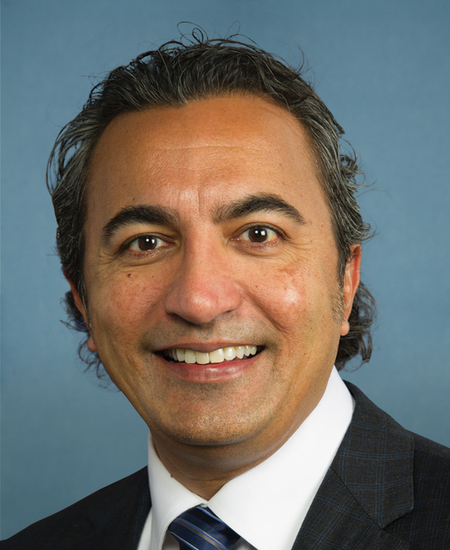
Ami Bera
86% support rate
Top opponent
Scott Perry
14% support rate
Ranked legislators
10
5 support · 5 oppose
Key legislators

Who's moving technology in United States

Legislators moving technology in United States
Legislator Party Stance Support rate Decisive votes
Ami Bera
Ami Bera House · District 6
D
Strong +
86% 22
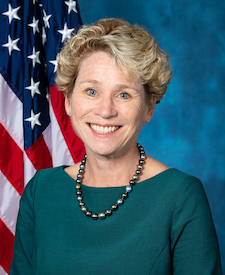
Chrissy Houlahan
Chrissy Houlahan House · District 6
D
Strong +
86% 22
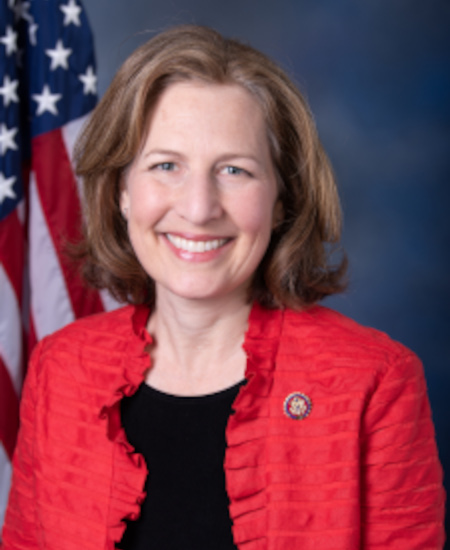
Kim Schrier
Kim Schrier House · District 8
D
Strong +
86% 22
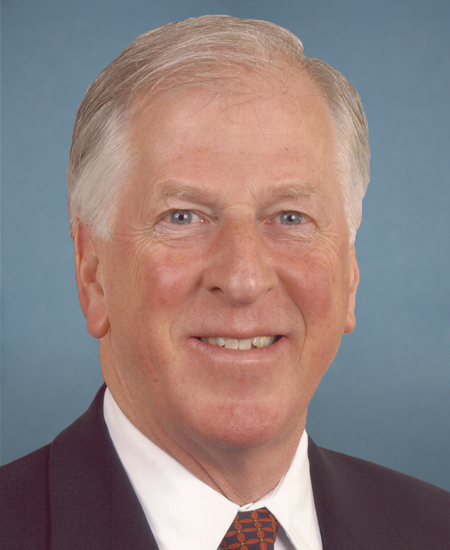
Mike Thompson
Mike Thompson House · District 4
D
Strong +
86% 22
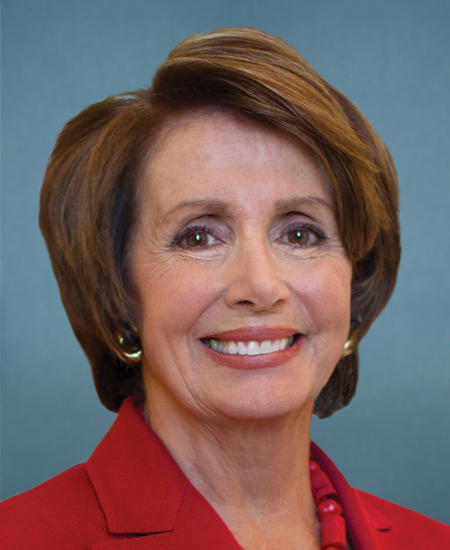
Nancy Pelosi
Nancy Pelosi House · District 11
D
Strong +
86% 22
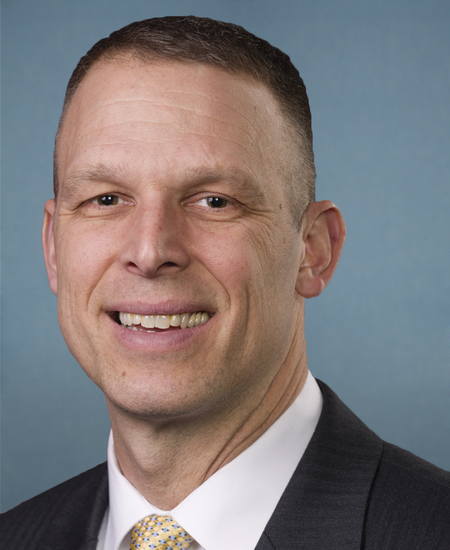
Scott Perry
Scott Perry House · District 10
R
Strong −
14% 21
AA
Alan Armstrong Senate
R
Strong −
17% 29
Rand Paul
Rand Paul Senate
R
Strong −
17% 46
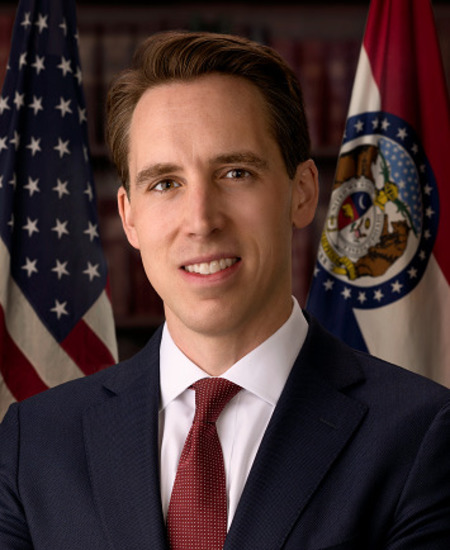
Josh Hawley
Josh Hawley Senate
R
Strong −
18% 45
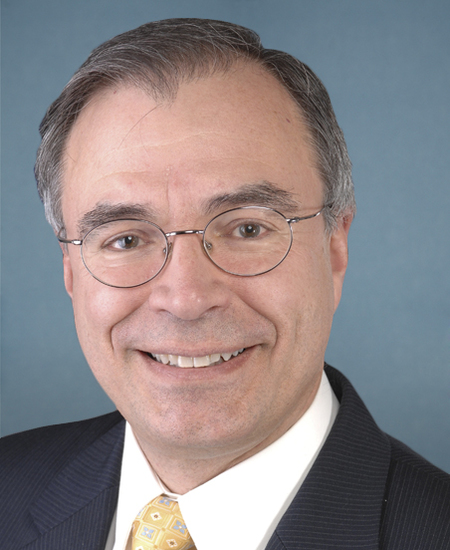
Andy Harris
Andy Harris House · District 1
R
Strong −
18% 22
Showing 861–870 of 1,678 bills

All technology bills

in committee · United States · House Jan 22, 2026

HR 7215: Stop SCAMS Act

This bill requires the FBI, Consumer Financial Protection Bureau, and Federal Trade Commission to coordinate a government-wide strategy against scams. Within one year, they must establish a single definition of "scam," collect consistent data on scam types and losses, and report annual complaint numbers and dollar losses. By two years, they must produce a unified estimate of annual scam victims and total losses, including unreported cases. The agencies must also set metrics to evaluate the effectiveness of their anti-scam training programs and publicly share annual scam data. The bill directly affects federal agencies managing scam data, not the public.
in committee · United States · House Dec 5, 2025

HR 5782: Western Wildfire Support Act of 2025

The Western Wildfire Support Act of 2025 aims to improve wildfire management across western U.S. federal lands by enhancing preparation, detection, suppression, and recovery efforts. The bill requires federal agencies to improve transparency around wildfire funding, establish reimbursement for military training-related wildfires, and create strategic fire management plans for at-risk areas. It authorizes research on drone technology for firefighting, funding for local firefighter training, and establishes a new account for long-term burned area rehabilitation. The act directly affects federal land management agencies, state and local fire departments, and communities in wildfire-prone areas across the western United States. Key provisions include improved detection technology, post-fire recovery resources, and incentives for innovative solutions to invasive species problems following wildfires.
in committee · United States · House Aug 19, 2025

HR 5001: SBIR/STTR Oversight Act

HR 5001, the SBIR/STTR Oversight Act, requires federal agencies administering Small Business Innovation Research (SBIR) and Small Business Technology Transfer (STTR) programs to improve transparency and accountability. It mandates annual reports to Congress detailing program operations, including publishing reports online, and directs the Comptroller General to assess diversity in participant demographics and technology commercialization efforts within three years. The bill also extends a report on award timeliness from 3 to 11 years and establishes a pilot program at the National Institutes of Health (NIH) to reduce funding approval times to approximately 90 days. This legislation directly affects federal agencies running SBIR/STTR programs and aims to enhance oversight of how these programs support small businesses, particularly underrepresented groups and new entrants.
Tags Small Business
in committee · United States · House Aug 5, 2025

HR 4891: Secure Our Embassies Act

HR 4891, the Secure Our Embassies Act, requires the State Department to improve coordination among security personnel at overseas diplomatic posts. It directly affects Regional Security Officers (RSOs), Diplomatic Technology Officers (DTOs), and others by mandating role-specific counterintelligence and security training to address cyber threats, insider risks, and regional security challenges. The bill also requires the Secretary of State to submit a report within 180 days detailing current training standards, planned improvements, and resource needs for implementing these security protocols. This focuses on concrete policy changes to enhance embassy security through better training and interdepartmental collaboration.
passed · United States · House Jul 21, 2026

HR 3029: To amend the Research and Development, Competition, and Innovation Act to support nucleic acid screening, and for other purposes.

HR 3029, the Nucleic Acid Standards for Biosecurity Act, directs the National Institute of Standards and Technology (NIST) to develop new screening standards for synthetic DNA and RNA production to prevent misuse. It requires NIST to research improved testing accuracy, security protocols for sequence databases, and technical guidance for screening tools, with a stakeholder consortium including industry and researchers to set priorities. The bill authorizes $5 million annually (2026-2030) for NIST to carry out this work and mandates a report to Congress within 18 months of the first consortium meeting. This directly affects biotechnology companies, research institutions, and labs producing synthetic genetic materials by establishing new biosecurity screening requirements.
in committee · United States · House Aug 5, 2025

HR 4896: Warehouse Worker Protection Act

The Warehouse Worker Protection Act establishes new requirements for employers in warehouse facilities to protect workers from harmful quotas and workplace surveillance practices. It requires employers to provide written descriptions of quotas and workplace monitoring to workers, prohibits quotas that interfere with breaks, safety compliance, or anti-discrimination rights, and gives workers the right to access their work speed data. The bill creates a Fairness and Transparency Office within the Department of Labor to enforce these requirements and investigate violations, with enforcement also involving the Federal Trade Commission. Employers with more than 200 employees at covered warehouse facilities (including distribution centers, couriers, and warehouses) are directly affected by these new requirements, which include new protections against retaliation for workers who exercise these rights.
in committee · United States · House Jun 12, 2025

HR 4006: Mission UNPLUGGED Act

HR 4006, the Mission UNPLUGGED Act, prohibits students in Department of Defense Education Activity (DODEA) schools from using personal electronic devices like smartphones during regular school hours. The policy allows exceptions for emergencies, medical needs, disabilities (as documented in IEPs or 504 plans), English language learning support, and extracurricular activities. DODEA must implement the policy within 180 days of enactment, with $1.2 million authorized for 2026 to fund device storage solutions and support, and must submit annual reports on implementation, costs, and effects on student performance and well-being.
in committee · United States · House Feb 4, 2026

HR 1731: Standard FEES Act

HR 1731, the Standard FEES Act, establishes a uniform fee schedule for processing specific government forms related to easements, rights-of-way, and leases for communications facilities (like cell towers) on federal property. It requires the Administrator of General Services to set fees based on actual processing costs and ensure they are fair for all applicants, with limited exceptions only for public benefit (such as broadband expansion) granted case-by-case by agency heads. The bill directly affects federal agencies (like the GSA and FCC) and applicants (e.g., telecom companies) seeking to use federal land for communications infrastructure. Fees collected must cover processing costs and override any conflicting existing fee rules under other laws.
in committee · United States · House Sep 17, 2025

HR 5424: Energizing Our Communities Act

HR 5424, the *Energizing Our Communities Act*, creates a fund to provide payments to communities hosting major new or upgraded electric power transmission projects (those capable of moving 999 megawatts or more). The fund, financed by a portion of interest collected on specific federal energy loans, pays host communities (municipalities or tribes) within 18 months of project construction starting. Communities must use 80% of funds for local services like schools, broadband, parks, or workforce training, and at least 20% for conservation, recreation, or climate resilience projects like habitat restoration or park access. The bill requires annual reports to Congress on fund usage and payments.
passed · United States · House Mar 25, 2025

HR 730: Mathematical and Statistical Modeling Education Act

This bill authorizes $10 million annually (2026-2030) for the National Science Foundation to fund grants supporting mathematical and statistical modeling education in K-12 schools. It requires funded projects to focus on engaging students from groups historically underrepresented in STEM, using real-world data and computational tools, and addressing transitions like middle school to high school. The bill also allocates $1 million to fund a National Academies study on best practices for integrating these skills across curricula. These efforts aim to address a projected STEM workforce shortage by better preparing students for data-driven careers in fields like technology, healthcare, and engineering.
Sub-Topics K-12 Education
Showing 861 to 870 of 1,678 bills
Previous 1 … 86 87 88 … 168 Next