Issue · Technology

Technology

Every technology bill, vote, and legislator stance in United States, automatically classified by Maddy, our AI policy reader.

Total bills
1,678
119th Congress
Top supporter
Ami Bera
86% support rate
Top opponent
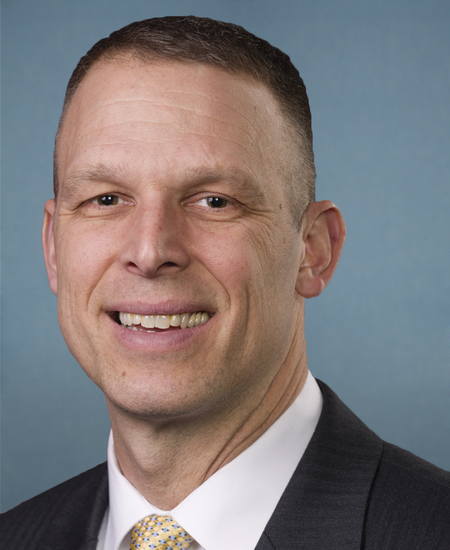
Scott Perry
14% support rate
Ranked legislators
10
5 support · 5 oppose
Key legislators

Who's moving technology in United States

Legislators moving technology in United States
Legislator Party Stance Support rate Decisive votes
Ami Bera
Ami Bera House · District 6
D
Strong +
86% 22
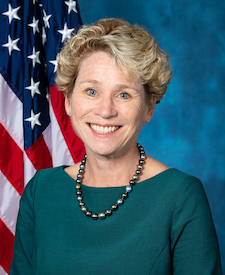
Chrissy Houlahan
Chrissy Houlahan House · District 6
D
Strong +
86% 22
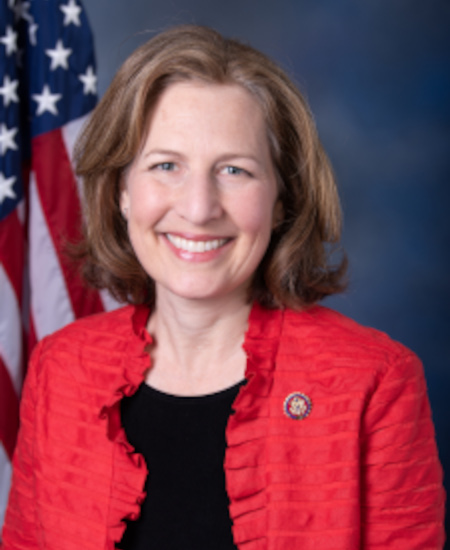
Kim Schrier
Kim Schrier House · District 8
D
Strong +
86% 22
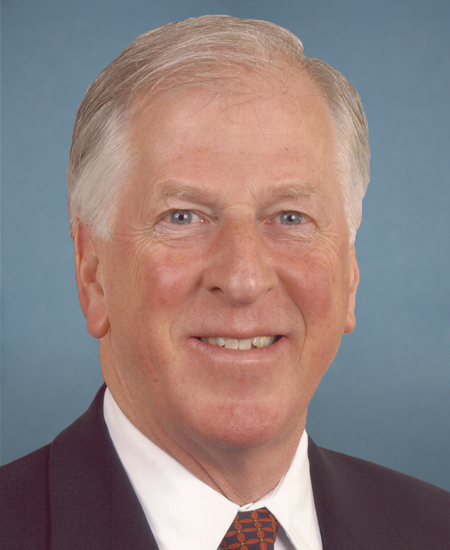
Mike Thompson
Mike Thompson House · District 4
D
Strong +
86% 22
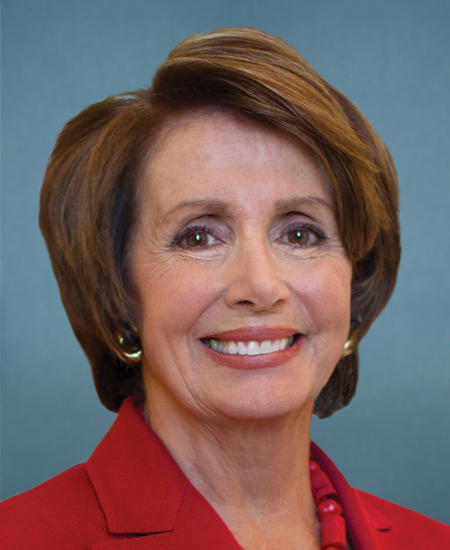
Nancy Pelosi
Nancy Pelosi House · District 11
D
Strong +
86% 22
Scott Perry
Scott Perry House · District 10
R
Strong −
14% 21
AA
Alan Armstrong Senate
R
Strong −
17% 29
Rand Paul
Rand Paul Senate
R
Strong −
17% 46
Josh Hawley
Josh Hawley Senate
R
Strong −
18% 45
Andy Harris
Andy Harris House · District 1
R
Strong −
18% 22
Showing 801–810 of 1,678 bills

All technology bills

in committee · United States · House May 7, 2025

HR 3239: Research Advancing to Market Production for Innovators Act

This bill amends the Small Business Act to improve how federal agencies support small businesses in turning research into market products through the SBIR and STTR programs. It shortens peer review timelines from one year to 180 days, requires reviewers to assess commercialization potential alongside technical merit, and mandates agencies to appoint dedicated Technology Commercialization Officials. Agencies must also track success through annual reports measuring revenue from new products, patents, follow-on funding, and spin-out companies. The changes directly affect small businesses receiving SBIR/STTR grants and federal agencies managing these programs.
Tags Small Business
passed · United States · House Feb 11, 2026

HR 3390: Bringing the Discount Window into the 21st Century Act

HR 3390, the "Bringing the Discount Window into the 21st Century Act," requires the Federal Reserve Board to review and potentially modernize its discount window operations - the facility banks use to borrow during liquidity crises. Within 240 days, the Fed must assess the window's effectiveness, technology, cybersecurity, communications, oversight, and operating hours, including public input. The Fed must then develop a remediation plan with specific actions, timelines, and measures to maintain improvements, and submit a report to Congress within one year. Annual follow-up reports on progress will also be required. This bill directly affects the Federal Reserve’s operations and the banks relying on the discount window during financial stress.
Sub-Topics Cybersecurity
in committee · United States · House Jun 9, 2025

HJRES 100: Providing for congressional disapproval under chapter 8 of title 5, United States Code, of the rule submitted by the Federal Trade Commission relating to ''Negative Option Rule''.

This bill (HJRES 100) is a procedural resolution seeking congressional disapproval of a Federal Trade Commission (FTC) rule on "Negative Option Rule" marketing practices. It specifically targets the FTC’s rule published in the Federal Register (89 Fed. Reg. 90476, November 15, 2024), which required companies to get explicit customer consent before charging them for recurring services. If passed, the resolution would nullify the FTC rule, meaning it would have no legal effect and companies would no longer be required to comply with its provisions. This directly affects businesses using automatic billing or subscription models that previously had to obtain affirmative opt-in consent from customers.
in committee · United States · House Mar 5, 2025

HR 1867: To amend title XVIII of the Social Security Act to remove in-person requirements under Medicare for mental health services furnished through telehealth and telecommunications technology.

This bill removes the requirement for an initial in-person visit before Medicare beneficiaries can receive mental health services via telehealth. It eliminates geographic restrictions that previously limited telehealth access, allowing services to be provided from home or other locations without travel. The change applies immediately to mental health care and substance use disorder treatment, and permanently removes a 2025 deadline that would have ended expanded telehealth access for rural clinics and health centers. This directly affects Medicare patients seeking mental health support, particularly those in rural areas or with mobility challenges.
in committee · United States · House Apr 1, 2025

HR 2582: Expanding Partnerships for Innovation and Competitiveness Act

HR 2582, the Expanding Partnerships for Innovation and Competitiveness Act, creates a nonprofit organization called the Foundation for Standards and Metrology to support the National Institute of Standards and Technology (NIST). The Foundation will work with researchers, universities, industry, and nonprofits to advance measurement science, technical standards, and technology commercialization to enhance U.S. economic security. It will be governed by a Board of Directors with 11 appointed members representing diverse stakeholders, and must become financially self-sustaining within five years. The Foundation will conduct studies, support research facilities, facilitate commercialization of federally funded research, and report annually to Congress on its activities and financial status. The bill authorizes $500,000-$1,250,000 annually from NIST's budget to fund the Foundation starting in fiscal year 2026.
passed · United States · House Mar 25, 2025

HR 1368: DOE and NASA Interagency Research Coordination Act

HR 1368, the DOE and NASA Interagency Research Coordination Act, establishes a formal framework for DOE and NASA to collaborate on joint research and development projects. It directs the agencies to coordinate through memoranda of understanding and competitive awards in specific areas like nuclear propulsion systems, quantum computing, space-based solar energy transmission, and earth sciences research. The bill requires the agencies to share data, leverage existing infrastructure, and report on coordination progress to Congress within two years. This legislation does not create new funding but aims to streamline existing research efforts between the two agencies and their partners, such as national laboratories and universities.
in committee · United States · House Mar 21, 2025

HR 2280: BIRD Energy and U.S.-Israel Energy Center Reauthorization Act of 2025

This bill reauthorizes and expands U.S.-Israel energy cooperation programs through 2031. It increases annual funding for the BIRD Energy Foundation from $2 million to $5 million and for the U.S.-Israel Energy Center from $4 million to $7 million, extending support through fiscal years 2026-2031. The bill adds new focus areas like hydrogen energy, fusion, industrial decarbonization, carbon management, agrivoltaics, grid modernization, and energy infrastructure cybersecurity to existing collaboration efforts. These changes directly affect U.S. and Israeli energy companies, researchers, and institutions working on commercializing clean energy technologies.
in committee · United States · House Mar 6, 2025

HR 1941: Preventing Deepfakes of Intimate Images Act

This bill prohibits the non-consensual sharing of digitally manipulated intimate images (deepfakes) of identifiable people. It creates a civil right for victims to sue individuals who distribute such images without consent, allowing claims for actual damages, $150,000 in liquidated damages, or punitive damages, plus attorney fees. Criminal penalties up to 10 years in prison apply for malicious disclosure intended to harass, harm reputation, or facilitate violence. Exceptions include disclosures to law enforcement for investigations, legitimate public interest matters (excluding mere public figure status), or efforts to assist the victim. The law specifically defines "intimate digital depictions" to include explicit body parts, sexual fluids, or sexual conduct in manipulated images.
in committee · United States · Senate Feb 12, 2025

S 536: Fair SHARE Act of 2025

This bill imposes a $550 tax on each heavy battery module (over 1,000 pounds) and a $1,000 tax on each electric vehicle sold by manufacturers, producers, or importers. It directly affects EV manufacturers and battery suppliers, with taxes applying to sales after December 31, 2025. Revenue from these taxes will be transferred to the Highway Trust Fund. The bill excludes hybrid vehicles that use both internal combustion engines and rechargeable batteries from the electric vehicle definition.
in committee · United States · House Mar 25, 2025

HR 2318: Electronic Permitting Modernization Act

HR 2318, the Electronic Permitting Modernization Act, requires the U.S. Department of the Interior to create modern online systems for processing permits, forms, and related paperwork currently handled manually. This directly affects businesses, developers, tribes, and state/local governments that apply for Department permits, replacing paper processes with digital applications, payments, and tracking. Key provisions include building a public online hub linking all electronic permitting systems, providing contact details for assistance, and requiring consultation with stakeholders during development. The bill prohibits disclosing protected information and mandates consistency with existing environmental review rules, while banning duplicated systems.
Showing 801 to 810 of 1,678 bills
Previous 1 … 80 81 82 … 168 Next