Issue · Technology

Technology

Every technology bill, vote, and legislator stance in United States, automatically classified by Maddy, our AI policy reader.

Total bills
1,431
119th Congress
Top supporter
Suzan K. DelBene
86% support rate
Top opponent
Scott Perry
14% support rate
Ranked legislators
10
5 support · 5 oppose
Key legislators

Who's moving technology in United States

Legislators moving technology in United States
Legislator Party Stance Support rate Votes
Suzan K. DelBene
Suzan K. DelBene House · District 1
D
Strong +
86% 259
Mike Thompson
Mike Thompson House · District 4
D
Strong +
86% 261
Chrissy Houlahan
Chrissy Houlahan House · District 6
D
Strong +
86% 259
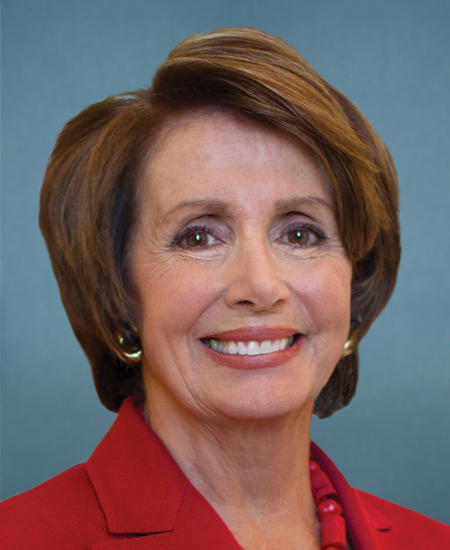
Nancy Pelosi
Nancy Pelosi House · District 11
D
Strong +
86% 246
Kim Schrier
Kim Schrier House · District 8
D
Strong +
86% 261
Scott Perry
Scott Perry House · District 10
R
Strong −
14% 252
AA
Alan Armstrong Senate
R
Strong −
14% 46
Rand Paul
Rand Paul Senate
R
Strong −
16% 223
Andy Harris
Andy Harris House · District 1
R
Strong −
18% 257
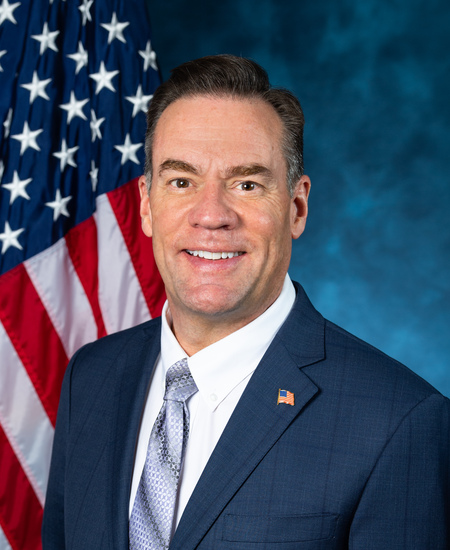
Russ Fulcher
Russ Fulcher House · District 1
R
Strong −
18% 262
Showing 11–20 of 1,431 bills

All technology bills

in committee · United States · House Aug 24, 2026

HRES 1489: Honoring the crew of the Artemis II mission for their historic lunar flyby.

This House resolution honors the four astronauts who completed the Artemis II mission, a ten-day lunar flyby that marked humanity's return to the Moon's vicinity for the first time in over fifty years. The bill details the crew members' backgrounds and highlights their achievement of traveling 252,756 miles from Earth, which is the farthest distance humans have ever ventured. It expresses the House's support for designating National Artemis II Mission Day to commemorate the event and congratulates the crew on paving the way for future lunar surface landings.
in committee · United States · House Sep 2, 2026

HR 10238: Cybersecurity for Small Businesses Act of 2026

The Cybersecurity for Small Businesses Act of 2026 directs the Small Business Administration, in partnership with federal cybersecurity agencies, to create and distribute resources that help small businesses improve their digital security practices. The bill specifically requires the administration to provide guidance on federal cybersecurity compliance standards to small companies seeking government contracts or subcontracting opportunities. This information must be made available through small business development centers, district offices, and the agency's website. Additionally, the Office of Advocacy is required to submit an annual report to Congress detailing how many small businesses have contacted them regarding cybersecurity issues.
Sub-Topics Consumer Data Protection Cybersecurity Tags Small Business
in committee · United States · House Aug 24, 2026

HR 10146: AI Advertising Disclosure Act

The AI Advertising Disclosure Act requires companies operating AI chatbots and generative search features with over 50,000 monthly users to clearly disclose when their responses are influenced by paid partnerships or commercial arrangements. These disclosures must be visible without scrolling, use plain language, and identify the specific nature of the sponsorship, while also prohibiting AI systems from denying they are artificial or hiding sponsored content behind organic-looking answers. The bill grants the Federal Trade Commission authority to enforce these rules and allows state attorneys general and private individuals to sue for violations, with potential penalties including triple damages for willful misconduct.
in committee · United States · House Sep 3, 2026

HR 10284: Smart Meter Data Privacy Protection Act

The Smart Meter Data Privacy Protection Act prohibits state-regulated electric utilities that are not wholly owned by U.S. persons from selling or commercially monetizing personal consumption data collected via smart meters, restricting such use to specific operational needs like billing and grid reliability. The bill requires these utilities to submit annual reports to the Federal Trade Commission detailing what data was collected, how it was used, and with whom it was shared. If a utility violates these privacy rules, the FTC can order the company to credit affected customers an amount equal to three times the revenue generated from that unauthorized use. State attorneys general are also granted the authority to sue on behalf of residents to enforce compliance or seek damages, while the FTC is tasked with establishing security standards for data retention.
in committee · United States · Senate Aug 7, 2026

S 5368: Water Cyber Shield Act of 2026

The Water Cyber Shield Act of 2026 mandates cybersecurity risk assessments and emergency response plans for community water systems serving more than 3,300 people and large wastewater treatment facilities serving over 10,000 people with a design flow rate of at least one million gallons. The bill requires the Environmental Protection Agency to establish baseline cybersecurity standards in collaboration with federal agencies and industry experts, while authorizing states to assume primary enforcement responsibilities if they demonstrate adequate capacity and security protocols. It allocates $300 million annually for fiscal years 2027 through 2032 to help water systems build cybersecurity resilience, prioritizing assistance for facilities with the greatest need for resources or expertise. Additionally, the legislation expands cyber incident reporting obligations under the Homeland Security Act to include these specific water infrastructure entities and requires that submitted security documentation be protected from public disclosure under federal and state freedom of information laws.
in committee · United States · Senate Aug 7, 2026

S 5381: ADVERSARIES Act

The ADVERSARIES Act requires the Under Secretary of the Bureau of Industry and Security to conduct a review within 90 days of enactment regarding how U.S.-based affiliates of foreign entities on the Entity List or Military End User List might be acquiring controlled items that their parent companies are restricted from accessing. The review must also assess national security risks posed by foreign adversary exploitation of vulnerabilities in information and communications technology, including whether specific sectors pose undue risk to export control effectiveness. Following the review, officials must submit a report to relevant congressional committees detailing their findings, any planned actions to address identified threats within the next year, and recommendations for changes to U.S. law.
in committee · United States · House Aug 17, 2026

HR 10110: Housing Price Transparency Act

The Housing Price Transparency Act requires landlords and property managers who use algorithms to set rental prices to clearly disclose this practice to tenants. The Federal Trade Commission is authorized to enforce these rules by treating violations as unfair or deceptive acts, while state attorneys general may also bring civil actions on behalf of their residents if federal enforcement is not pending. Individuals injured by non-compliance can file private lawsuits in federal court to seek injunctions and recover damages of at least $10,000 per violation or actual monetary losses, whichever is greater.
Sub-Topics Landlords Renters Tenant Rights Tags Government Transparency
in committee · United States · House Sep 1, 2026

HR 10152: Open-Source AI Leadership Act

The Open-Source AI Leadership Act directs the Secretary of Commerce to promote the adoption of U.S.-developed open-source artificial intelligence models by coordinating with private sector entities, state governments, and foreign partners. The bill requires the Department of Commerce to identify barriers to using these domestic models and to enter into agreements that facilitate their use in interstate and foreign commerce. Additionally, it mandates an annual public report assessing the risks associated with AI models developed by foreign adversary nations, including concerns about data security, national safety, and model performance. A specific provision ensures that the Secretary of Commerce cannot use this authority to ban or restrict any open-source AI model from being available in the market.
in committee · United States · House Sep 3, 2026

HR 10288: Rural Broadband Modernization Act

The Rural Broadband Modernization Act amends the ReConnect program to ensure that broadband projects are eligible for federal loans and grants based on performance standards rather than the specific technology used. The bill requires that funded projects provide internet speeds of at least 100 Mbps downstream and 20 Mbps upstream, while prohibiting agencies from denying or deprioritizing applications because they use terrestrial, non-terrestrial, or low-Earth orbit satellite systems. This change directly affects rural communities and service providers by allowing a wider range of delivery methods to compete for funding. Additionally, the law mandates that the Secretary of Agriculture publish public reports on awarded projects within 30 days and issue final implementing regulations within 180 days of enactment.
Sub-Topics Broadband Access Telecommunications Tags Rural Communities
in committee · United States · House Aug 27, 2026

HR 10151: Water Authority Cybersecurity Protection Act

The Water Authority Cybersecurity Protection Act extends the Drinking Water Infrastructure Risk and Resilience Program through fiscal years 2028 and 2029, replacing the previous expiration dates of 2020 and 2021. The bill doubles the authorized funding for technical assistance to $10 million and for grants to small water systems to $20 million. Additionally, it increases the total annual authorization of appropriations for the program from $25 million to $50 million. These changes directly affect public water utilities by providing continued financial support for cybersecurity improvements and risk management.
Showing 11 to 20 of 1,431 bills