Issue · Technology

Technology

Every technology bill, vote, and legislator stance in United States, automatically classified by Maddy, our AI policy reader.

Total bills
1,661
119th Congress
Top supporter
Ami Bera
86% support rate
Top opponent
Scott Perry
14% support rate
Ranked legislators
10
5 support · 5 oppose
Key legislators

Who's moving technology in United States

Legislators moving technology in United States
Legislator Party Stance Support rate Decisive votes
Ami Bera
Ami Bera House · District 6
D
Strong +
86% 22
Chrissy Houlahan
Chrissy Houlahan House · District 6
D
Strong +
86% 22
Kim Schrier
Kim Schrier House · District 8
D
Strong +
86% 22
Mike Thompson
Mike Thompson House · District 4
D
Strong +
86% 22
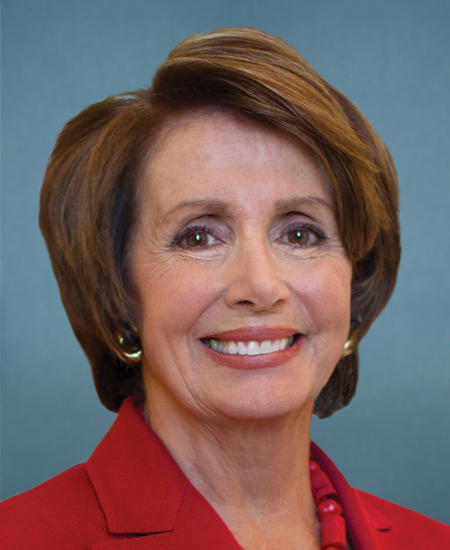
Nancy Pelosi
Nancy Pelosi House · District 11
D
Strong +
86% 22
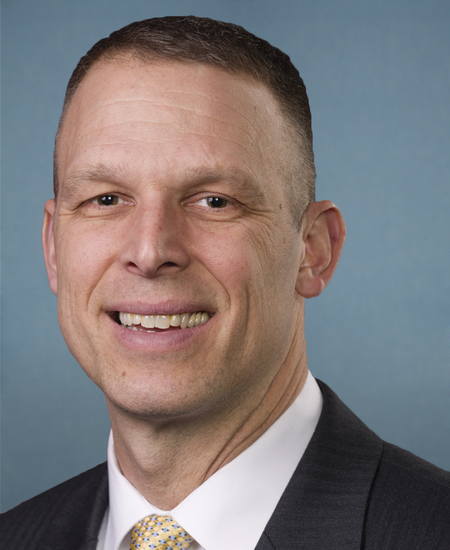
Scott Perry
Scott Perry House · District 10
R
Strong −
14% 21
AA
Alan Armstrong Senate
R
Strong −
17% 29
Rand Paul
Rand Paul Senate
R
Strong −
17% 46
Josh Hawley
Josh Hawley Senate
R
Strong −
18% 45
Andy Harris
Andy Harris House · District 1
R
Strong −
18% 22
Showing 1,321–1,330 of 1,661 bills

All technology bills

in committee · United States · House May 15, 2025

HR 3435: Federal Cyber Workforce Training Act of 2025

The Federal Cyber Workforce Training Act of 2025 establishes a Federal Institute to train federal employees in cybersecurity roles and human resources staff managing cybersecurity positions. The Institute will develop role-specific training modules - including hands-on exercises and assessments - based on the NICE cybersecurity framework, offering both in-person and virtual options without requiring a cybersecurity degree. The National Cyber Director must submit a detailed implementation plan to Congress within 180 days, and the Institute will operate without new funding, leveraging existing federal resources. This training aims to enhance skills for entry-level cybersecurity roles, support mid-career transitions, and improve hiring practices for federal cybersecurity personnel.
Sub-Topics Cybersecurity
passed · United States · House Nov 18, 2025

HR 2659: Strengthening Cyber Resilience Against State-Sponsored Threats Act

HR 2659 creates a federal task force to address cyber threats from China's state-sponsored actors, specifically targeting groups like Volt Typhoon identified in a 2024 CISA advisory. The task force, led by CISA and FBI directors, coordinates federal agencies responsible for critical infrastructure security to detect and respond to cyberattacks. It must produce annual reports - including classified assessments of infrastructure risks and recommendations - to Congress within 540 days of formation and for five years after. These reports will guide federal efforts to protect critical infrastructure (like energy grids and transportation systems) and inform owners/operators through a public awareness campaign.
Sub-Topics Cybersecurity
in committee · United States · House Feb 4, 2025

HR 912: 9–8–8 Lifeline Cybersecurity Responsibility Act

This bill requires the National Suicide Prevention Lifeline (9-8-8 hotline) program to address cybersecurity vulnerabilities and report incidents. It mandates that the program’s network administrator and participating local crisis centers must report identified security weaknesses or cyber incidents to federal officials within a reasonable time, while protecting user privacy. The law also requires a study by the Comptroller General within 180 days to evaluate cybersecurity risks specific to the 9-8-8 system. These changes directly affect the federally funded 9-8-8 hotline program and its local crisis centers.
in committee · United States · Senate Jul 31, 2025

S 2604: A bill to require the Secretary of Defense to establish the Artificial General Intelligence Steering Committee, and for other purposes.

This bill requires the Secretary of Defense to create the Artificial General Intelligence Steering Committee by April 1, 2026. The committee, composed of senior Defense officials and experts, must analyze AI development trends, assess adversary capabilities, evaluate military applications, and develop a strategy for adopting artificial general intelligence - including ethical guidelines and funding plans. It must submit an unclassified report to Congress by January 31, 2027, detailing its findings, with a classified annex permitted. The committee’s requirements expire on December 31, 2027. The bill directly affects the Department of Defense’s strategic planning for advanced AI systems.
in committee · United States · House Jan 20, 2026

HR 7151: Artificial Intelligence Public Awareness and Education Campaign Act

This bill directs the Commerce Secretary to create a public education campaign about artificial intelligence within 180 days. It aims to improve consumer understanding of AI's daily uses (like recommendations, voice assistants, and deepfakes), teach best practices for detecting AI-generated content, and provide targeted outreach to vulnerable groups like seniors. The campaign will develop multilingual materials, a mobile-friendly website, and annual updates, while coordinating with small businesses and state/local governments. The effort expires after 5 years with no new federal funding required.
in committee · United States · House Dec 2, 2025

HR 6143: PRECISE Act

The PRECISE Act amends existing agricultural programs to specifically support farmers adopting precision agriculture practices and technology. It expands eligibility under the Conservation Loan Program (Section 304 of the Farm and Rural Development Act) for loans covering precision agriculture tools like GPS guidance, soil sensors, and data software. Farmers using these loans can also receive increased payments through the Environmental Quality Incentives Program (EQIP), with costs for precision agriculture practices covered up to 90% of expenses. The bill directly affects agricultural producers seeking to improve efficiency, reduce input waste, and enhance environmental outcomes through technology adoption.
Sub-Topics Conservation
in committee · United States · House Jul 22, 2025

HR 4579: FEMA Cybersecurity Improvement Act

HR 4579, the FEMA Cybersecurity Improvement Act, amends the Homeland Security Act of 2002 to require the Federal Emergency Management Agency (FEMA) to specifically address cybersecurity risks that could disrupt its operations. The bill adds a new requirement for FEMA to mitigate these risks, as defined in another section of law, and mandates that FEMA, working with the Cybersecurity and Infrastructure Security Agency (CISA), submit an annual report to Congress detailing progress on these efforts. This bill directly affects FEMA's internal operations and cybersecurity planning, with CISA providing consultation. It does not create new funding or alter FEMA's core mission but updates existing security protocols to explicitly include cybersecurity risk mitigation.
Sub-Topics Cybersecurity Tags Emergency Management
in committee · United States · Senate Jul 31, 2025

S 2637: MAPWaters Act of 2025

The MAPWaters Act of 2025 requires federal agencies managing public waterways (like the National Park Service and Forest Service) to digitize and publish online specific data about access restrictions. This includes seasonal closures, speed zones, equipment rules, boat ramp locations, and fishing restrictions (like no-take zones) within 5 years of enactment. The law mandates public updates at least twice yearly for access data and in real time for fishing restrictions, while excluding irrigation canals and sensitive archaeological sites. It directly affects recreational users, anglers, and boaters by making federal waterway access information more accessible through standardized digital maps. The bill does not alter existing fishing regulations or jurisdiction over navigable waters.
Sub-Topics Data Privacy
in committee · United States · Senate Apr 3, 2025

S 1276: American Innovation Act

The American Innovation Act (S 1276) authorizes multi-year funding for key federal science and technology agencies, including the National Science Foundation, Department of Energy's Office of Science, Department of Defense science programs, National Institute of Standards and Technology, and NASA's Science Mission Directorate. It sets specific annual funding levels from fiscal years 2026 through 2035, with automatic annual increases starting in 2036 based on the Consumer Price Index to adjust for inflation. The bill also exempts these appropriations from automatic budget cuts (sequestration) under the Balanced Budget Act. This funding directly affects the operations and research capabilities of these federal agencies.
Sub-Topics State Budget
in committee · United States · House Jan 3, 2025

HR 96: Buzz Off Act

This bill prohibits federal law enforcement agencies from using drones to surveil specific U.S. citizens or their private property without the citizen's written consent. Exceptions allow drone use if the President authorizes it for terrorism threats (with written certification) or if a judge issues a warrant. It directly affects federal agencies like the FBI and protects U.S. citizens' privacy from unwarranted drone surveillance.
Showing 1,321 to 1,330 of 1,661 bills